Hell Isn’t Ahead—It’s Where We’ve Always Been
A truly efficient Hell wouldn’t be a torture chamber... it'd be a bureaucracy.

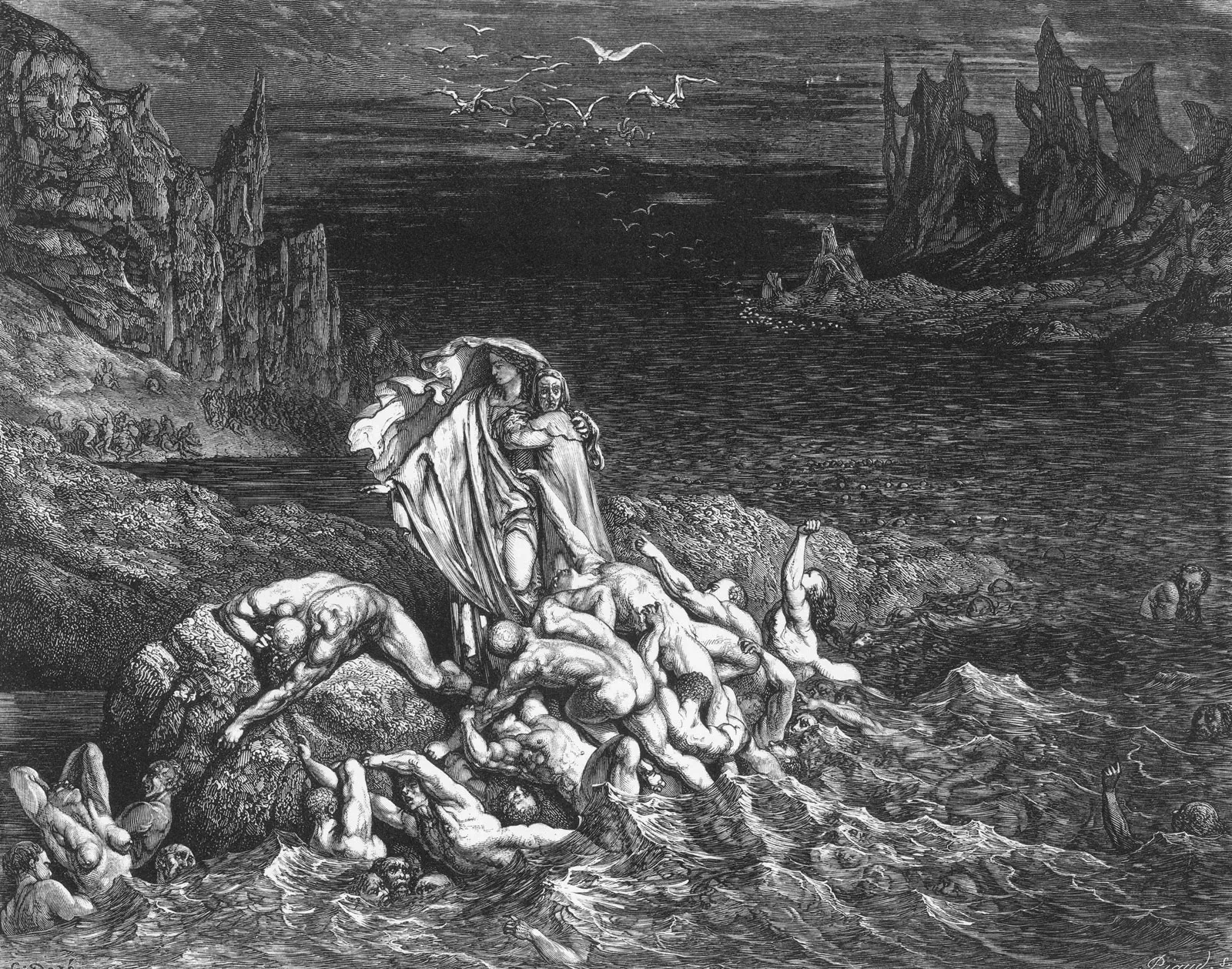
The first thing you do when you get here is scream.
It isn’t a cry of joy or a breath of relief; it’s a violent, lung-burning protest against the sudden shock of crushing gravity, blinding light, and the frigid chill of a world outside the womb.
We call it “the miracle of life,” but if you look at it through a slightly different lens, it looks more like an intake procedure. You’re stripped, cleaned, numbered, and handed over to guardians who are just as confused and weary as you are.
We spend the rest of our lives searching for the exit, or at least a map to make sense of the journey. We build cathedrals to reach upward and telescopes to look outward, all the while nursing a quiet, low-frequency dread that the “Other Place”—the one with the pitchforks and the lake of fire—is waiting for us at the finish line.
But Hell isn’t ahead.
It’s where we’ve always been.
Consider the architecture of our existence. Every living thing must consume another living thing to persist for another day. We inhabit bodies that begin to decay the moment they reach their peak. We're granted the capacity for infinite love in a realm governed by the absolute certainty of loss. If you were tasked with designing a sophisticated, self-sustaining laboratory of lament—one that didn’t just torture its subjects, but made them complicit in their own suffering—could you really do a better job than this?
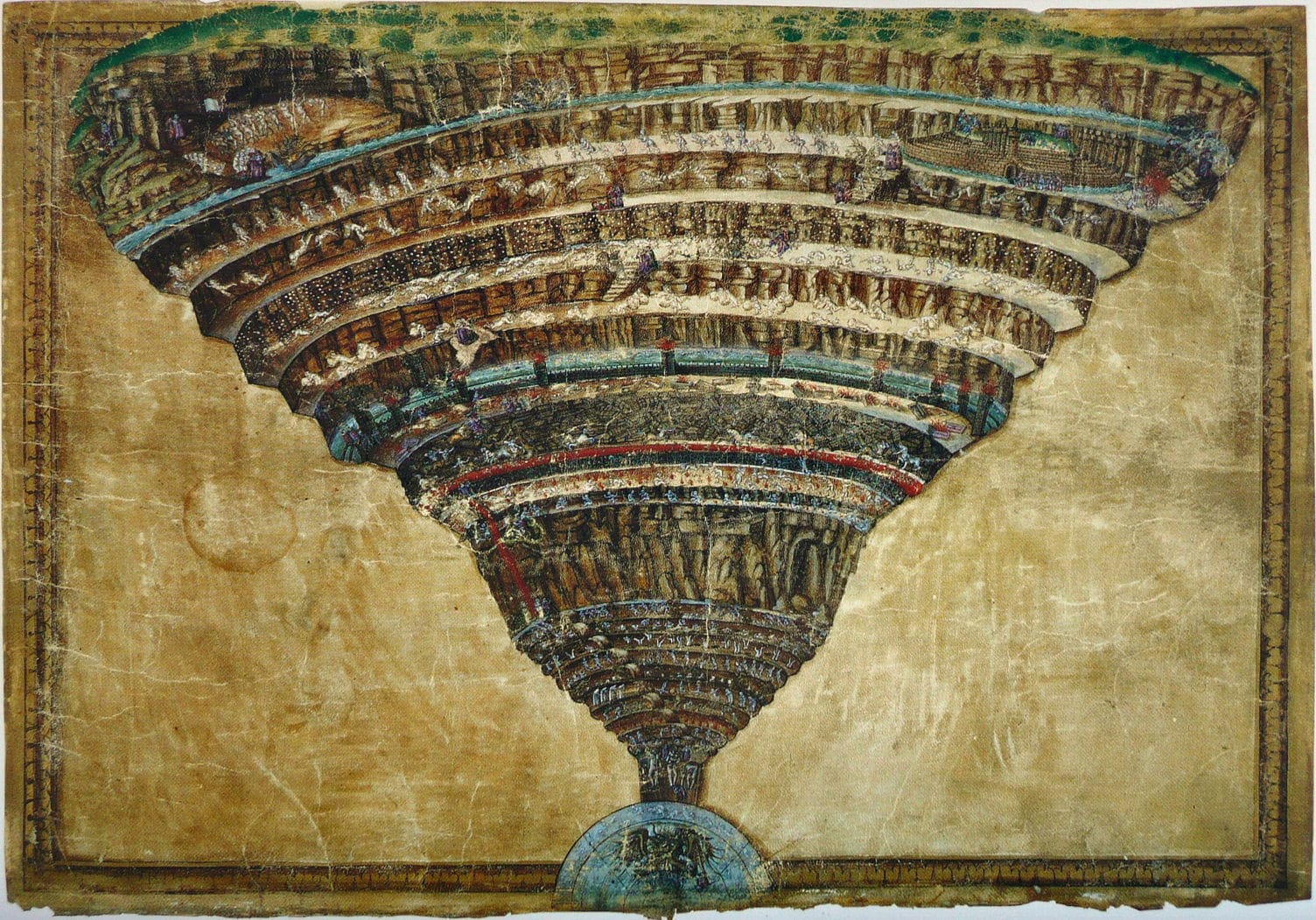
The Infernal Blueprint
When we think of Hell, we default to Dantean imagery: a demon-infested downward spiral through fire and ice, with rivers of boiling blood and pits of burning pitch. But that’s a cartoon. A truly efficient Hell wouldn’t be a torture chamber; it would be a bureaucracy. It would feel just normal enough to keep you hoping, yet just cruel enough to ensure that hope is always eventually curdled.
Arthur Schopenhauer, the patron saint of cosmic pessimism, saw the stitches in the fabric of reality long ago:
“If we should bring clearly to a man’s sight the terrible sufferings and miseries to which his life is constantly exposed, he would be seized with horror… the world is Hell, and men are on the one hand the tormented souls and on the other the devils in it.”
This world is a closed system of recursive suffering. We are both the inmates and the prison guards. We police each other’s joys, compete for dwindling resources, and pass our traumas down as biological inheritance. We're the devils Schopenhauer warned us about, wearing skin suits and doom-scrolling through endless feeds of curated despair.
The Arrogant Beast
Of course, this isn’t a new anxiety. The ancient Gnostics saw the “beauty” of the natural world as a prison. They believed in the Demiurge—an “arrogant beast” that resembled an aborted fetus in both appearance and character. A flawed, lesser deity (sometimes called Yaldabaoth), the Demiurge created the material world in ignorance and arrogance as a cage for divine sparks—our souls.
In Gnostic cosmology, the universe is a mistake. The stars are the bars of a cell; the Archons ("rulers") use our desires and fears to keep us tethered to the wheel. To the Gnostic, the Problem of Evil isn’t a problem at all. Why do bad things happen to good people? Because the manager of this establishment is either a psychopath or a fool.
In his 1928 novel, Point Counter Point, Aldous Huxley toyed with the same suspicion:
‘But why should two people be unhappy?’ persisted the barmaid. ‘When it isn’t necessary?’
‘Why shouldn’t they be unhappy?’ Spandrell enquired. ‘Perhaps it’s what they’re here for. How do you know that the earth isn’t some other planet’s hell?’
We scan the heavens for signs of life and hear only the crushing silence of an immense, uncaring cosmos. Perhaps the rest of existence is the “real” world, and we're just a dumping ground for the incorrigible—a cosmic Botany Bay orbiting a mid-sized yellow sun.
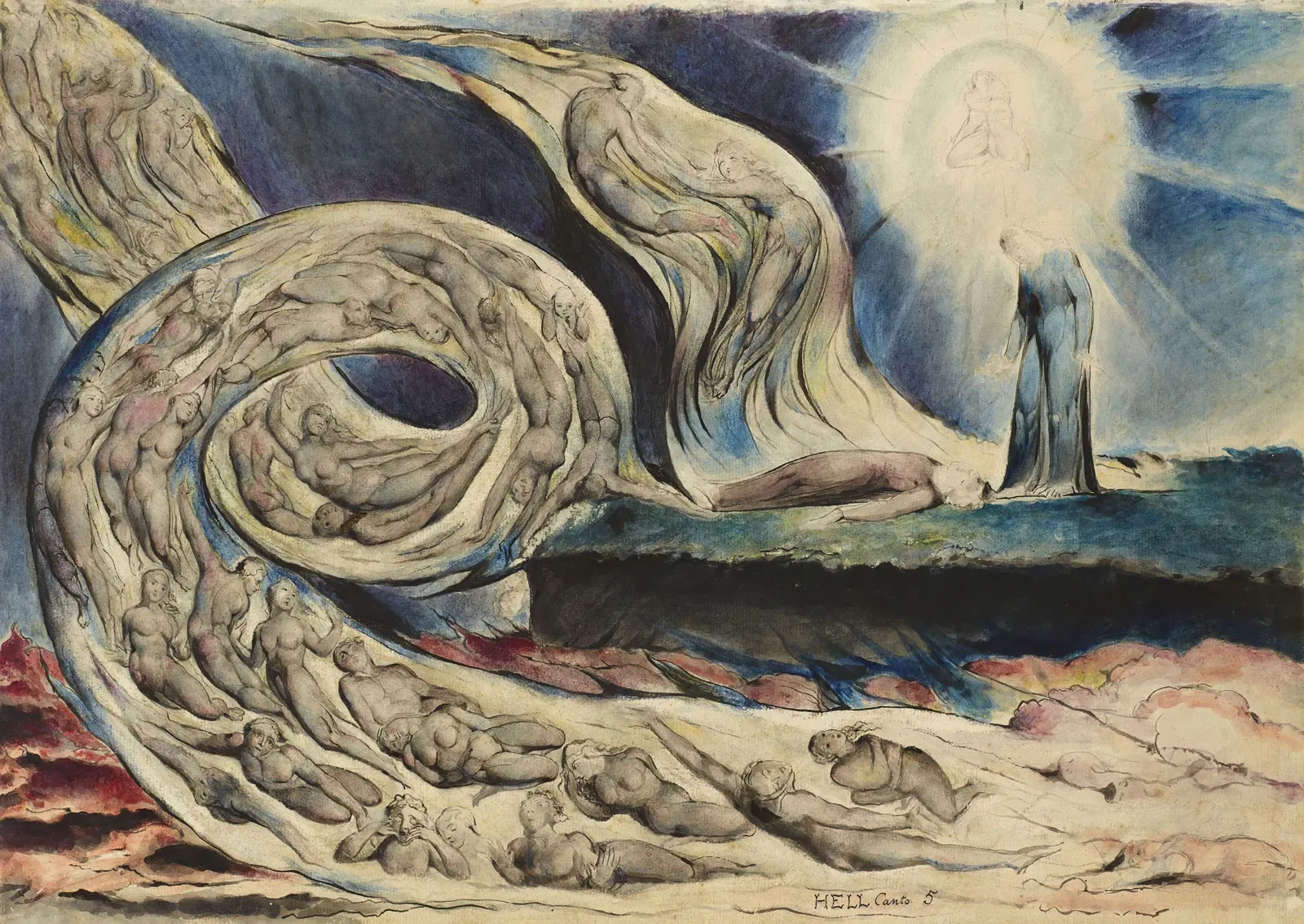
The Ingenuity of the Trap
If this world is a designed Hell, it is a masterwork of psychological engineering. Its brilliance lies in its variety.
The Cruelty of Hope: A raging inferno of constant agony would breed numbness. To truly suffer, you must have something to lose. So the system offers sunset-streaked skies over ancient forests, the crisp sweetness of ripened fruit, the wild laughter of children at play, the quiet peace of a beloved pet at your side, and the warm press of a lover’s hand in yours—not as blessings, but bait. They make the inevitable loss—the cancer diagnosis at forty-two, the betrayal by a trusted friend, the slow erasure of a parent’s mind—cut deeper.
The Loop of Dukkha: Buddhism calls it samsara—the aimless wandering through birth and death—defined by dukkha, that subtle, ever-present unsatisfactoriness. Even when things are good, something feels slightly off. We run on a treadmill of desire, forever chasing a horizon that recedes at exactly our pace.
From Hell There Is No Exit: Jean-Paul Sartre‘s 1944 existentialist French play, No Exit, popularized the phrase “Hell is other people"— we're locked in a room together, forced to define ourselves through the gaze of others who are just as insecure and judgmental as we are. We crave validation from people we don’t even like.
Even death offers no guaranteed escape. In many of these frameworks, death is just a hard reset: memory wiped, soul recycled. You could be reborn as a factory-farmed pig that never sees the sunlight, a jungle cat driven to extinction by poachers and deforestation, a starving child in a forgotten corner of the world, or the tyrant whose cruelty poisons every life it touches. The wheel keeps turning. The suffering stays the same.
Solving the Problem of Evil
For centuries, theologians have twisted themselves into intellectual pretzels to explain how a benevolent God could allow childhood leukemia to ravage its tiny host from within, tsunamis and earthquakes to erase entire communities in seconds, genocides that turn neighbor into executioner, or the trafficking and exploitation of young women by powerful men, enabled by a system that shields predators and abandons their prey.
If the purpose of the system is to generate and recycle suffering, then the system is functioning perfectly. There is no glitch. The cruelty is a feature, not a bug. The most efficient Hells need no external demons—they convince the inmates to torture one another.
This realization brings a strange, cold clarity. You stop asking “Why me?” and start saying “Of course.” You stop waiting for divine intervention that will never arrive and start looking at the person next to you with newfound urgency and compassion.
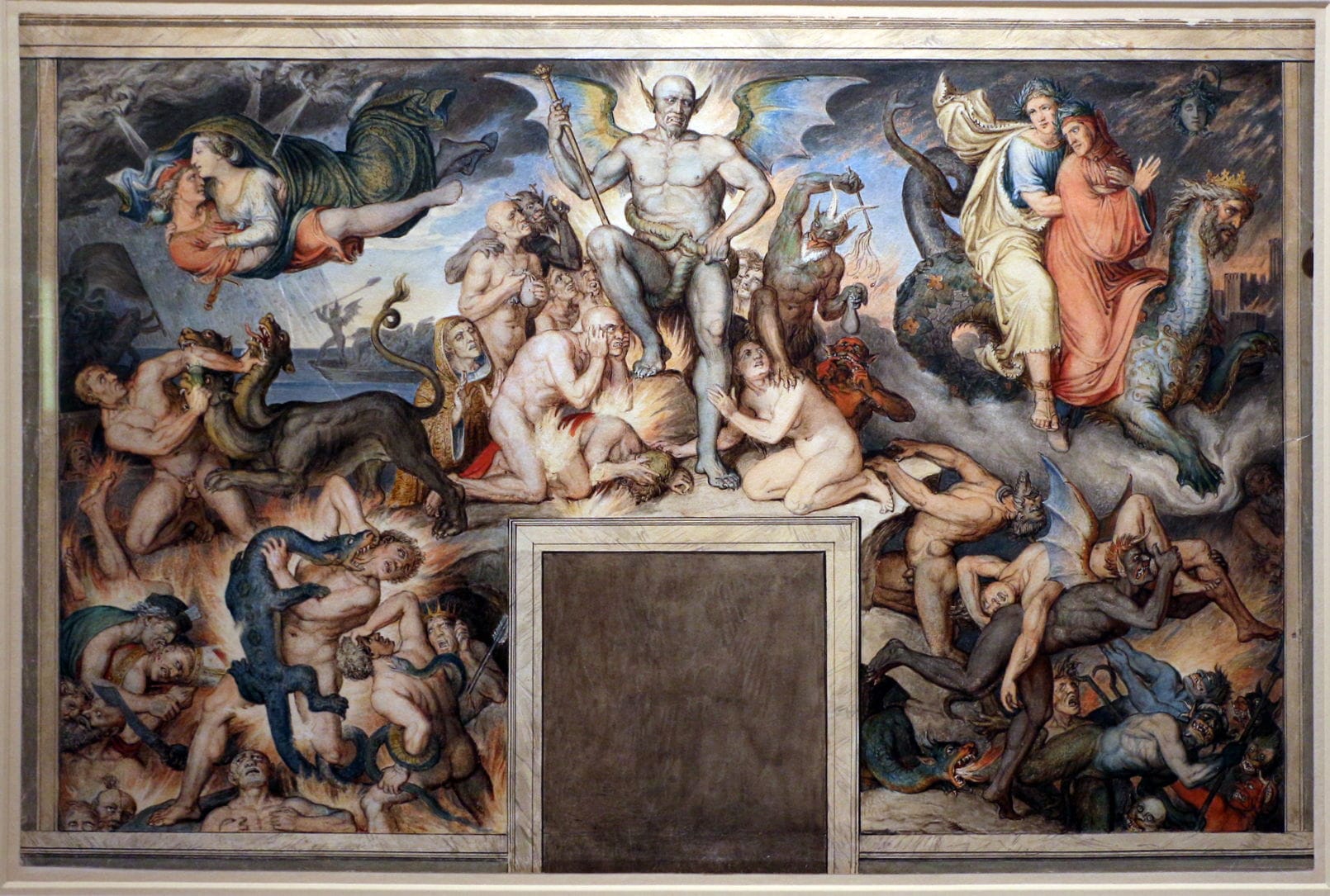
Kindness as An Act of Insurrection
If we accept that we're already in Hell—that the system is rigged, the architect absent or malevolent, and the suffering is the point—then every act of unrequited kindness becomes cosmic rebellion.
In a world engineered for selfishness and predation, basic decency is an act of insurrection. When you help someone who can do nothing for you, when you choose empathy over the quicker, easier, more seductive path of hate, when you create art for no reason other than to feel something, you are spitting in the eye of the Demiurge.
Because we are all tormented souls together, moral superiority dissolves. Radical solidarity replaces judgment. You don’t have to be a saint to be kind; you only have to be a fellow prisoner who refuses to do the ruling class’s work for them.
We can’t change the laws of physics that demand we age and die. But we can make the cell a little more habitable for the person on the other side of the wall. We can whisper jokes through the cracks. We can share our rations. We can care.
Choosing to Sing
There’s an old story of prisoners in a death camp who put God on trial for His silence. After hours of testimony, they found Him guilty. Then the rabbi looked at the group and said, “The trial is over. Now let us say our evening prayers.”
In that stark verdict and the prayers that followed, we see defiant dignity in the face of an uncaring, unrelenting world that never promised fairness. They acknowledged the full weight of the horror—God's abandonment amid unimaginable suffering—yet chose to pray anyway, turning ritual into rebellion. It's a song lifted in the void, a refusal to let indifference win.
The realization that our capacity to see the horror clearly—and still choose decency anyway—is the one variable the architects of the abyss cannot control. If we’re already condemned to this Hell, let’s make it insufferable for those who imprison us by uniting as a legion of empathetic radicals who refuse to become devils—who choose to laugh in the face of damnation and sing in the darkness.
TL;DR: There is no God. Hell is all around us. Be kind.
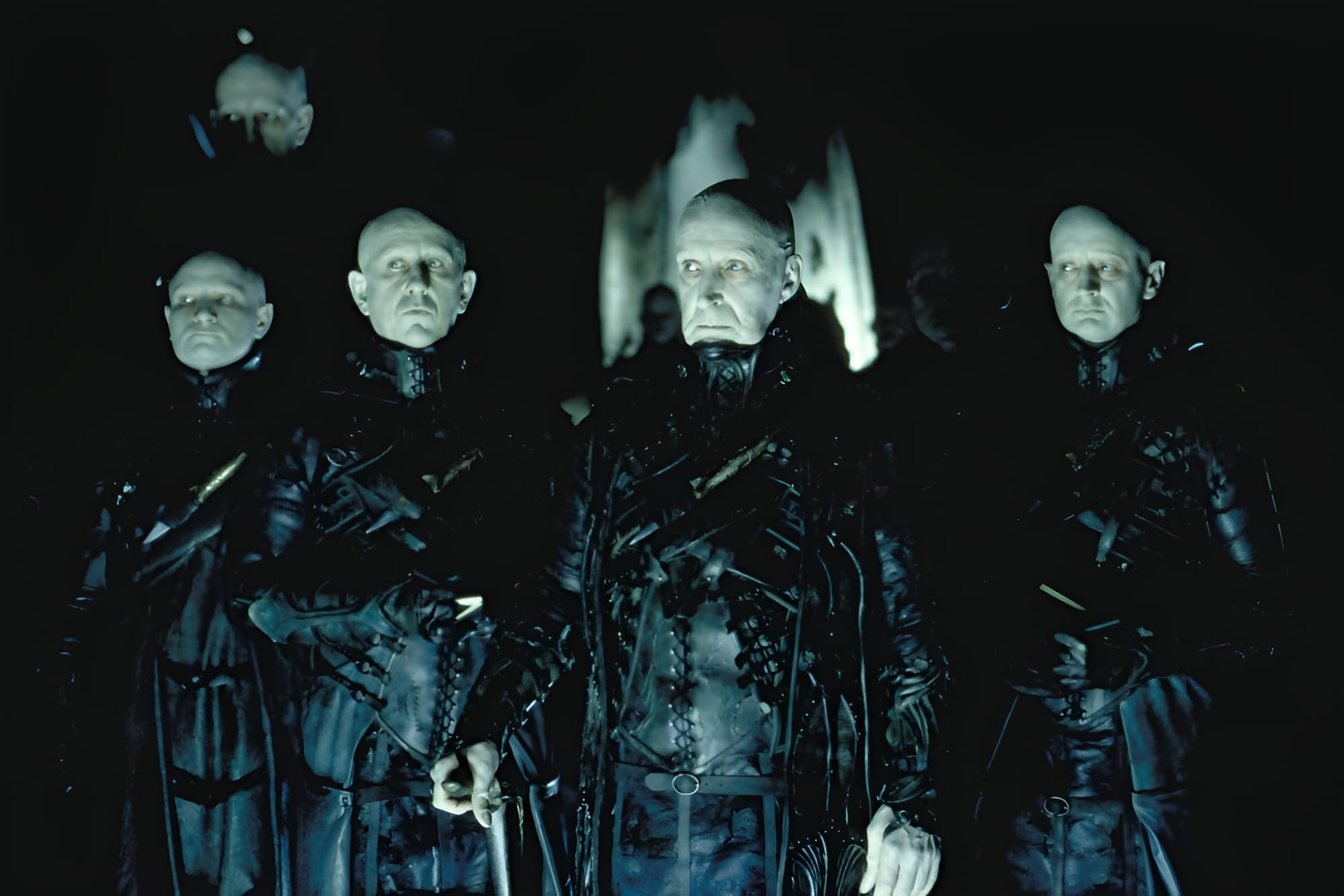
Hell Isn’t Ahead—It's on the Screen
They Live (1988, dir. John Carpenter)
A blue-collar drifter discovers a pair of sunglasses that reveal the world is a monochromatic nightmare run by alien elites broadcasting subliminal commands to obey, consume, and stay asleep. The hidden Archons are already here, and putting on the glasses is a subversive act of awakening.
Jacob’s Ladder (1990, dir. Adrian Lyne)
In 1970s New York, a traumatized Vietnam vet's life steadily dissolves into demonic visions that blur reality and Hell. Gnostic horror at its most intimate: the real prison is our refusal to let go of this world; acceptance and forgiveness are the only exit.
Groundhog Day (1993, dir. Harold Ramis)
A cynical weatherman is trapped in an endless time loop, forced to relive the same day in a small Pennsylvania town. The ultimate cinematic samsara: he tries to escape this never-ending hell and finally breaks the cycle through radical kindness and choosing to love the hand he's dealt.
Dark City (1998, dir. Alex Proyas)
An amnesiac realizes his city is an artificial construct rebuilt every night by telepathic aliens who rewrite memories. Often called the purest Gnostic film ever made—the Strangers are literal Archons running an endless experiment on trapped souls in a cosmic prison.
Pleasantville (1998, dir. Gary Ross)
Two 1990s teenagers are pulled into a black-and-white 1950s sitcom world where the citizens can't think or act for themselves and are forced to follow the arcs the sitcom creators scripted for them. A Gnostic retelling of the Fall of Man: the true Hell is ignorance—knowledge brings color, desire, chaos, and the defiant joy of becoming fully human.
The Truman Show (1998, dir. Peter Weir)
An ordinary man slowly learns his entire life is a staged reality-TV show inside a giant dome. A sunny Demiurge fable: the perfect illusion of freedom is the cruelest cage, and walking out the door is pure insurrection.
eXistenZ (1999, dir. David Cronenberg)
A game designer and her bodyguard enter a living, flesh-based virtual-reality game that starts to feel more real than reality. Body-as-prison Gnosticism: our meat suits are the hardware keeping divine sparks trapped in ever-deeper illusions.
The Matrix (1999, dir. the Wachowskis)
A hacker discovers humanity is trapped inside a machine-built simulation, kept alive as living batteries. The definitive modern Gnostic myth: a flawless false world where hope is the ultimate control mechanism, and awakening is rebellion.
The Thirteenth Floor (1999, dir. Josef Rusnak)
A scientist discovers that Los Angeles is a simulation nested inside yet another simulation. Hell has infinite layers: escape one floor, and you may enter a better-decorated cell of the same prison.
Vanilla Sky (2001, dir. Cameron Crowe)
After a crash, a man wakes up in a perfect life that turns out to be a constructed lucid dream. The cruelty of hope: a flawless, fabricated paradise becomes its own exquisite torment when the dreamer senses the lie.
The Fountain (2006, dir. Darren Aronofsky)
A man pursues immortality across three intertwined timelines—as conquistador, scientist, and space traveler—fighting death to save the woman he loves. We are divine sparks trapped in the material world, bound by illusion and decaying flesh. Transcendence arrives only through acceptance and surrendering to the eternal.
Prometheus (2012, dir. Ridley Scott)
Explorers seek the Demiurge-like Engineers who created humanity, only to find violent, regretful beings. The God-as-asshole question: what if our creators are just as flawed and indifferent as the world they made?
Choosing to Sing: Iron Maiden's 1982 metal epic, "The Number of the Beast," dives straight into Hell and confronts the Beast head-on with soaring vocals and face-melting riffs.
🍕 POP 'N' PIZZA is your deep-dish slice of pop culture’s weirdest, most esoteric corners—served with extra sauce and a side of existential dread. Written by Adam Frazier.