While the World Burns: Volume I
A film series covering 80 films from 1959 to 1989, from the waning days of the studio system through the early tremors of New Hollywood to the excess of the '80s.

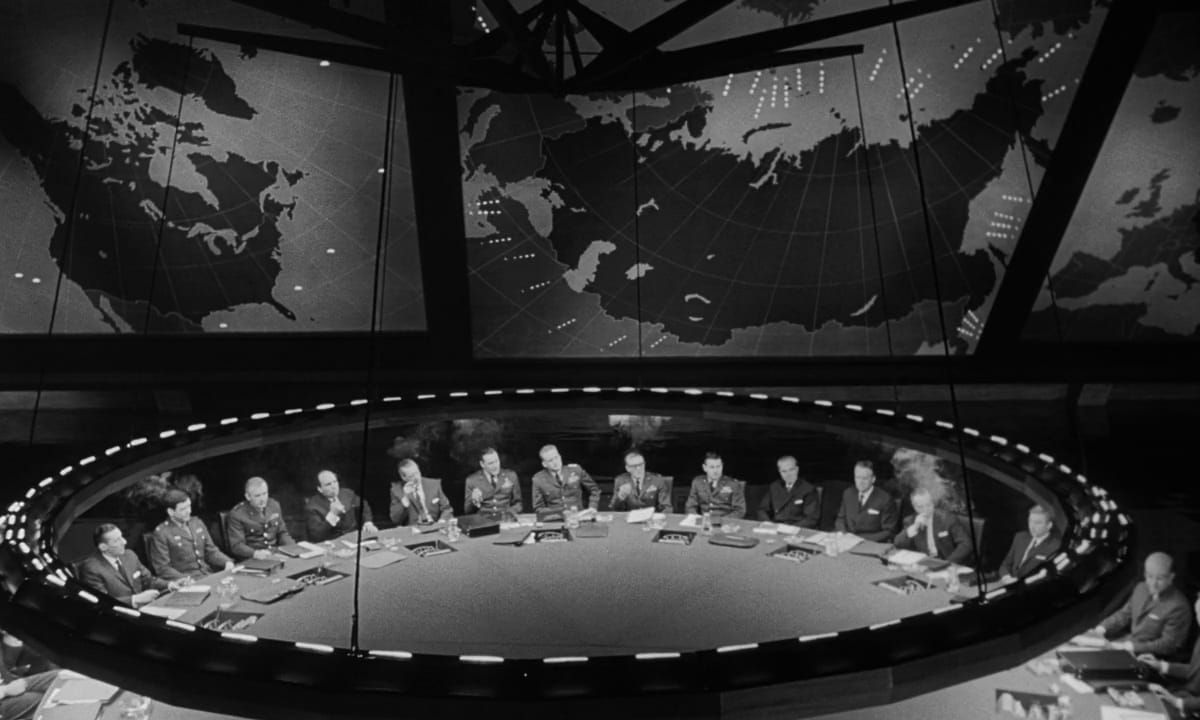
It started, as so many things do, with Mad Men. Marissa and I finished our latest rewatch last month, and somewhere around the fourth season — Don hitting rock bottom, Peggy quietly outgrowing everyone who underestimated her — I got the itch to build a film series around the same era and the same obsessions. Classic cinema we'd never seen, or only half-remembered from a college film class 20 years ago. The golden age of American paranoia and moral ambiguity, when Hollywood finally started telling the truth about how the machine worked and what it cost you to live inside it.
There's a strange comfort in that — especially right now. World War II, McCarthyism, the Cuban Missile Crisis, the Kennedy and King assassinations, Vietnam, Watergate: people survived all of it, and made extraordinary art in the middle of it. Artists who stared into the same encroaching darkness we're staring into now and looked back at it unflinchingly — finding the absurdity, the hope, and the terrible beauty buried inside the catastrophe.
WHAT ARE WE WATCHING (WHILE THE WORLD BURNS)? is a six-volume series covering 80 films from 1959 to 1989 — musicals and rom-coms, war epics and paranoid thrillers, courtroom dramas and pitch-black satire. The genres swing wildly, but the heartbeat stays consistent: the individual's complicated, often doomed dance with legal systems, corporations, class structures, and rigid social norms. Heroes don't always win. When they do, it feels hard-won, hollow, or heartbreakingly temporary. No one walks away with their innocence intact — and right now, somehow, that's the most comforting thing of all.
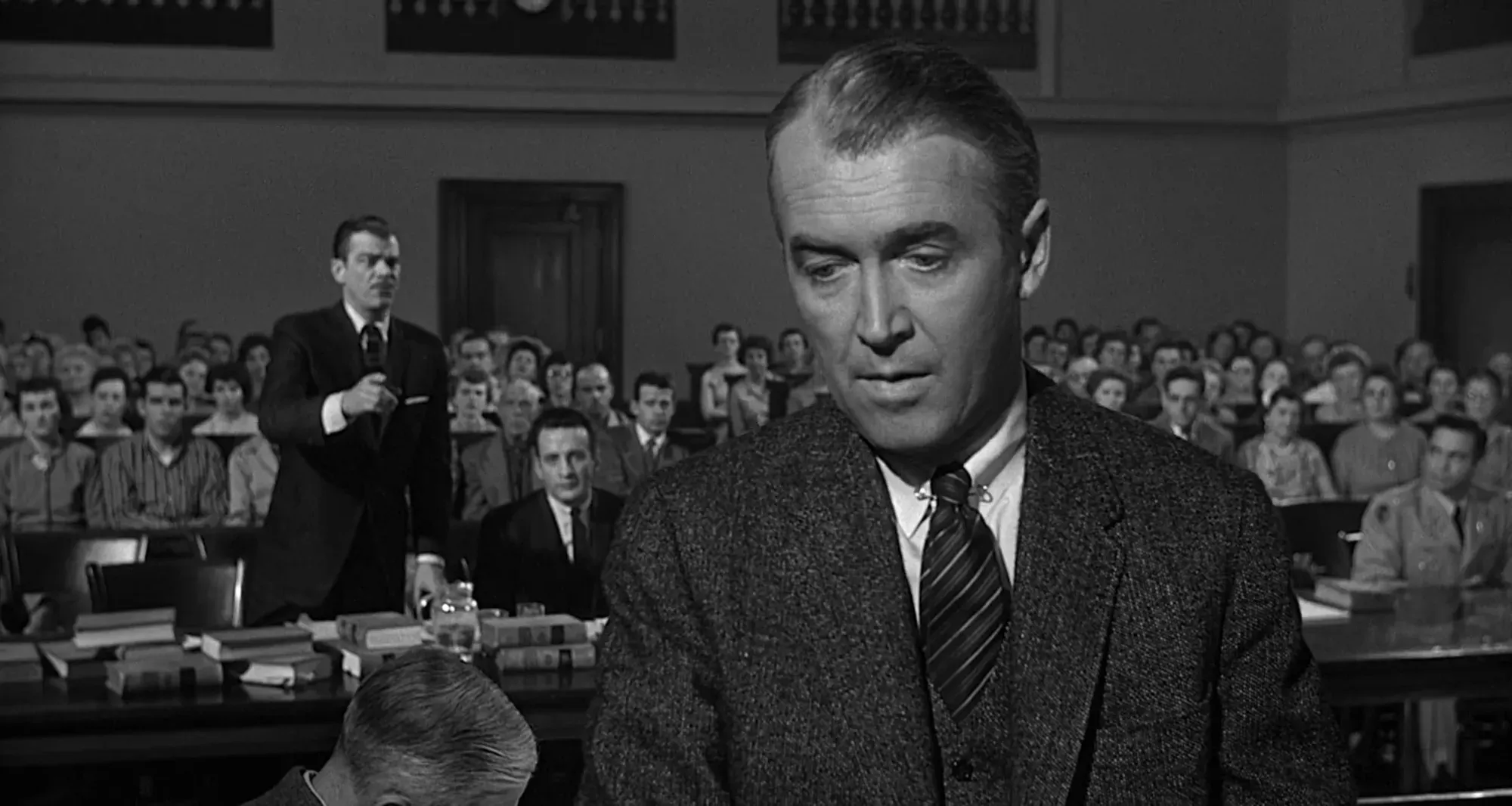
Anatomy of a Murder (1959)
Dir. Otto Preminger · DP: Sam Leavitt · Cast: James Stewart, Lee Remick, Ben Gazzara, Arthur O'Connell, Eve Arden, George C. Scott
Otto Preminger's landmark procedural is a masterclass in legal realism, trading courtroom histrionics for a sophisticated, morally ambiguous game of maneuvers. James Stewart subverts his "everyman" charm with a sharp-witted, cynical edge — a defense attorney more interested in winning than in truth. The film refuses to reveal whether the defendant is guilty, whether the victim deserved justice, or whether the law has anything to do with either question. It remains the gold standard of the courtroom genre precisely because it never offers a comfortable moral high ground — just the spectacle of brilliant people playing a very high-stakes game with very human lives.
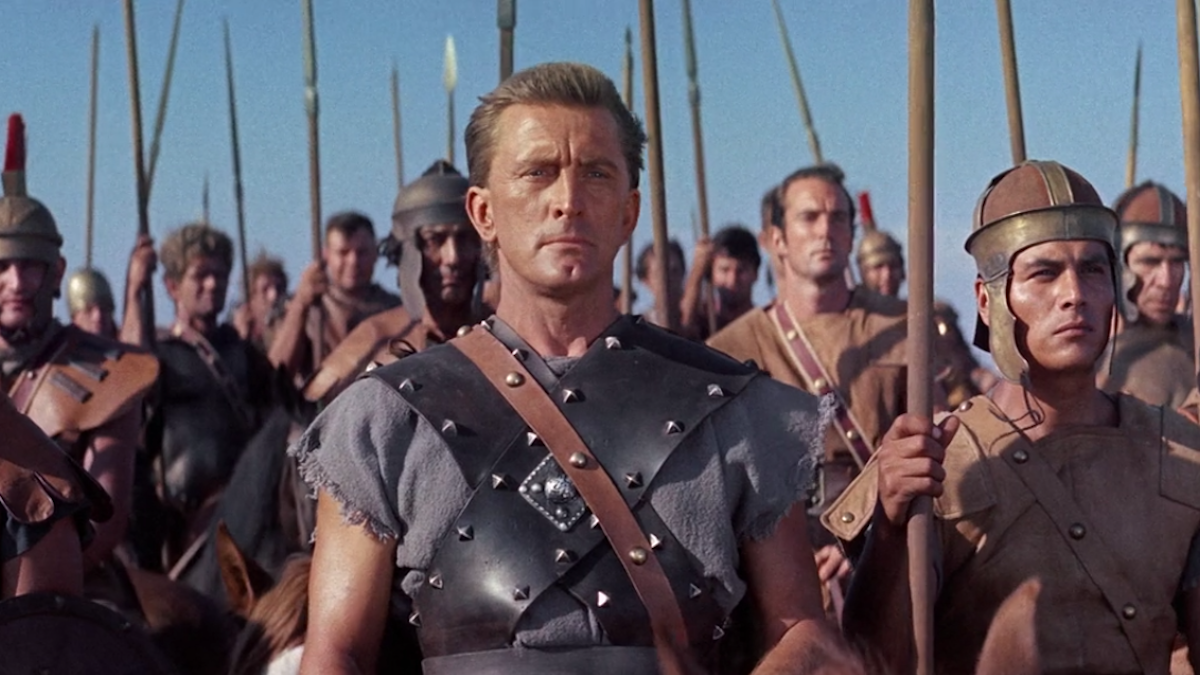
Spartacus (1960)
Dir. Stanley Kubrick · DP: Russell Metty · Cast: Kirk Douglas, Laurence Olivier, Jean Simmons, Charles Laughton, Peter Ustinov, Tony Curtis
Stanley Kubrick took the job as a director-for-hire and still managed to make one of the most subversive epics Hollywood ever greenlit. Beneath the spectacle — the gleaming armor, the blood-soaked battlefields, the legendary "I am Spartacus" finale — beats something genuinely radical: a story about collective resistance, about the power of the many against the cruelty of the few. Kirk Douglas is commanding in the title role, but it's the extraordinary supporting ensemble — Laurence Olivier as the coolly reptilian Crassus, Charles Laughton as a scheming senator, Peter Ustinov winning an Oscar as a toadying slave trader — that gives the film its texture and moral complexity. A muscular, deeply human film that proves even within the crushing machinery of the Hollywood epic, a singular, subversive vision can find a way through.
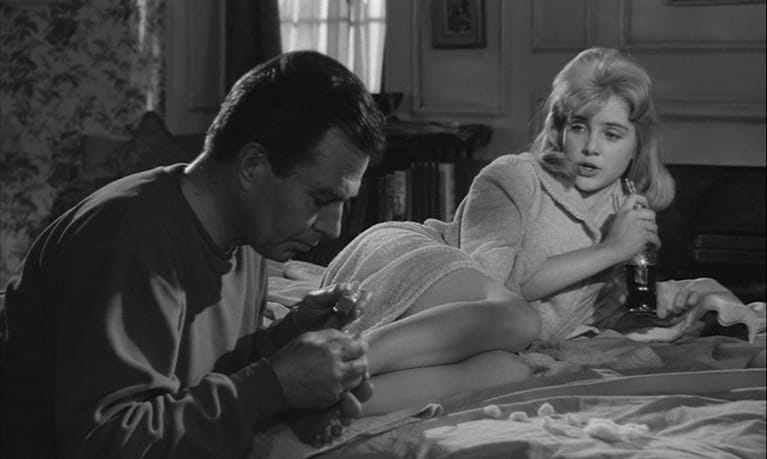
Lolita (1962)
Dir. Stanley Kubrick · DP: Oswald Morris · Cast: James Mason, Shelley Winters, Peter Sellers, Sue Lyon
How do you adapt the unadaptable? Kubrick's answer was to lean into the novel's darkest irony — that Humbert Humbert is not just a monster but a ridiculous one, a pompous intellectual destroyed by his own obsessions. James Mason plays him with devastating self-delusion, and Shelley Winters is heartbreaking as the woman who mistakes his contempt for sophistication. But it's Peter Sellers, as the mercurial Clare Quilty, who pulls the whole enterprise into orbit — a shapeshifting performance that introduces the kind of comic dread Sellers and Kubrick would push to its logical extreme two years later. A darkly funny, deeply uncomfortable tightrope walk of tone that turns a "forbidden" narrative into a tragic, transfixing cornerstone of mid-century cinema.
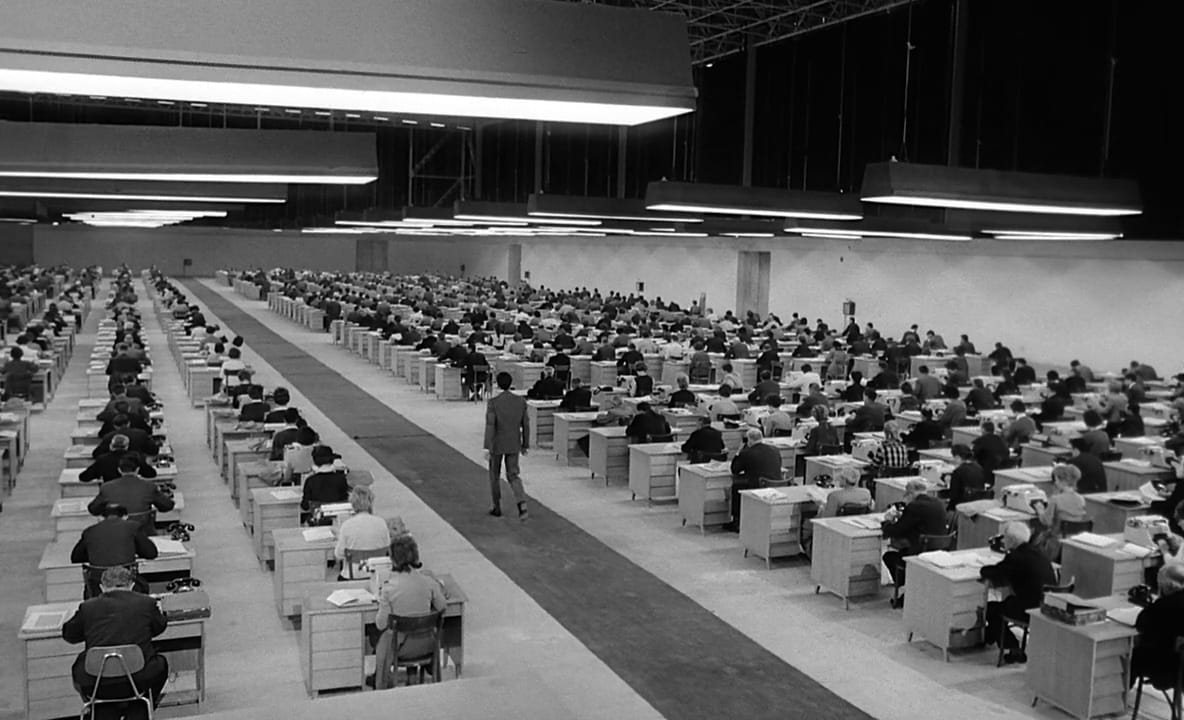
The Trial (1962)
Dir. Orson Welles · DP: Edmond Richard · Cast: Anthony Perkins, Jeanne Moreau, Romy Schneider, Orson Welles
Orson Welles called it his best film, and it's hard to argue. Adapting Franz Kafka's nightmare novel about a man arrested for a crime no one will name, Welles shot in the abandoned Gare d'Orsay railway station in Paris and turned empty architectural enormity into existential horror — endless corridors, cathedral-scale office spaces, doors that open onto more doors. Anthony Perkins' Josef K. is jittery, indignant, and yet desperately reasonable in the face of pure institutional absurdity. The law in Welles's THE TRIAL is a labyrinth with no center, a system that accuses without explaining and punishes without cause. Sixty-plus years later, it remains the definitive cinematic map of what it feels like when the machine turns its attention toward you.
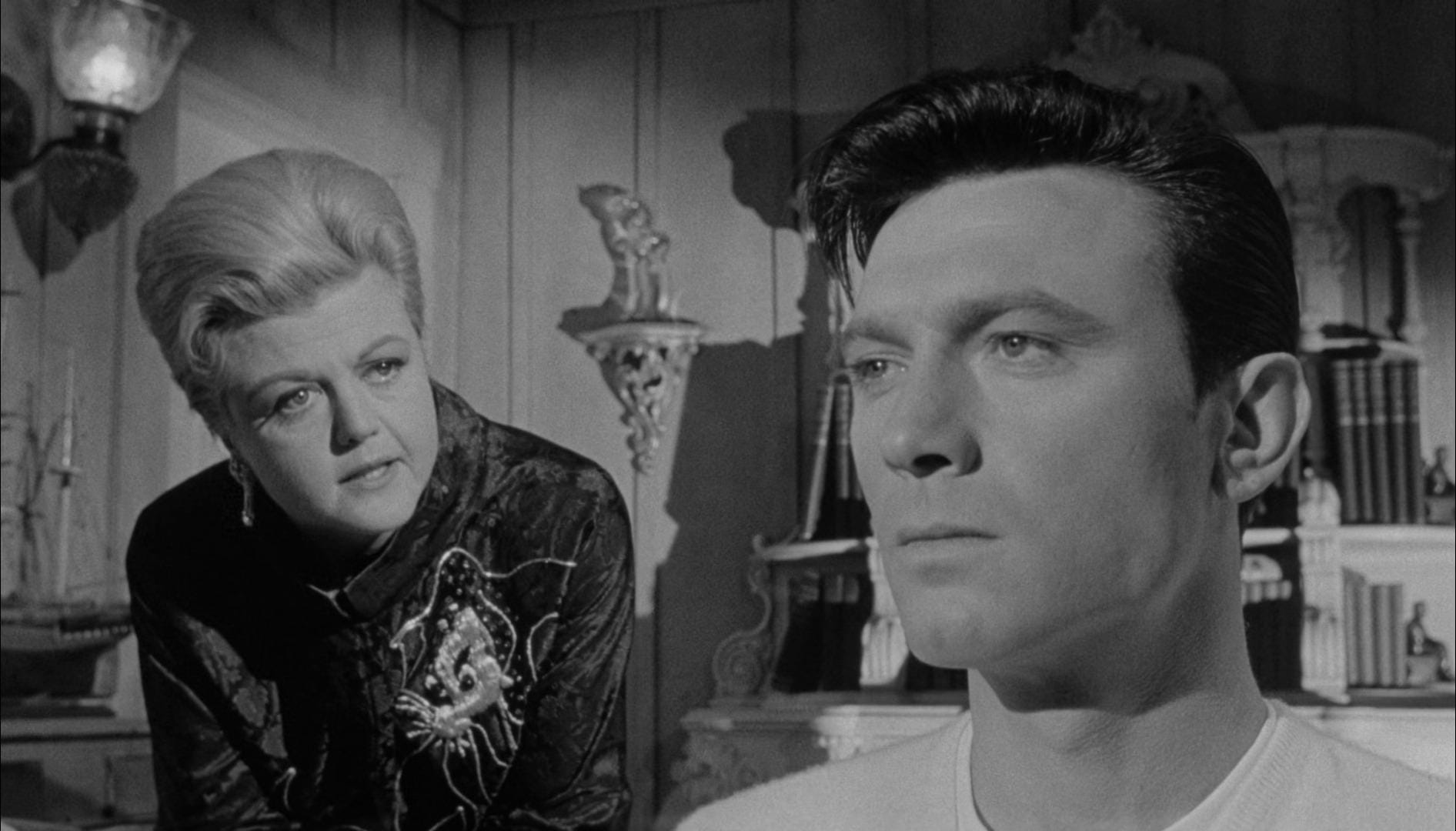
The Manchurian Candidate (1962)
Dir. John Frankenheimer · DP: Lionel Lindon · Cast: Frank Sinatra, Laurence Harvey, Angela Lansbury, Janet Leigh, James Gregory
John Frankenheimer's pressure cooker of paranoia follows a decorated Korean War veteran (Laurence Harvey) who enemy agents have programmed to be an unwitting political assassin, triggered by a playing card and the voice of his own mother. That mother, played by Angela Lansbury in one of cinema's greatest villain performances, is serene, calculating, and genuinely terrifying in her conviction. Lionel Lindon's angular, shadow-heavy cinematography keeps everything slightly off-kilter, like the dream logic of a mind that's been rewired. Frankenheimer builds tension with clockwork precision, turning the Cold War's deepest anxieties — brainwashing, political manipulation, the hollowness of American patriotism — into a visceral, crackling thriller that only gets more prescient with every passing year.
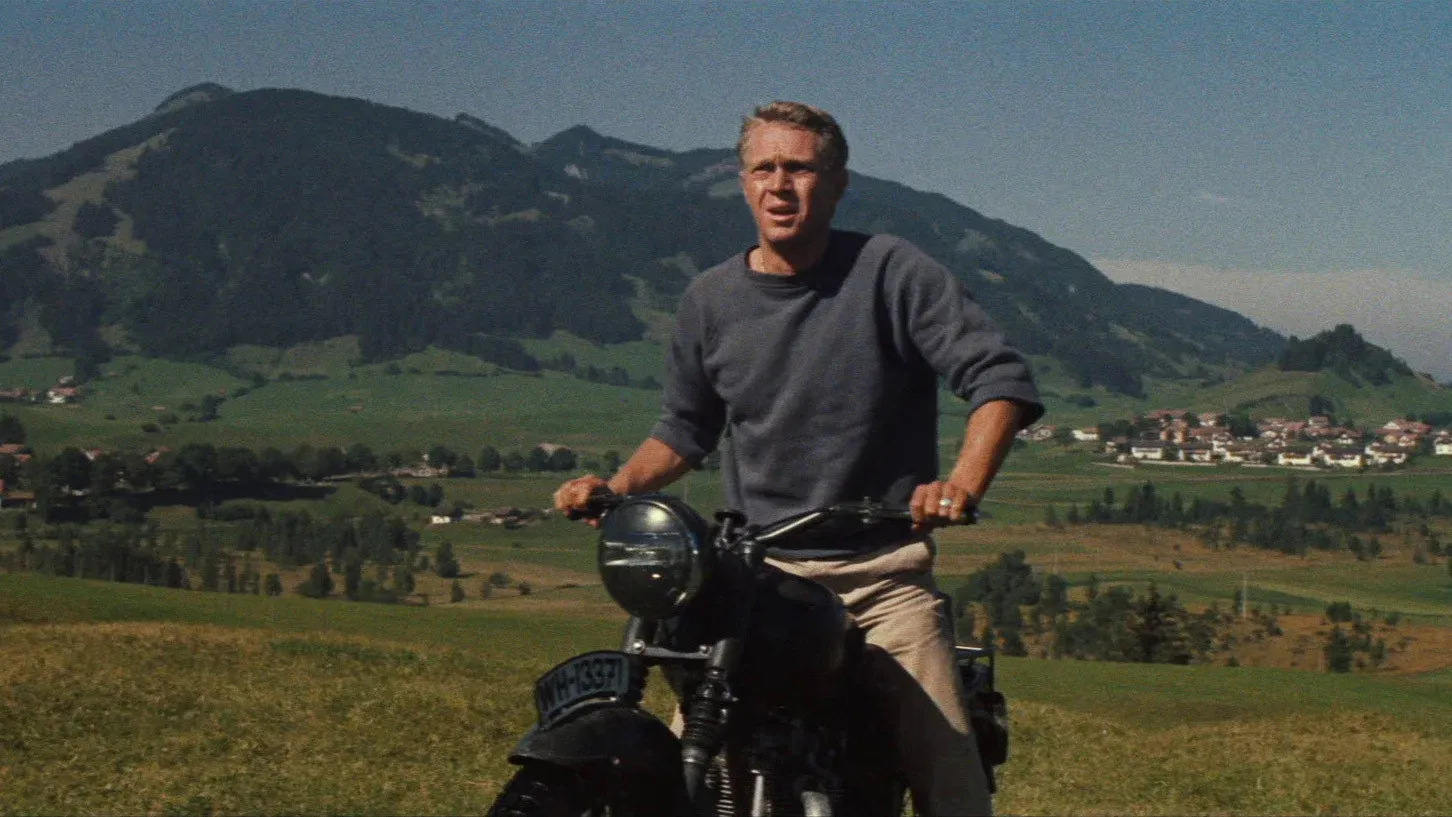
The Great Escape (1963)
Dir. John Sturges · DP: Daniel L. Fapp · Cast: Steve McQueen, James Garner, Richard Attenborough, James Donald, Charles Bronson, Donald Pleasence, James Coburn
John Sturges's magnificent prisoner-of-war epic is many things at once: a rousing adventure, a procedural thriller, a quiet tragedy, and the absolute gold standard of the ensemble "men on a mission" movie. Based on the true story of a mass escape attempt from Stalag Luft III in 1944, it unfolds with meticulous detail and an unhurried confidence — the tunnel-digging, the forgery operation, the tailoring of civilian clothes — before detonating into a thrilling and heartbreaking final act. Daniel L. Fapp's sun-drenched Panavision photography gives the film a deceptive warmth, all rolling hills and blue skies, right up until the moment it doesn't. Steve McQueen is pure 1960s cool on a motorcycle, but the ensemble — Attenborough, Garner, Bronson, Coburn, Pleasence — is what gives the film its soul. An expertly paced, handsomely crafted celebration of defiance, and one of the most quietly devastating films ever made about the cost of that defiance.
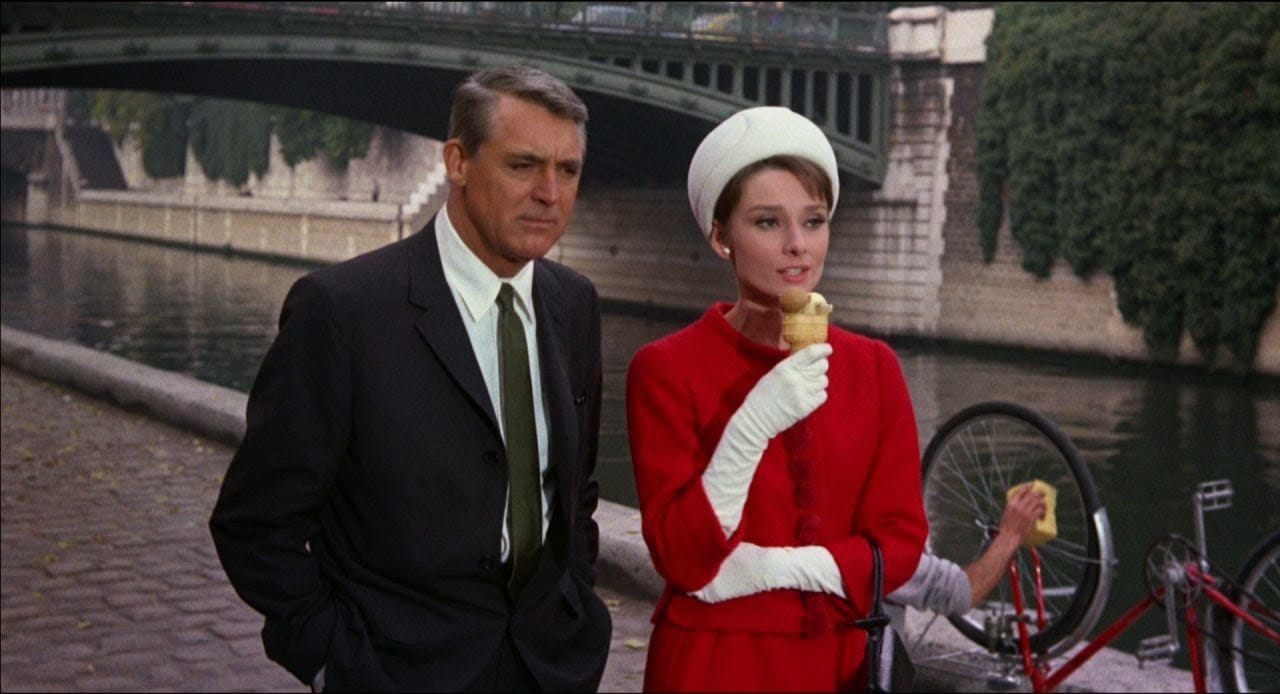
Charade (1963)
Dir. Stanley Donen · DP: Charles Lang · Cast: Cary Grant, Audrey Hepburn, Walter Matthau, James Coburn, George Kennedy
The best Hitchcock film Hitchcock never made. Stanley Donen's CHARADE is like a Technicolor dream of 1960s Paris — Henry Mancini's irresistible score drifting over Charles Lang's lustrous widescreen photography while Cary Grant and Audrey Hepburn demonstrate more charm per frame than most films can manage across an entire runtime. The plot is a labyrinthine "wrong woman" thriller involving a dead husband, a stolen fortune, and a gallery of memorably menacing supporting players (Walter Matthau and James Coburn). But the real pleasure is watching Grant and Hepburn navigate mistrust and desire simultaneously — the film understands that attraction and suspicion are essentially the same feeling. Breezy, sophisticated, and surprisingly ruthless when it wants to be. Proof that Hitchcock wasn't the only one who could master the art of elegant dread.
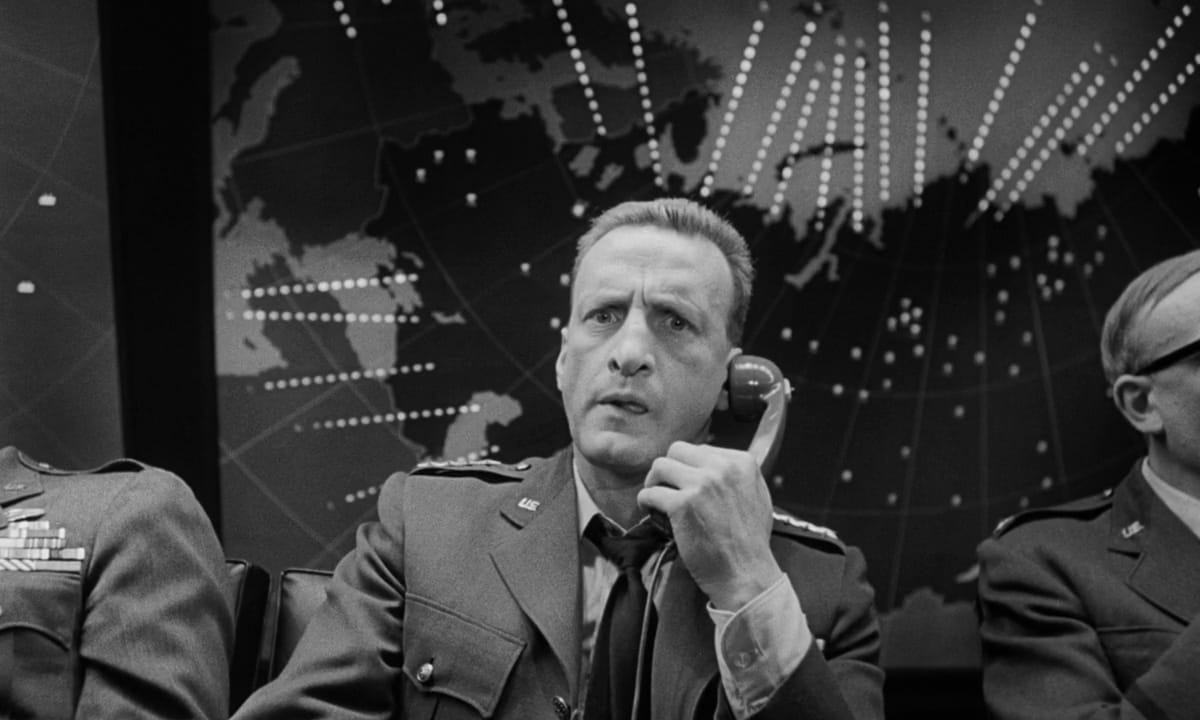
Dr. Strangelove or: How I Learned to Stop Worrying and Love the Bomb (1964)
Dir. Stanley Kubrick · DP: Gilbert Taylor · Cast: Peter Sellers, George C. Scott, Sterling Hayden, Slim Pickens, Keenan Wynn, Peter Bull
The funniest film ever made about the end of civilization, or the most terrifying comedy in the history of the medium. Kubrick's pitch-black satire — shot by Gilbert Taylor in a cold, clinical monochrome that turns nuclear annihilation into a board meeting — tears apart the logic of mutually assured destruction and finds, at its core, not strategy or patriotism but vanity, impotence, and sheer bureaucratic inertia. Peter Sellers plays three roles and is brilliant in all of them, but it's George C. Scott's gonzo Air Force general and Sterling Hayden's fluoride-obsessed, sexually anxious base commander who reveal the film's real thesis: that the men with their fingers on the button are exactly as unhinged as your worst nightmare. One of the all-time great comedies, and a film that grows more rather than less relevant with every passing decade of geopolitical absurdity.
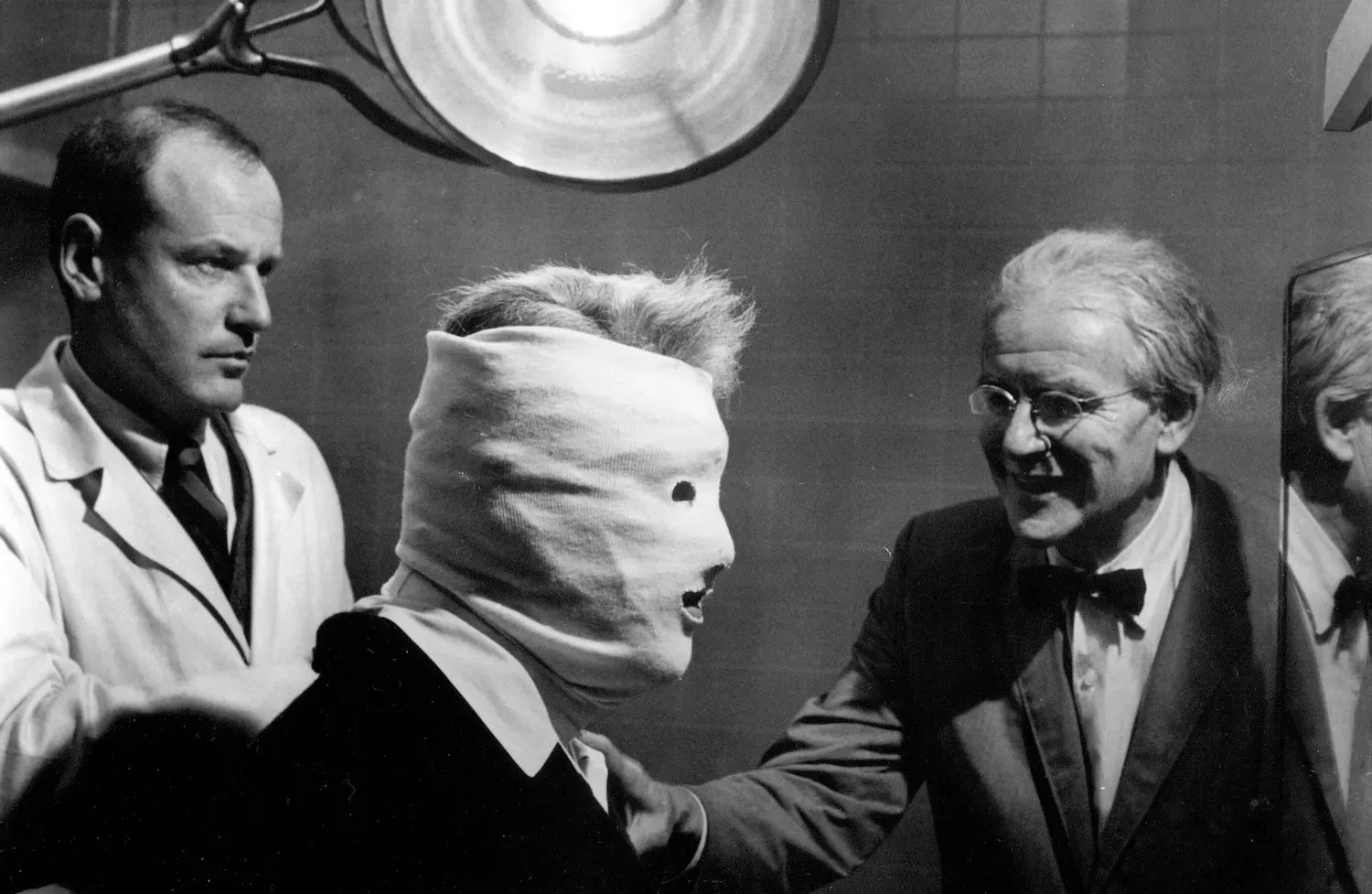
Seconds (1966)
Dir. John Frankenheimer · DP: James Wong Howe · Cast: Rock Hudson, John Randolph, Will Geer, Jeff Corey, Salome Jens
The most unsettling film on this list, and possibly the most underrated American film of the 1960s. John Frankenheimer's SECONDS follows a middle-aged banker who purchases a new identity — a new face, a new life, a new self — from a shadowy corporation that specializes in helping the dissatisfied disappear. The premise sounds like liberation. It is not. James Wong Howe's distorted, wide-angle photography — faces stretched at the edges of the frame, hallways that seem to breathe — turns the whole film into a waking nightmare about the horror of getting exactly what you think you want. Rock Hudson gives the performance of his career as a man who discovers that shedding your identity doesn't free you from it. A haunting, claustrophobic descent into the abyss of selfhood that lingers long after the final, devastating frame — and a prophetic vision of consumer culture's promise to sell you a better version of yourself, right up until the moment it doesn't need you anymore.
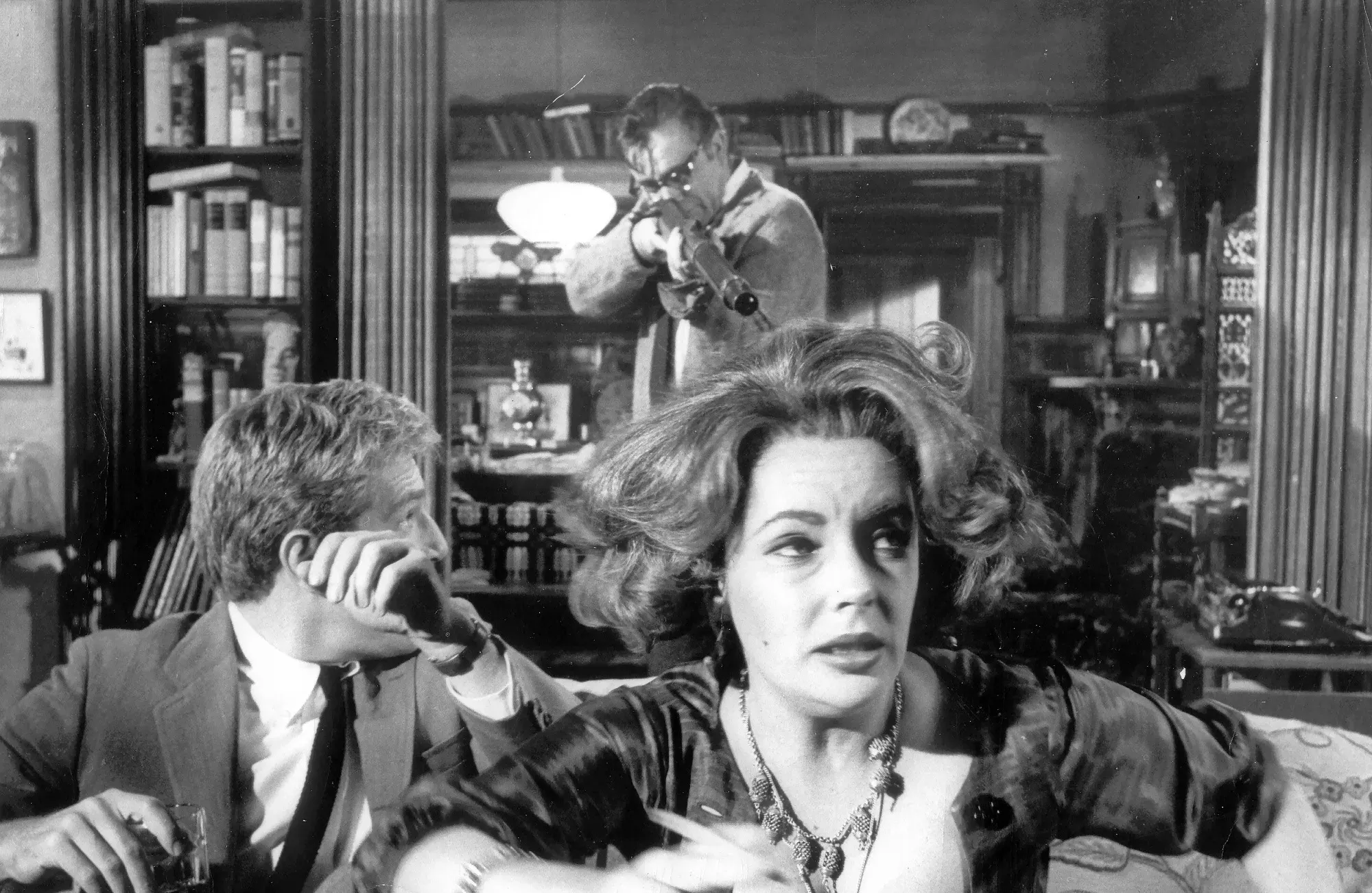
Who's Afraid of Virginia Woolf? (1966)
Dir. Mike Nichols · DP: Haskell Wexler · Cast: Elizabeth Taylor, Richard Burton, George Segal, Sandy Dennis
White phosphorus, soaked in nitroglycerin and flambéed with a napalm flamethrower. Mike Nichols's debut feature — adapted from Edward Albee's stage play and shot by Haskell Wexler in a ravaged, restless black-and-white — is one of cinema's most scorching acts of demolition, an all-night war between two people who have weaponized their intimacy so thoroughly they can no longer tell the wounds from the weapons. Elizabeth Taylor and Richard Burton don't act so much as excavate, dragging up from their real-life marriage something so raw it barely feels like performance. The system here isn't a government or a corporation — it's the institution of marriage itself, the social architecture of mid-century respectability, the mutual playact of happiness that keeps the whole edifice standing. By dawn, nothing is left standing. Winner of five Academy Awards and, four decades before prestige television made it fashionable, the template for every story about two brilliant, terrible people determined to destroy each other and everything they've built.
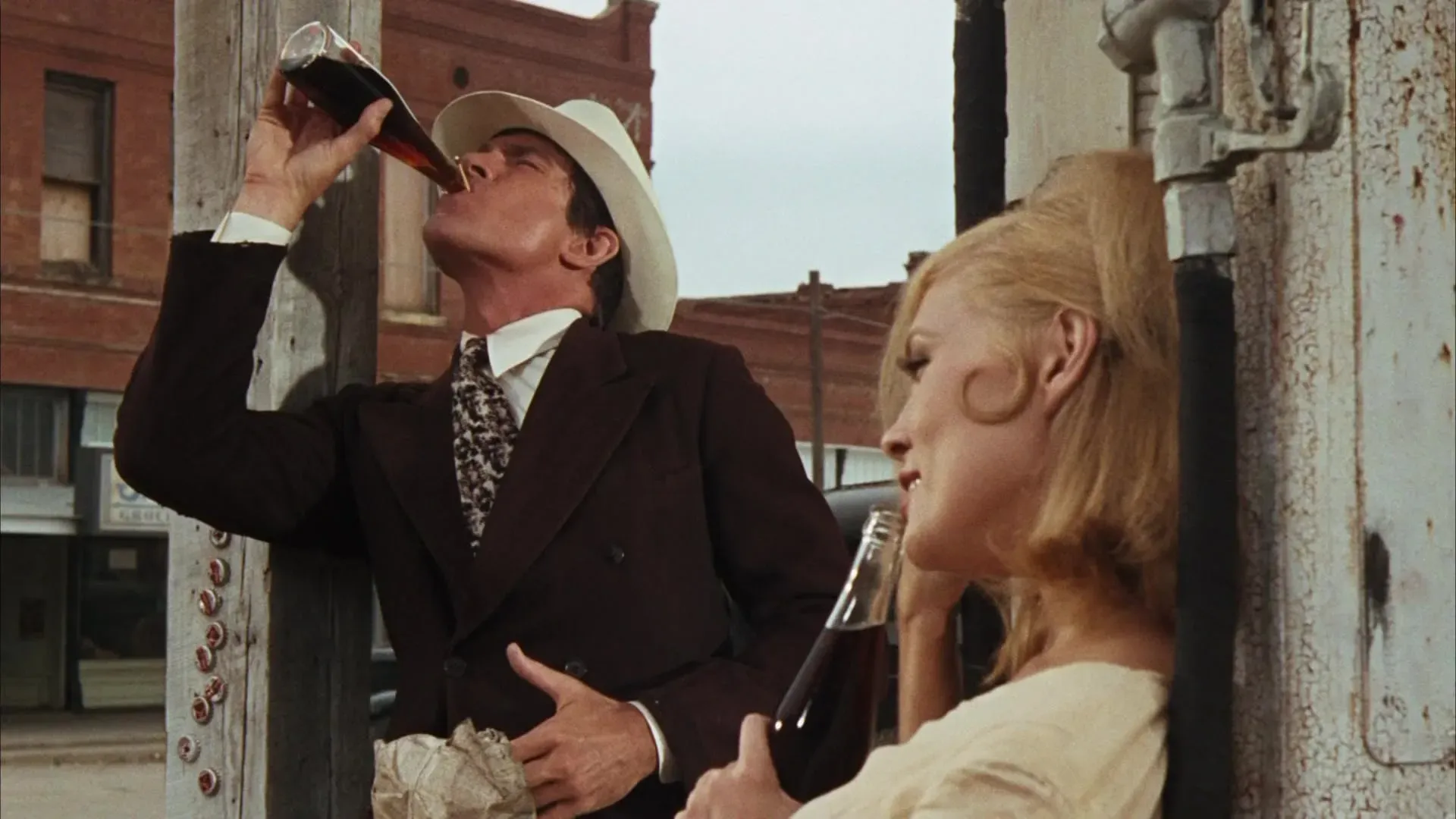
Bonnie and Clyde (1967)
Dir. Arthur Penn · DP: Burnett Guffey · Cast: Warren Beatty, Faye Dunaway, Gene Hackman, Estelle Parsons, Michael J. Pollard, Gene Wilder
The shot heard round New Hollywood. Arthur Penn's BONNIE AND CLYDE didn't just break the Hays Code — it shattered the entire moral universe that code had been built to protect, replacing it with something messier, more glamorous, and infinitely more honest about violence and desire. Warren Beatty and Faye Dunaway made outlaws irresistible: beautiful, doomed, and fully aware of their own mythology. Burnett Guffey's sun-drenched, dusty cinematography captures the Depression-era landscape with the hazy romanticism of a memory that knows it will end badly. Penn was the first American director to employ the kind of editing Peckinpah would later perfect — the slow-motion ballet of bodies in death — and the film's final ambush remains one of the most viscerally shocking sequences in the history of American cinema. A foundational text for everything that followed: the violence, the style, the moral ambiguity, the doomed romance, the absolute refusal to flinch.
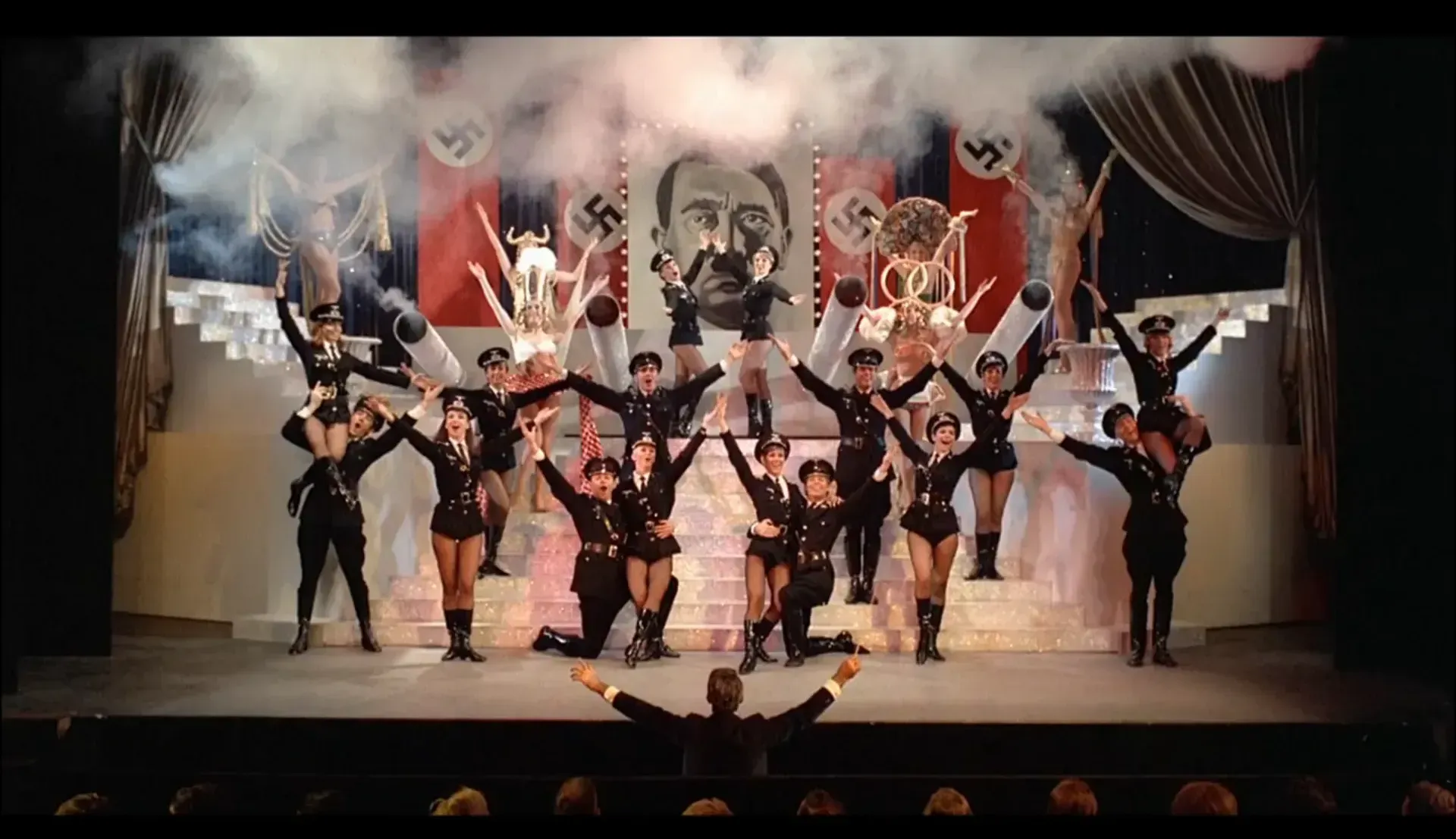
The Producers (1967)
Dir. Mel Brooks · DP: Joseph F. Coffey · Cast: Zero Mostel, Gene Wilder, Dick Shawn, Kenneth Mars, Lee Meredith
Mel Brooks's debut feature is a riotous, fearless act of cultural sabotage — a film that weaponizes bad taste against the ultimate evil and gets away with it entirely because it understands that laughter, deployed with precision, is the most destabilizing weapon available. The scheme at the film's center (produce a guaranteed flop, pocket the investors' money, flee to Rio) is a perfect comic engine: a hustle so audacious it becomes its own kind of art. Zero Mostel's volcanic showmanship and Gene Wilder's anxious, wide-eyed hysteria create a comedic chemistry that feels genuinely unhinged in the best possible way, and "Springtime for Hitler" — a musical number so brazenly offensive it loops back around to genius — remains one of cinema's great set pieces. THE PRODUCERS understands something essential about power: the best way to deflate it is to mock it until it dies of embarrassment.
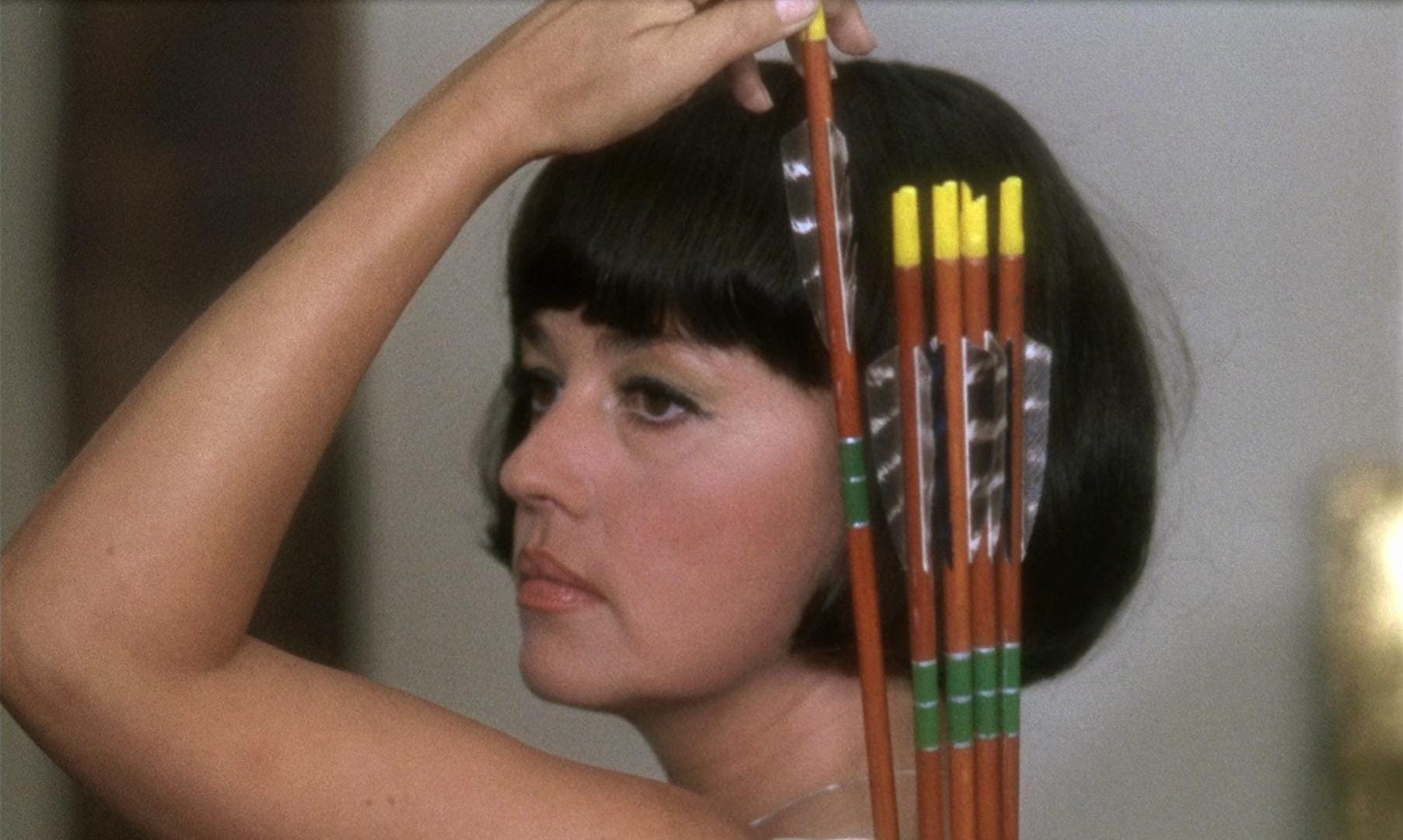
The Bride Wore Black (1968)
Dir. François Truffaut · DP: Raoul Coutard · Cast: Jeanne Moreau, Michel Bouquet, Michel Lonsdale, Charles Denner, Claude Rich
François Truffaut's love letter to Hitchcock — and to the cinema of obsession more broadly — is a sleek, icy revenge thriller anchored by a performance from Jeanne Moreau that operates entirely on its own frequency. Her Julie Kohler moves through the film like grief made ambulatory: methodical, patient, and without mercy, working her way down a list of men who destroyed her world on her wedding day. Raoul Coutard's elegant photography gives the kills a strange, almost aesthetic beauty — each one staged like a painting, preceded by a seduction that is its own kind of art. The system Julie dismantles is one of male impunity: the casual, catastrophic damage men do and are never held accountable for. Truffaut made the prototype for what Tarantino would later perfect with KILL BILL, and Moreau's performance remains one of French cinema's most transfixing.
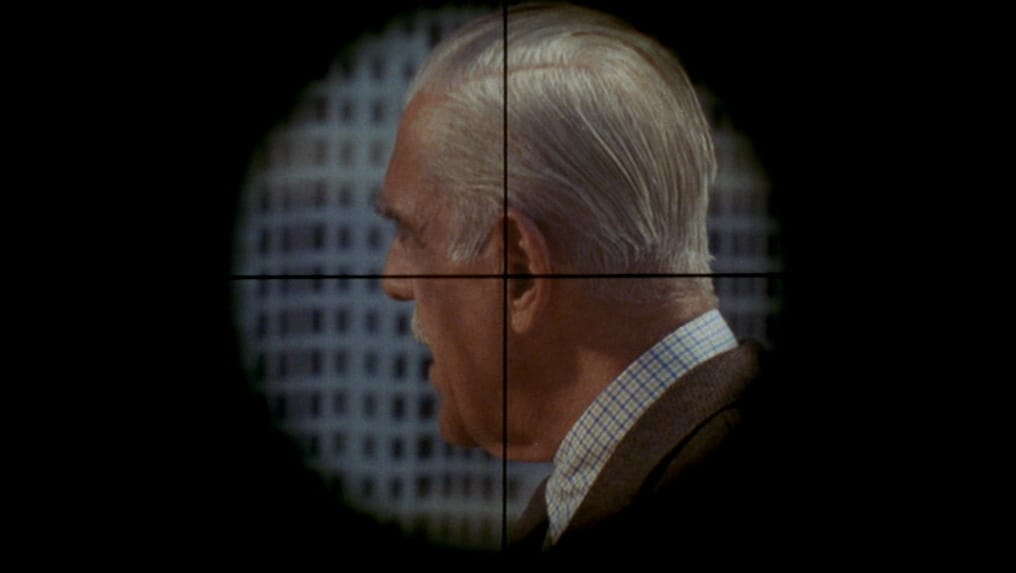
Targets (1968)
Dir. Peter Bogdanovich · DP: Laszlo Kovacs · Cast: Boris Karloff, Tim O'Kelly, James Brown, Nancy Hsueh
Peter Bogdanovich made his feature debut with $130,000, two days of Boris Karloff's contracted time, and a thesis so blunt it could cut glass: the monsters of the old Hollywood horror films have become quaint in the face of the real American monster — the quiet, blank-faced young man with a rifle. TARGETS runs two stories in parallel: an aging horror icon (Karloff, in a poignant swan-song performance) confronting his own obsolescence, and a clean-cut suburban sniper (Tim O'Kelly) beginning his killing spree with no apparent motive, no manifest ideology, no comprehensible inner life at all. Laszlo Kovacs shoots both strands with the same flat, unhurried light, which is exactly the point — the monster and the movie star occupy the same reality now. Released the same year Robert Kennedy and Martin Luther King Jr. were assassinated, TARGETS is one of the most chillingly prophetic films ever made, a lean and devastating opening salvo of the American New Wave.
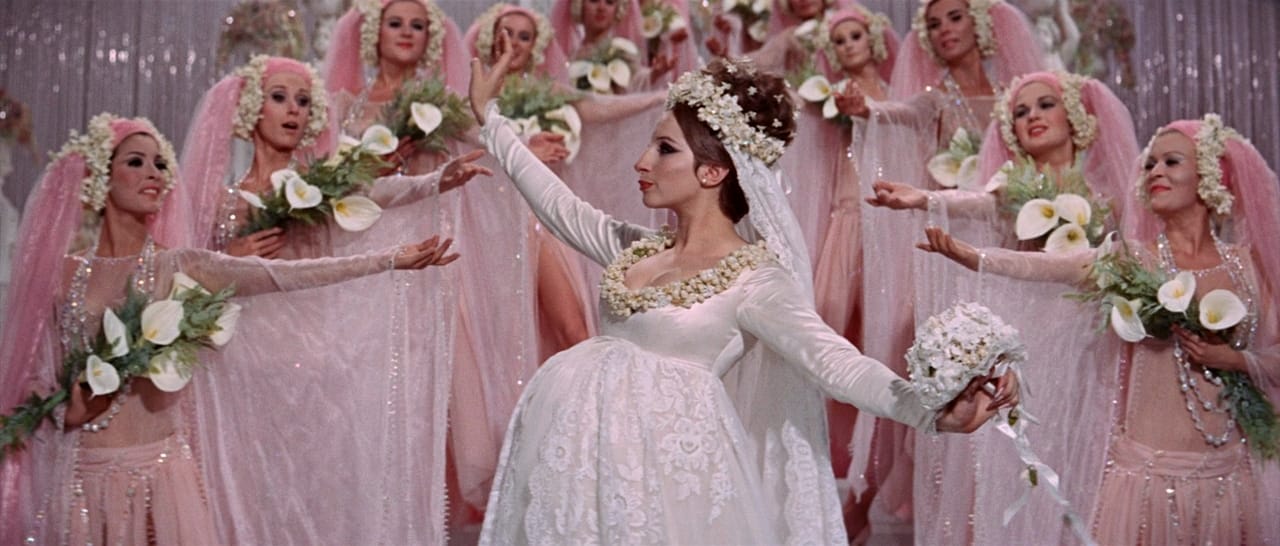
Funny Girl (1968)
Dir. William Wyler · DP: Harry Stradling · Cast: Barbra Streisand, Omar Sharif, Kay Medford, Anne Francis
William Wyler's lush, bittersweet musical biography of Fanny Brice is, at its core, the story of a woman who refuses to be told what she is. Not pretty enough, not refined enough, not the right kind of star — and yet Fanny Brice became one of the great American entertainers of the twentieth century through sheer force of talent and a willingness to make herself the joke before anyone else could. Barbra Streisand's debut film performance is one of the most purely magnetic in the history of the musical: funny, heartbreaking, technically extraordinary, and utterly without vanity. Harry Stradling's opulent cinematography makes the Ziegfeld Follies look like a fever dream. The system Fanny navigates isn't just show business — it's the unwritten contract that tells women to diminish themselves in exchange for acceptance, a contract she gleefully refuses to sign. "Don't tell me not to fly," she sings. A star is born, and the screen has never quite recovered.
That's Volume I. If you made it all the way through — thank you, genuinely. I hope you took something away from it, even if it's just a few titles for the ol' watchlist and a renewed appreciation for how damn good Faye Dunaway looks while she's sippin' Coca-Cola and blastin' cops.
Volume II is coming, and it's going to hurt in the best possible way. We're moving into 1969–1973 — the years when New Hollywood stopped knocking politely and kicked the door down — opening with Sydney Pollack's THEY SHOOT HORSES, DON'T THEY? and closing with Fred Zinnemann's THE DAY OF THE JACKAL.
Fifteen more films. The machine gets bigger. The stakes get higher. The endings get darker, and the truth gets clearer. There's comfort in the darkness, once your eyes adjust.
Stay tuned. 📺
🍕 POP 'N' PIZZA is your deep-dish slice of pop culture's weirdest, most esoteric corners—served with extra sauce and a side of existential dread. Written by Adam Frazier.