G O L D I E S: T W O
It’s curious. It’s patient. It’s growing. Told without dialogue, GOLDIES follows an excavation crew that uncovers a mysterious relic left buried by their ancestors—one that was never meant to be found.

P A R T T W O
The decontamination bay is a cramped, low-ceilinged module lined with plating dulled by age, rubber seals cracked and stained at every seam from years of chemical washdown. The deck is rusted grate metal, raised over a drainage sump that swallows runoff the instant it hits the floor.
Overhead, ductwork groans under negative pressure, filters yellowed behind brackets that were never meant to be permanent. Fluorescent tubes flicker behind wire cages, and above the hatch, a hazard beacon turns slow and amber, keeping its own private rhythm. Spray nozzles hang coiled against the bulkhead, chemical tanks racked along the same wall, their warning labels gone illegible with corrosion.
Bolted beside the door, a logbook holds the record of every decontamination this crew has run in it — kept on paper, since the station's own memory has a habit of losing itself mid-cycle — in grease pencil, a dozen different hands scrawling the same few words on repeat: Resolved. Resolved. Inconclusive. Purged.
Technicians fall into line, suits sealing in the same sequence they always do — glove, collar, cuff — hands finding each clasp without once looking down. Arms lift in unison. A wash of disinfecting mist sweeps floor to ceiling. Above the door, a counter ticks down in the same tired amber digits worn into every readout on the station.
Zero. The seals crack open down the line. Gold faces surface from behind the visors — damp, hollow, none of them young. Gloved hands go instinctively to bare forearms, turning them over under the light, checking for something none of them could name if they found it. It isn't the first time this crew has stood in this room, hoping not to find something.
Elsewhere, the search runs its course, procedural and exact. A control room lit blue by a wall of monitors, a technician logging timestamp after timestamp as footage scrolls — corridor 4, corridor 9, cargo tier, empty, empty, empty. Infrared renders the station in cold ghost-light; nothing moves that shouldn't. Sweep logged. Sweep signed. A second tech runs the same grid again anyway, without being asked to, the way people do when the numbers are correct and still don't feel right. Data pulled and cross-checked against station schematics twice, twice more. Every field comes back the same, filed in the same flat shorthand: Negative.
What's left, in the absence of anything else, are the chrysalis remains — dulling in a containment tray, the jade gone the color of old moss. A tech logs the decay with the same flat hand as everything else — weight, texture, color — and sets a spent sample near a bank of potted plants no one's paid attention to in months.
By the next shift, those plants aren't dying anymore.
This finding moves through the science team quick and quiet, more unease than triumph. A diluted trace of chrysalis matter doubles a seedling's growth in six hours. A flake of shell dropped into a beaker of stagnant water clears it to drinking standard by morning. A sealed air chamber, stale from months of recycling, reads clean within the hour. Nobody celebrates. Whatever this thing is, whatever it carried, it doesn't just grow. It repairs. And a station this old, held together this long past its intended service life, knows exactly what that's worth.
A technician runs isotope analysis on two samples side by side, checking the machine's calibration tag out of old habit before trusting anything it says. The first reading holds steady across three runs: consistent, clean, unambiguous. Three hundred thousand years. They stare longer at this number than its size should warrant — because it isn't the size that's wrong. It's the placement. Every account the Goldies have of themselves — every myth of origin, every fossil record their own scholars have ever dated — puts their history at a fraction of that span. This ruin isn't just old. It's older than the Goldies have any right to be.
The second sample doesn't return a number at all.
The instrument cycles. Recalibrates on its own. Tries again. What comes back isn't a date so much as a refusal — the read pegs at the outer limit of the machine's range and stays there, as if the shell isn't old so much as it doesn't belong to time at all. They switch instruments, run the same shaving through older, cruder equipment that has no calibration left to lose.
Same result. No number. Just the needle sitting dead against the far end of the dial, patient, unmoved, the way it might sit against a wall.
No one is called. Nothing is said. The technician sits with the two readouts side by side — one number too large to reconcile with their own species' history, and one that isn't a number at all — aboard a station that should've been decommissioned centuries ago, kept operational by careful hands and corporate neglect.
A ventilation grate, low in a corridor wall, looks out on a supply bay gone dim and still. Something shifts behind the vents — not a shadow but a shape, low and jointed, pausing at the light just long enough to almost resolve before it's gone again.
Later.
A basin of runoff water sits forgotten in a corner, overlooked between one inventory count and the next. The shape comes free of the wall for the first time — slender, four-legged, feline, its whole body a woven lattice of vine and leaf and small budding flower, light passing through the gaps as it would through a stained-glass window. Nothing about it is still. Its sides bristle with something like breath. Small folds at its head open and close, slow, deliberate, in a rhythm the eye reads as blinking before the mind can explain why.
It lowers what might be a head to the basin and drinks — a leafy tongue-shape drawing the water up and through it, vein by vein, the body brightening faintly as it does. Then it's gone again, folded back into the gap it came from, leaving the basin half empty and a thin trail of water beading across the floor.
No one is there to see it. The bay's overhead camera catches eleven seconds of it before the feed drops to static — one more blind spot in a surveillance grid that's been running on outdated code longer than anyone currently aboard has held their post. The clip is flagged, filed, appended to a case still logged open under the same number nobody's closed since the lab. Case status, unchanged: Ongoing.
More entries are logged in the following weeks, each thinner than the last. A half-second silhouette on a loading-dock feed. A trail of beaded water with no source found nearby. A tech on a night round who reports movement in a stairwell and, asked to describe it, gives three different answers in the same debrief. Filed. Filed. Unconfirmed. No two sightings agree — a shadow here, a shape there, never quite the same size twice. Whatever it is, it won't hold still long enough to be known.
One entry is different. A maintenance feed, timestamped against a fixed reference — a grate no wider than a hand's span — catches the same silhouette square in frame, and it no longer fits the grate the way the first sighting did. Broader. Longer. Still growing.
Above it all, in a chamber built to older lines than the rest of the station — repurposed rather than replaced, the way everything out here eventually is — three positions sit around the same table and do not agree.
A Scientist lays out the readings side by side: the ruin's age, older than the Goldies' own account of themselves; the shell's age, which isn't an age at all, just an instrument refusing to answer. The case for more time, study, and caution before anyone decides anything comes in plain, careful language — the tone of someone used to being the last line of defense against a decision made too fast.
An Overseer studies a data-slate, its catalog mark worn soft and half-illegible from years of the same thumb passing over it, the same as it's been since this whole thing began — and doesn't look up until the figures are collated. What's tallied there isn't caution. It's yield: air, water, growth, repair, multiplied out across a station, a fleet, a species that could use all four.
The yield gets run twice before the Overseer trusts it. The third pass isn't for the yield. A thumb drags back up the file instead — past the numbers, to the image logged above them: the shell, warm and jade-dark, exactly as it looked the moment it first came free of the ground. Beside it, still lit at the edge of the same screen, the Scientist's two readings wait: an age too old to make sense of, and an age with no number at all. The thumb doesn't move again for a long moment. Then the hand closes over the slate anyway.
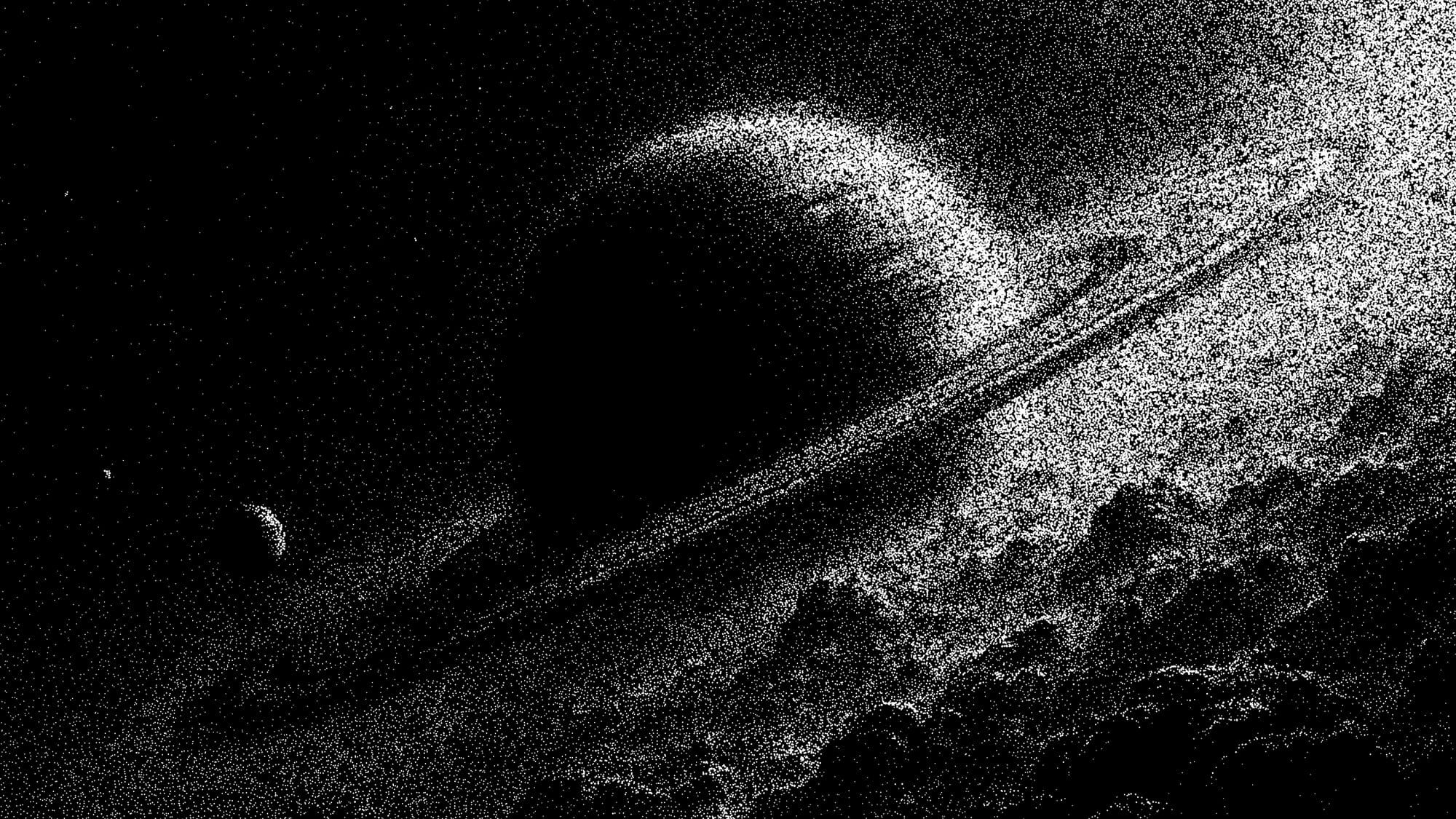
The Council Elder says nothing. Behind them, through the viewport, the gas giant hangs vast and banded, wrapped in its slow rings of ice and dust — old light behind it, indifferent to anything decided in this room. On the table between the three of them, a projection turns slowly in the air: the temple, small and sun-bleached and silent, the same carved face that greeted the astronauts at the very start.
It turns once more before the Elder's hand stops it, mid-rotation, caught between two faces of the same structure — walls built outward, like something meant to keep whatever's inside from ever leaving, and within them, golden figures with palms lifted, built to honor whatever it is they're facing. Built to imprison. Built to worship. The Elder doesn't choose between them.
A hand presses flat over the case file instead. A single new mark goes into it, fresh over every mark logged there before: sealed. Whatever's just been decided doesn't leave this room in any form but silence.
TO BE CONCLUDED... NEXT WEEK!
🍕 POP 'N' PIZZA is your deep-dish slice of pop culture's weirdest, most esoteric corners—served with extra sauce and a side of existential dread. Written by Adam Frazier.