The Mandalorian and Grogu

"The Maker" himself, George Lucas, has been very clear about what kind of stories he wanted STAR WARS to tell. He made it for 12-year-olds. His goal was to create grand, joyous adventures in far-off galaxies — modern fairy tales that restored a sense of wonder, dreams, and fantasy to a generation mired in Vietnam, Watergate, and the bleak, nihilistic cinema of the 1970s. He saw the saga as a contemporary myth designed to inspire children with simple, powerful ideas: heroism, moral choice, redemption, and the eternal struggle between good and evil.
In that spirit, Lucas consciously followed the "Disney route" — big emotions, clear stakes, high-energy action, broad humor, and heart. He was never afraid to be silly or cute. From the bickering droids, cackling monkey-lizards, and teddy-bear warriors of the Originals to the incompetent battle droids and clumsy Gungans of the Prequels, Lucas embraced slapstick comedy and lovable creatures without a shred of irony. When adult fans complained that something was "too silly" or "for kids," Lucas stood firm: STAR WARS should prioritize being fun, joyful, and accessible above pleasing cynical adults. Being silly and unapologetically earnest wasn't a creative compromise. It was the mandate.
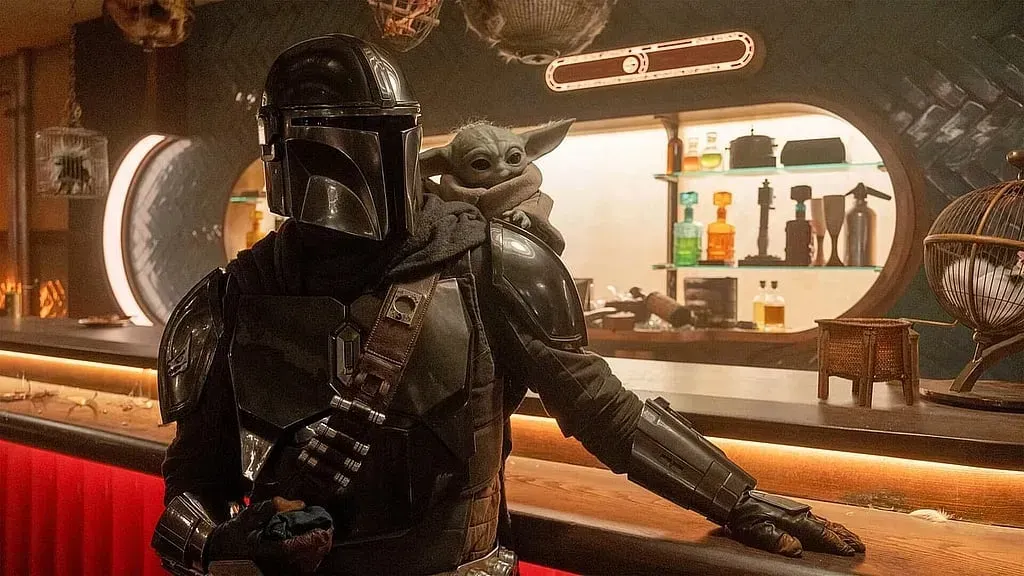
That's exactly why Jon Favreau's THE MANDALORIAN AND GROGU feels so true to the spirit of STAR WARS. It's made for kids — full of heart, humor, and silly, adorable creatures — and it delivers hope and wonder to a new generation navigating a crumbling empire, just as Lucas did during the turbulent 1970s.
When I think back to what hooked me about STAR WARS as a kid, it wasn't Lucas's deep understanding of Joseph Campbell's THE HERO WITH A THOUSAND FACES or the homages to Kurosawa's THE HIDDEN FORTRESS. It was the funny robots, a walking dog-man, and all the aliens and creatures — Jawas, Banthas, Dewbacks, Greedo, Hammerhead, and the patrons of Mos Eisley Cantina.
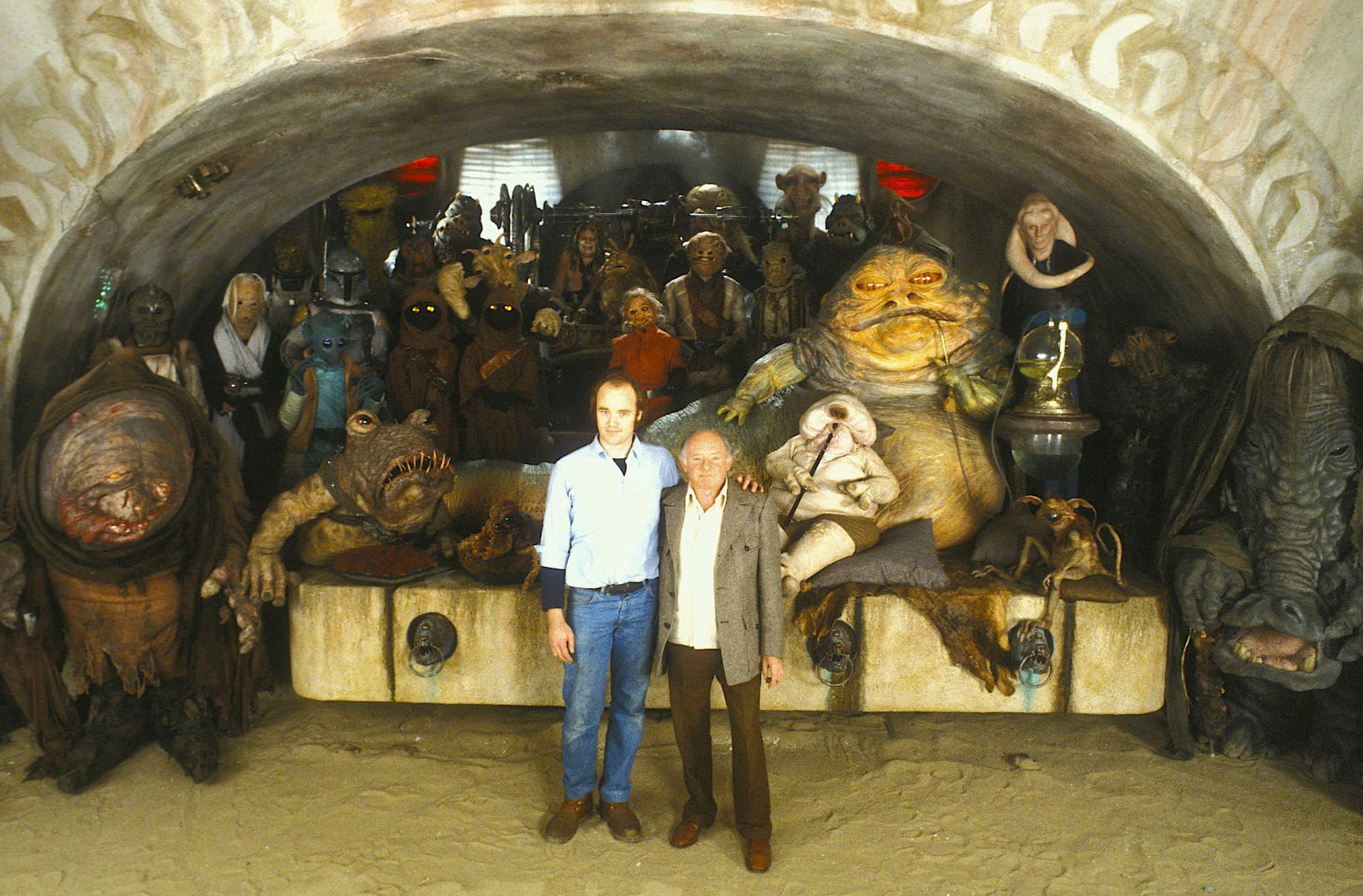
I watched the VHS tape of FROM STAR WARS TO JEDI: THE MAKING OF A SAGA a hundred times as a kid — when I wasn't watching the Original Trilogy, CARAVAN OF COURAGE: AN EWOK ADVENTURE, or EWOKS: THE BATTLE FOR ENDOR — and revered not just the creatures, spaceships, and worlds but the ILM wizards who built them: Joe Johnston, Phil Tippett, Stuart Freeborn, Dennis Muren, Lorne Peterson, Ken Ralston, John Dykstra. Their ingenuity deepened my love for STAR WARS as not just a story but as art — the art of breathing life into rubber, latex, and stop-motion puppets.
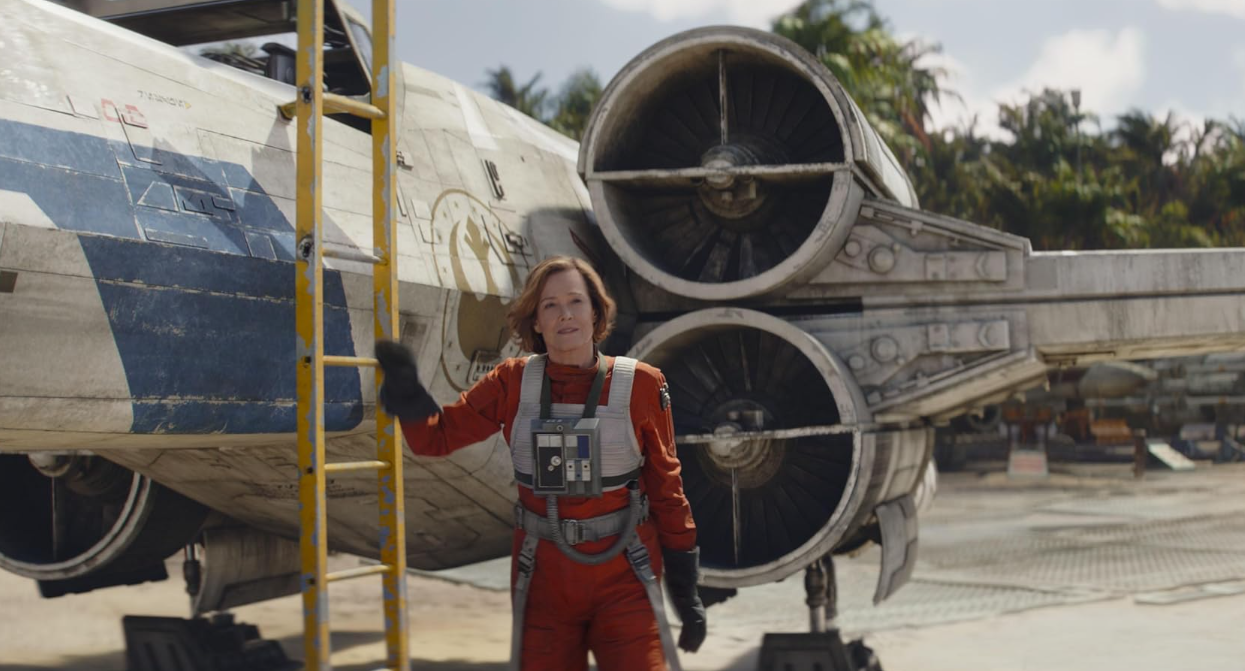
THE MANDALORIAN AND GROGU feels like a love letter to that Creature Shop ethos — a celebration of design and craftsmanship where every frame is packed with weird little beings daring you to emotionally invest in them. If you asked six-year-old me to pitch a STAR WARS movie, it would be 100% aliens and creatures, with no humans in sight. This one is 98% that — and the other two percent is dedicated to Ellen Ripley herself, Sigourney Weaver, in an X-Wing pilot jumpsuit, which my six-year-old self couldn't have even dared to dream possible.
After years of mainline sequels and prequels carrying the insurmountable expectation of being everything to everyone, director Jon Favreau and co-writer Dave Filoni have mounted a big-screen transition that understands exactly what it wants to be: a thrilling, accessible space adventure that tells a story that is meaningful to parents and children alike.
Set in the aftermath of the Empire's fall, the film finds bounty hunter Din Djarin (Pedro Pascal, Brendan Wayne, Lateef Crowder) and his Force-wielding ward Grogu working alongside the fledgling New Republic to hunt down the Imperial warlords still scattered across the galaxy. When Colonel Ward (Weaver) offers Djarin a new mission — rescue Rotta the Hutt (Jeremy Allen White), the son and heir of the late Jabba, from a dangerous crime syndicate in exchange for intel on a high-value Imperial target — he reluctantly accepts. What follows is a propulsive, planet-hopping adventure that layers double-crosses, unexpected alliances, and a rogues' gallery of gloriously weird creatures onto a deceptively simple father-and-son story at its core.
Expanding a television series built on an episodic, "mission-of-the-week" structure into a grand feature-length event is no small feat. There was a real risk that stretching this canvas to the silver screen might expose the narrative as too thin, or overwhelm its intimate emotional core with the mandatory bloat of modern blockbusting. Thankfully, Favreau scales up the action without losing the heartbeat of the show. The film doesn't labor under the exhausting weight of wrapping up a saga, nor does it get bogged down in world-building purely for the sake of future spin-offs. The pursuit of the central bounty carries Djarin and Grogu across a series of new worlds, each with a distinct visual identity that feels like classic, lived-in STAR WARS.
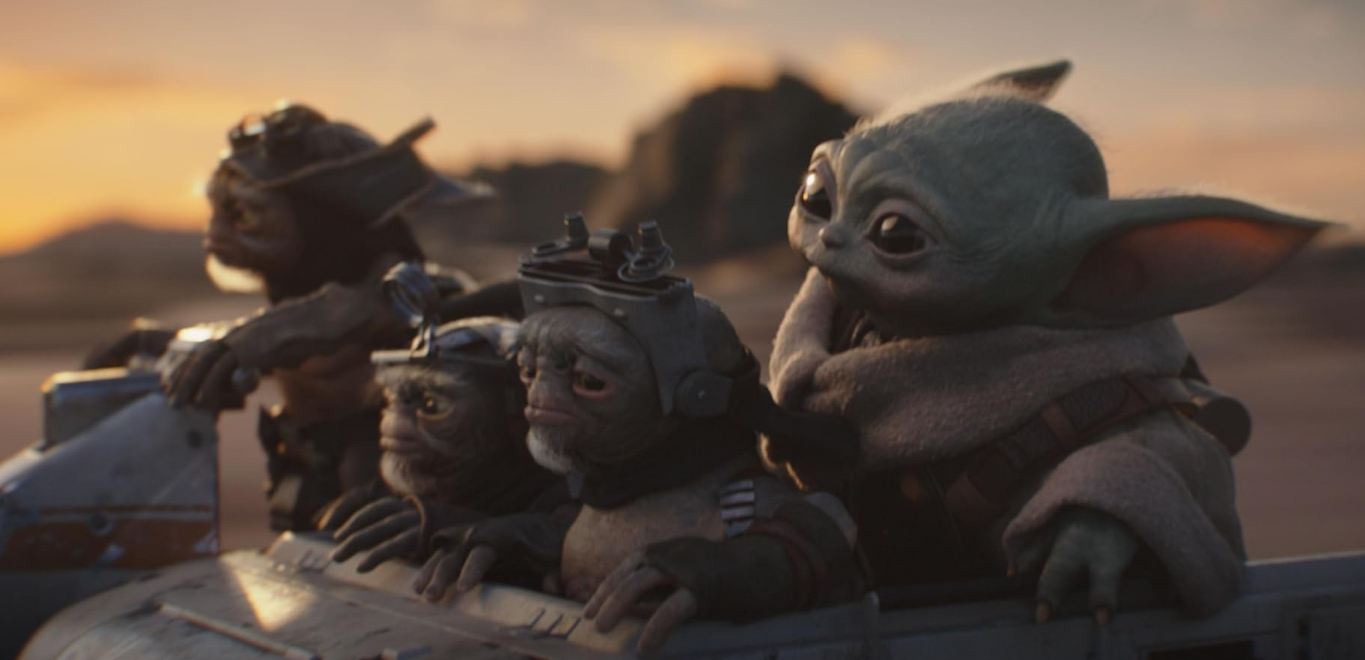
That immense aesthetic success belongs to the artisans behind the camera — designers, costumers, prop builders, and the creature effects wizards at Industrial Light & Magic, who utilize every tool in the toolbox, from stop-motion animation, motion-control miniatures, and practical animatronics and puppetry to computer-generated characters and cutting-edge StageCraft technology. When the film leans into being a full-on alien extravaganza — like an incredible "Dejarik Match" monster brawl on Shakari — it works because the characters on screen are so completely realized.
At the center of it all remains the palpable, unspoken chemistry between Pedro Pascal's weary, honorable Din Djarin and Grogu. Even with Pascal operating largely behind a chrome Beskar helmet, the emotional stakes are deeply felt. Grogu — a character cynical adults once dismissed as a merchandising vehicle — anchors the film with a wide-eyed, unapologetic earnestness that mirrors the innocence Lucas championed in 1977.
THE MANDALORIAN AND GROGU doesn't interest itself in subverting expectations or fracturing audience trust with narrative misdirection. It's an infectious, fast-paced, joyous ride that reminds us the galaxy far, far away is at its best when it stops trying to please hyper-critical adults and simply remembers how to look at the stars through the eyes of a child.
🍕 POP 'N' PIZZA is your deep-dish slice of pop culture's weirdest, most esoteric corners—served with extra sauce and a side of existential dread. Written by Adam Frazier.