While the World Burns: Volume IV
A film series covering 80 films from 1959 to 1989, from the waning days of the studio system through the early tremors of New Hollywood to the excess of the '80s.

By 1975, the revelations were over. Watergate ended — not with accountability but with a pardon. Vietnam ended in defeat, the last helicopters lifting from a Saigon rooftop. The Church Committee's findings were public record: the government had been spying on its own citizens, plotting assassinations, and infiltrating political movements for decades. The machinery of power had been exposed and, unchanged, simply kept running.
What followed was a national nervous breakdown. In the span of two years, America had to hold two contradictory things at once: its institutions had betrayed it at every level, and it was time to celebrate. The Bicentennial arrived on July 4, 1976, while the country was forced to confront the fact that it no longer knew who it was. The individual had been lied to by every institution designed to protect them. That knowledge didn't go away when the fireworks ended.
American cinema responded by getting angrier. The fifteen films in this volume — made between 1975 and 1979, from ONE FLEW OVER THE CUCKOO'S NEST to APOCALYPSE NOW — are portraits of individuals trying to survive, resist, or make sense of systems that revealed themselves as indifferent at best and predatory at worst. These films don't just map the system. They rage against it — and occasionally, in the case of CLOSE ENCOUNTERS OF THE THIRD KIND, look past it entirely toward something the decade had nearly forgotten: wonder.
One Flew Over the Cuckoo's Nest (1975)
Dir. Miloš Forman · DP: Haskell Wexler · Cast: Jack Nicholson, Louise Fletcher, Brad Dourif, Will Sampson, Danny DeVito, Christopher Lloyd
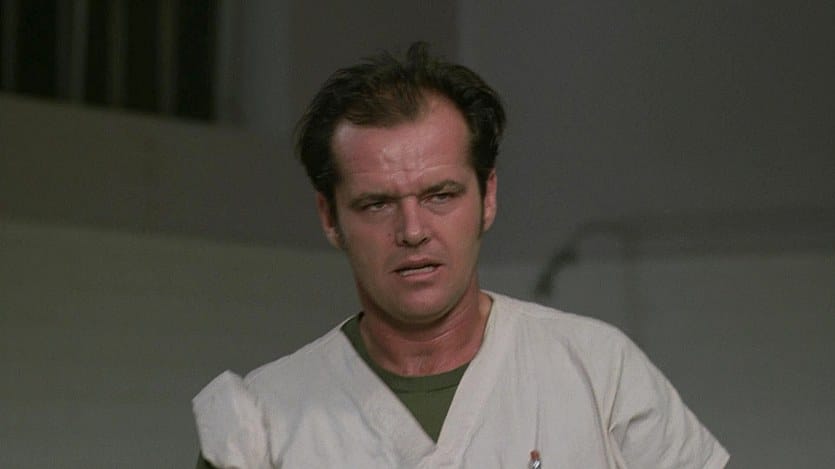
Miloš Forman's adaptation of Ken Kesey's 1962 novel stars Jack Nicholson (in the performance that earned him his first Academy Award) as R.P. McMurphy, a decorated Korean War veteran with a history of insubordination and assault who fakes insanity to escape a grueling prison work farm—figuring the psychiatric ward will be an easier sentence. He’s wrong.
What he's walked into isn't a hospital; it's what Kesey calls the Combine: a machine designed not to heal people but to process them, label them, and sand down their edges until they fit. Presiding over all of it is Nurse Ratched (Louise Fletcher), who isn't a villain in any conventional sense — she's something worse: the system with a face, polite, professional, and entirely certain that McMurphy's defiance is a symptom to be managed.
McMurphy becomes the reluctant leader of a rebellion, helping his fellow patients regain their sanity and dignity at the risk of losing his own. He thinks he can outsmart Ratched and the system she presides over. He can't. But watching him try — his sheer stubborn refusal to conform — is what makes ONE FLEW OVER THE CUCKOO'S NEST impossible to shake. The system always has a remedy for men like McMurphy. If it can't break your spirit, it will cut it out.
Barry Lyndon (1975)
Dir. Stanley Kubrick · DP: John Alcott · Cast: Ryan O'Neal, Marisa Berenson, Patrick Magee, Hardy Krüger, Gay Hamilton
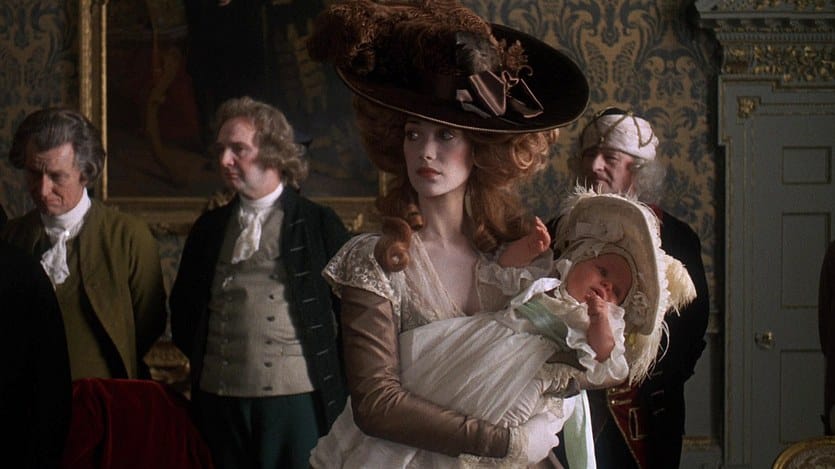
Kubrick's BARRY LYNDON, based on the 1844 novel The Luck of Barry Lyndon by William Makepeace Thackeray, tells the story of Redmond Barry, an Irish rogue with more ambition than prospects, who schemes, gambles, and marries his way up through 18th-century European society, convinced at every step that he's won something that can't be lost.
John Alcott's Oscar-winning cinematography — shot with NASA-developed Zeiss lenses capable of capturing images by candlelight alone — turns every frame into a living oil painting. The film possesses a heavy, tactile texture; it is deeply dark yet fiercely luminous, using natural flame to create a radiant, lit-from-within glow in which subjects softly emerge from velvety shadows.
Ryan O'Neal is perfectly cast as the blank-canvas social climber — a man so preoccupied with performing the role the next rung requires that he never accumulates anything worth keeping. Kubrick doesn't root for him and doesn't condemn him — he watches, with great patience, as the mechanisms of class grind Lyndon down from ambitious imposter to disgraced exile.
Three Days of the Condor (1975)
Dir. Sydney Pollack · DP: Owen Roizman · Cast: Robert Redford, Faye Dunaway, Cliff Robertson, Max von Sydow, John Houseman
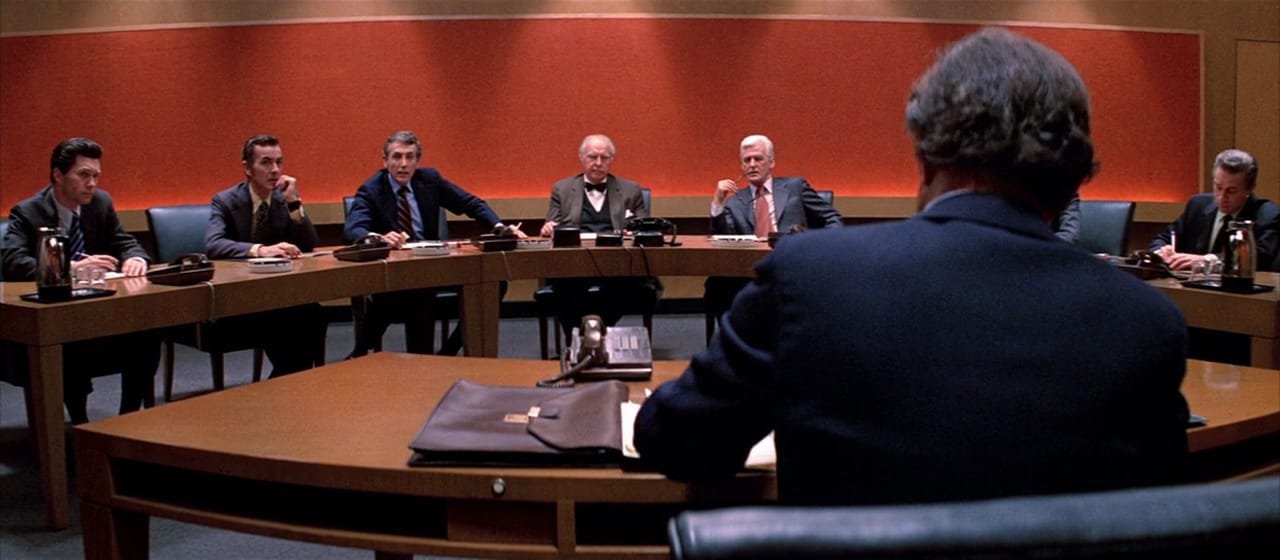
There's a precise moment in Sydney Pollack's THREE DAYS OF THE CONDOR where ordinary life curdles into panic. It's not a car chase or an explosion. It's Robert Redford's Joe Turner returning to his CIA outpost with lunch, only to find his entire department methodically slaughtered.
Turner isn't a field agent. He doesn't carry a gun or know how to throw a punch. He's a guy who gets paid to read books and look for hidden codes. He's us — an ordinary person who discovers the system meant to protect him has been using him all along. Released in the wake of Watergate and Vietnam, CONDOR strips the romanticism from the spy genre and replaces it with cold, corporate efficiency. Owen Roizman — who brings the same institutional eye to NETWORK later in this volume — gives wintry New York a clinical beauty: glass and steel, drop ceilings and fluorescent lobbies, a city that looks designed to make people disappear. Max von Sydow's Joubert — an elegant freelance assassin who treats murder as a logistical problem and conscience as an occupational hazard — is the film's most chilling creation.
The conspiracy Turner uncovers isn't a rogue political coup. It's a shadow-CIA plan to secure Middle Eastern oil fields. This reveal transforms the film from a tight thriller into something more unsettling: a portrait of a government willing to sacrifice its own people not for ideology but for resources. The final scene outside the New York Times building is one of the great bummers in American cinema. Turner has exposed the truth to the press, and his handler (Cliff Robertson) responds with a cold dose of reality: when the oil runs out, and the houses get cold, the public won't care about the truth. They'll just want the heat back on.
Taxi Driver (1976)
Dir. Martin Scorsese · DP: Michael Chapman · Cast: Robert De Niro, Jodie Foster, Cybill Shepherd, Harvey Keitel, Peter Boyle, Albert Brooks
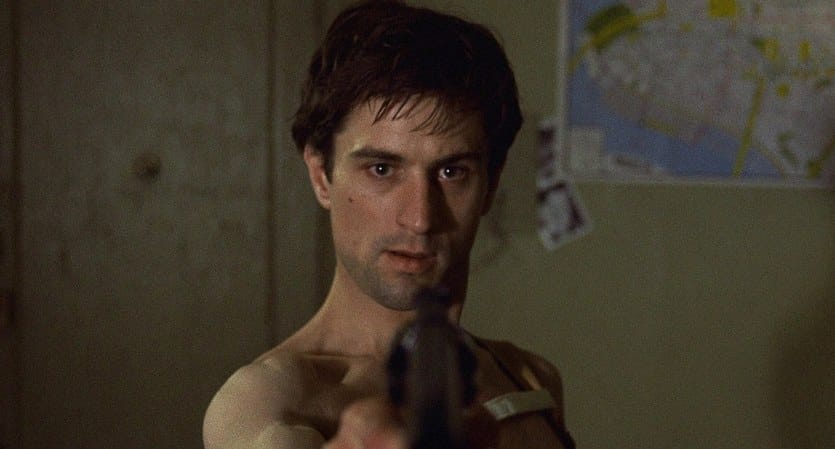
TAXI DRIVER is a head-first dive into a rotting psyche of Travis Bickle (Robert De Niro, in a performance that still feels dangerous), an insomniac Vietnam veteran haunting the streets of mid-70s New York — a city on the brink of bankruptcy and social collapse — chewed up and spat out by a country that has no idea what to do with his undiagnosed trauma.
Scorsese and screenwriter Paul Schrader structure Travis's journey like a classic American western — the lone cowboy riding into a lawless town to clean it up. But they strip away the romance. Travis isn't a hero; he's an engine of misplaced rage, sexual frustration, and reactionary bigotry. When his half-baked plot to assassinate a presidential candidate falls through, he reroutes his violent compulsion toward a pimp named Sport (Harvey Keitel) to "save" a teenage sex worker named Iris (Jodie Foster). The violence, when it comes, isn't cinematic or cathartic. It's messy, stomach-churning, and pathetic — the work of a broken man trying to force the world to acknowledge his existence.
The true horror of TAXI DRIVER isn't the bloodbath. It's the epilogue. Because Travis targeted the "right" people, the media turns him into a folk hero. Scorsese holds a mirror up to a society so desperate for easy answers that it will validate a psychopath, provided his violence lands on the right targets. In the film's closing moments, Travis catches a glimpse of something in his rearview mirror and twitches. As Pauline Kael wrote:
"He's got the rage out of his system — for the moment, at least — and he's back at work, picking up passengers in front of the St. Regis. It's not that he's cured, but that the city is crazier than he is."
All the President's Men (1976)
Dir. Alan J. Pakula · DP: Gordon Willis · Cast: Dustin Hoffman, Robert Redford, Jason Robards, Hal Holbrook, Martin Balsam, Jack Warden
If Pakula's first two entries in his Paranoia Trilogy — KLUTE and THE PARALLAX VIEW — were a slow descent into a pitch-black abyss, ALL THE PRESIDENT'S MEN is the frantic scramble back to the surface. Released just two years after Nixon's resignation, it is the definitive procedural of the 1970s: a film that turns the scratch of a pen on a legal pad and the clack of a typewriter into a high-stakes fight for the soul of America.
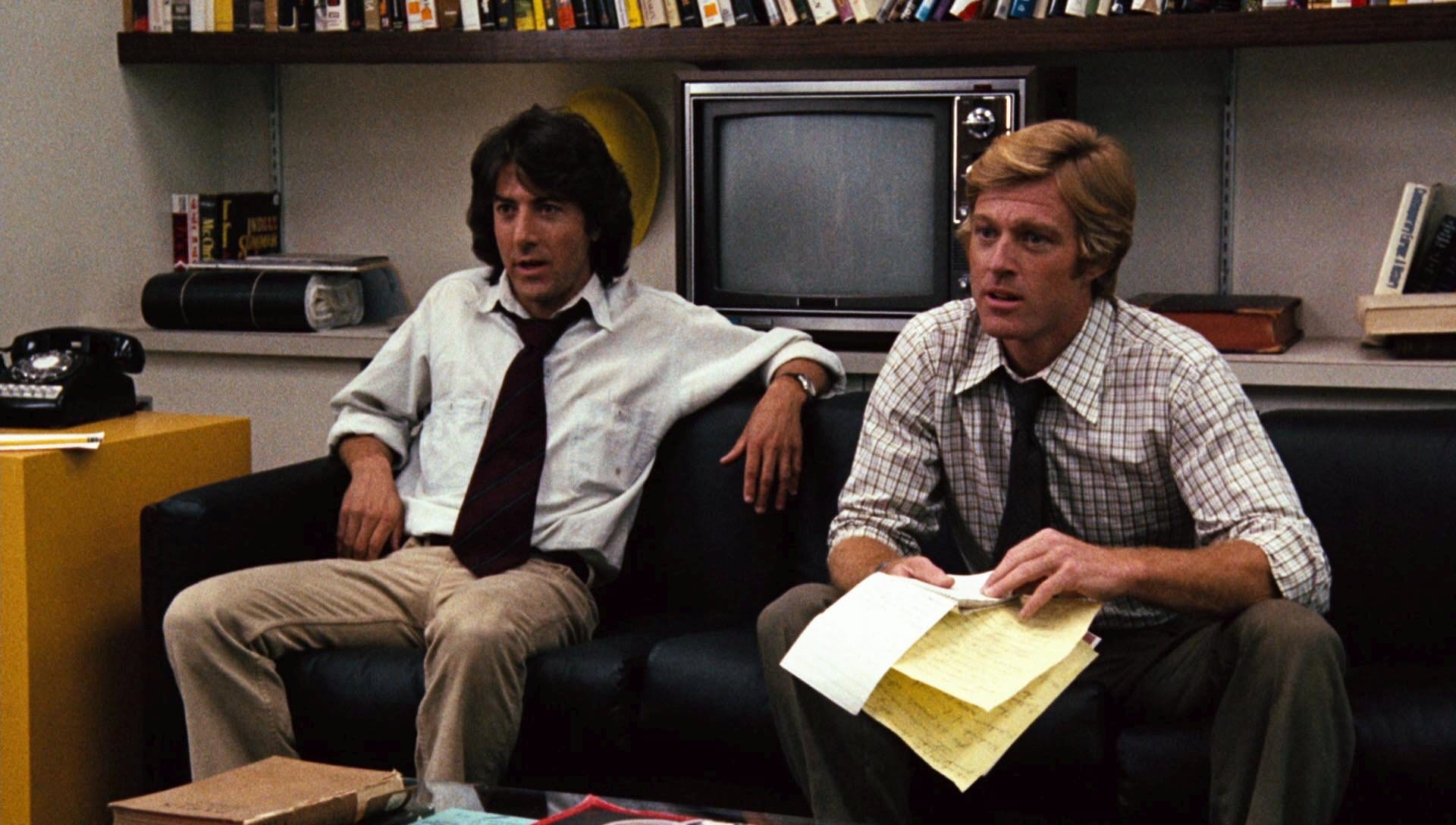
Bob Woodward (Robert Redford) and Carl Bernstein (Dustin Hoffman) aren't cinematic superheroes. They are hungry, lower-tier reporters practicing the exhausting, unglamorous grunt work of journalism — knocking on doors in the middle of the night, making thousands of unanswered cold calls, sorting through mountains of files until their fingers go numb. William Goldman's Oscar-winning screenplay understands what lesser films about journalism always miss: that institutional rot isn't toppled by a single crushing blow, but by a relentless obsession with small details until they form a pattern that can no longer be ignored. Cinematographer Gordon Willis makes this physical — the blinding fluorescent white of the Washington Post newsroom against the shadow-drenched parking garages where Woodward meets Deep Throat (Hal Holbrook). Accountability lives in the light. Power operates in the dark.
Where KLUTE gave us corporate conspiracy and THE PARALLAX VIEW showed the system swallowing the individual whole, ALL THE PRESIDENT'S MEN offers a harder-fought counterargument: the lone crusader gets crushed, but a united front backed by a free press can push back. The film doesn't end with a triumphant speech but with a teletype machine coldly hammering out the headlines of Nixon's downfall while Woodward and Bernstein simply go back to work.
Marathon Man (1976)
Dir. John Schlesinger · DP: Conrad Hall · Cast: Dustin Hoffman, Laurence Olivier, Roy Scheider, William Devane, Marthe Keller
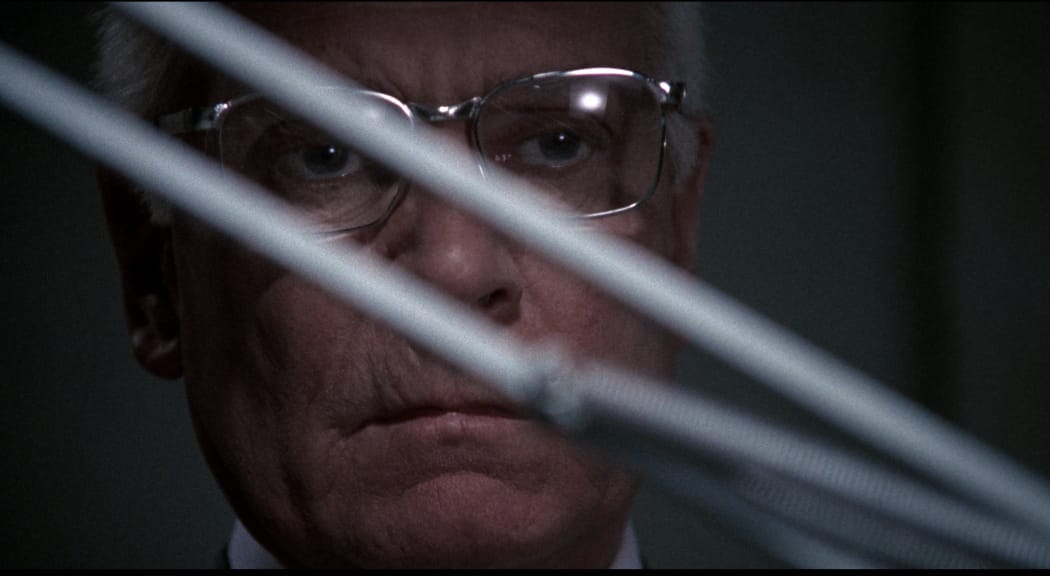
For most people, MARATHON MAN is defined by a single scene: Laurence Olivier's fugitive Nazi war criminal leaning over Dustin Hoffman with a dental instrument, asking — softly, repeatedly — "Is it safe?" It's one of the most terrifying sequences in American cinema, and enough to make people avoid the dentist for a decade. But the film is doing something darker and more specific than generating dental dread.
Thomas "Babe" Levy (Hoffman) is a Columbia Ph.D. candidate who runs obsessively through Conrad Hall's gray, grit-textured New York — keeping his head buried in his books, trying, as his family has always tried, to outrun history. His father was driven to suicide by the McCarthy blacklists. His brother Doc (Roy Scheider) is secretly a deep-cover operative for a shadow government agency. When Doc is murdered, Babe is yanked out of his library and thrown into the path of Christian Szell (Olivier) — the "White Angel of Auschwitz," a fugitive Nazi war criminal who has crawled out of his South American hiding spot to retrieve a cache of diamonds stolen from concentration camp prisoners.
William Goldman's script saves its sharpest blade for the reveal: the U.S. government has been actively protecting Szell for decades because his intelligence was useful to the Cold War machine. The monster isn't an aberration — he's an employee. The institutions designed to protect us are entirely transactional, perfectly willing to shelter the architects of the Holocaust when it serves the bottom line. When Babe finally corners Szell at the Central Park reservoir, he doesn't shoot him — he throws the diamonds in the water and watches the monster destroy himself, diving for stolen blood money, impaling himself on his own blade. Evil and greed don't just go hand in hand. They drown together.
Network (1976)
Dir. Sidney Lumet · DP: Owen Roizman · Cast: Peter Finch, Faye Dunaway, William Holden, Robert Duvall, Ned Beatty, Beatrice Straight
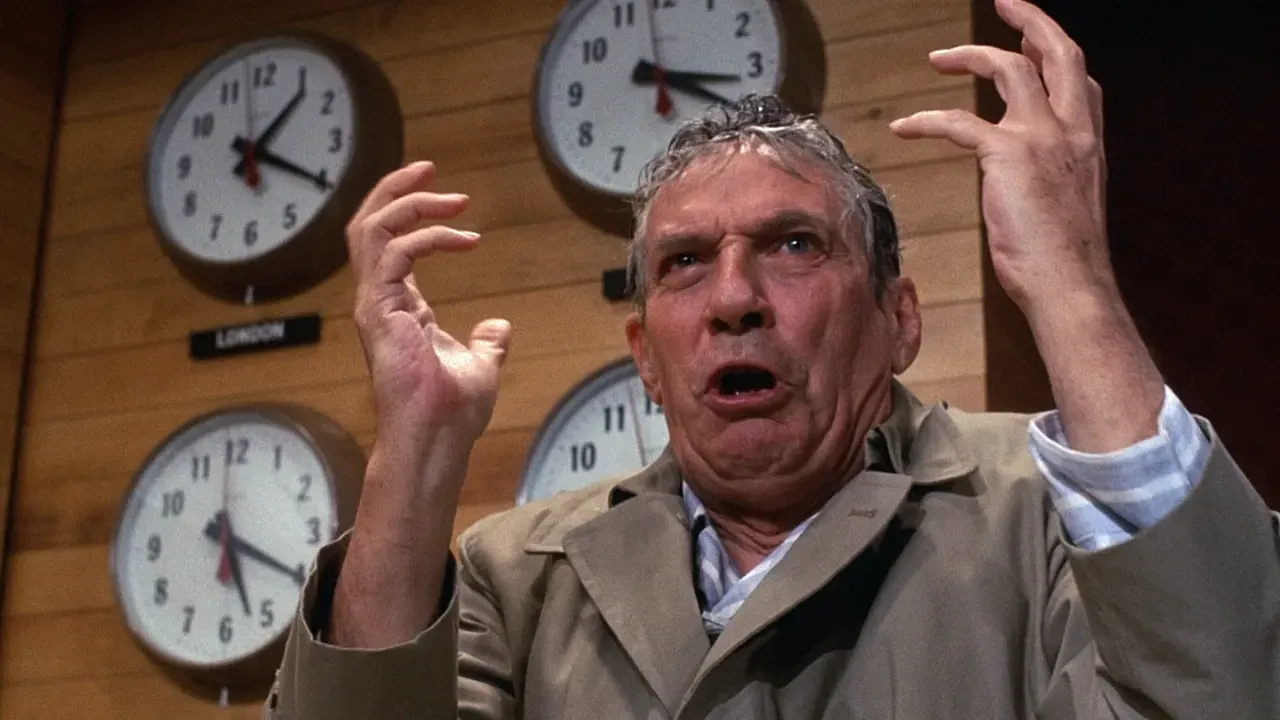
In 1976, audiences packed into theaters to watch NETWORK and treated it like pitch-black dystopian satire. Fifty years later, the jokes have completely evaporated. What Paddy Chayefsky actually wrote wasn't a farce. It was a prophecy.
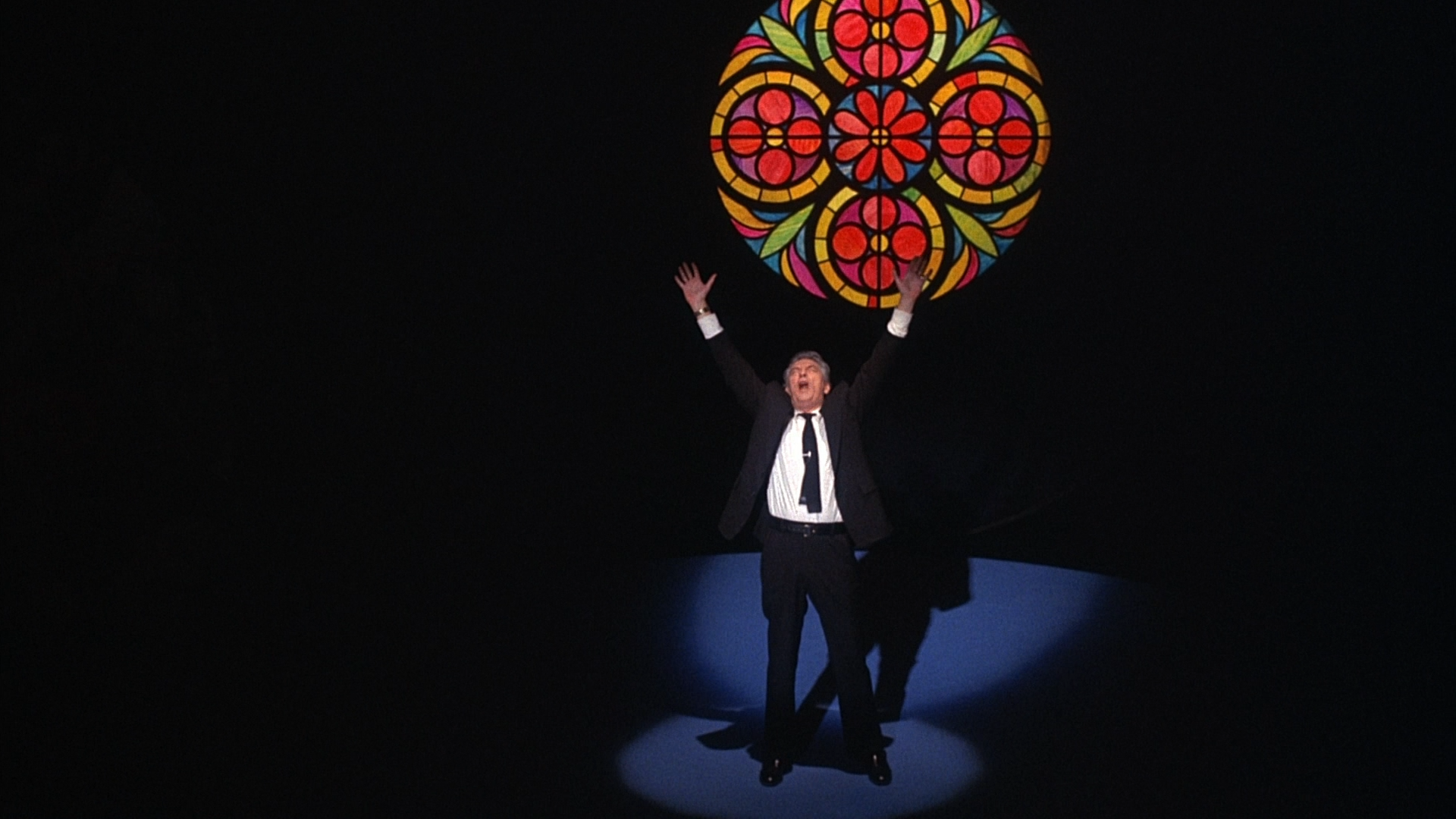
The fuse is lit when veteran news anchor Howard Beale (Peter Finch) has a live on-air breakdown, announcing his imminent suicide due to dropping ratings. Instead of pulling him off the air, ambitious programming executive Diana Christensen (Faye Dunaway) spots an opportunity — rebranding Beale as the "Mad Prophet of the Airwaves," plugging a corporate power cord directly into his genuine psychological ruin. Working with Owen Roizman, Lumet mirrors this hijack visually: the film opens with gritty, documentary naturalism, but as Beale's show becomes a hit, the cinematography is corrupted — becoming artificial, hyper-saturated, and rigidly composed. By the final act, it looks like a slick commercial. The camera itself becomes a casualty of the medium it's filming.
Chayefsky's genius is in how he deconstructs the audience's relationship with anger. When Beale demands his viewers shout "I'm as mad as hell, and I'm not going to take this anymore!", the network doesn't tremble. They rejoice. They don't care why the public is furious — they know anger keeps eyes glued to the screen. Then comes Ned Beatty's thunderous boardroom monologue as corporate chairman Arthur Jensen, who dismantles the illusion of global politics for a humbled Beale:
"The world is a business, Mr. Beale. It has been since man crawled out of the slime. And our children will live, Mr. Beale, to see that perfect world in which there's no war or famine, oppression or brutality – one vast and ecumenical holding company, for whom all men will work to serve a common profit, in which all men will hold a share of stock, all necessities provided, all anxieties tranquilized, all boredom amused."
The final punchline? A room full of suits casually plotting to assassinate Beale on live television — not because he's a political threat, but because his ratings dipped. As the narrator flatly notes, he became the first man killed because he had lousy ratings. In 1976, that felt like an absurd impossibility. In the era of the engagement economy, the influencer pipeline, and manufactured outrage, it feels like another Tuesday. Today, NETWORK reads less like a comedy and more like a grim, step-by-step field guide for the algorithmic age.
Harlan County, USA (1976)
Dir. Barbara Kopple · DP: Kevin Keating
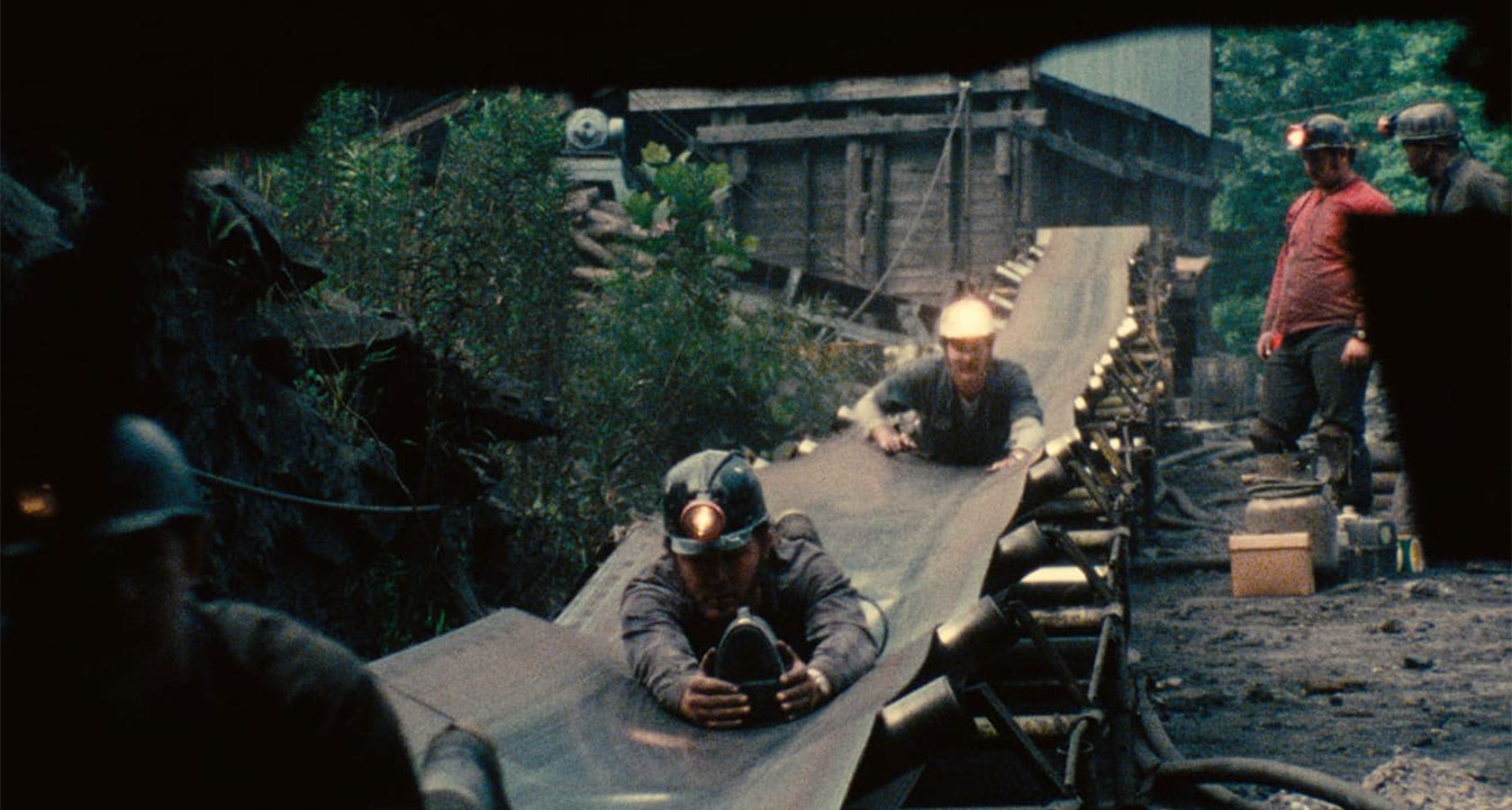
In a decade defined by cinematic cynicism and paranoid fictions about all-powerful institutions, Barbara Kopple did something radical: she grabbed a 16mm camera, went into the trenches of the American class war, and found a reason to believe in collective action.
Kopple spent three years embedded with striking coal miners in Harlan County, Kentucky — living with them, marching with them, filming through violence, intimidation, and the constant threat of armed company enforcers. Kevin Keating's camera goes where the miners go: into the lightless shafts and onto the exhausted picket lines, capturing a brutal labor war against a corporation that had weaponized local law enforcement and hired literal gun thugs to protect its bottom line.
The film's most powerful revelation belongs to the women of Harlan County. When company-backed courts choke off the picket lines, the miners' wives, mothers, and daughters step into the vacuum — lying in the dirt to block scab workers, staring down the barrels of hired muscle. Kopple positions them not as background support but as the unyielding spine of the resistance. By weaving in Appalachian folk music and Florence Reece's "Which Side Are You On?" — written during the Coal Wars of the 1930s — the documentary reveals a painful truth: corporate exploitation is a generational trap. The grandparents died in the dark. The parents died in the cave-ins. The children are expected to face the same fate, while the profits go to high-rises hundreds of miles away.
The tactics Kopple captures — legal manipulation, weaponized economic precarity, raw physical intimidation — haven't changed. Whether it's an Amazon warehouse, a Starbucks counter, or a Kentucky coal mine, the corporate machinery runs on one assumption: that you are expendable fuel. HARLAN COUNTY, USA, reminds us that the system may be rigged, but it still has to reckon with the people who won't break.
Black Sunday (1977)
Dir. John Frankenheimer · DP: John A. Alonzo · Cast: Robert Shaw, Bruce Dern, Marthe Keller, Fritz Weaver, Steven Keats
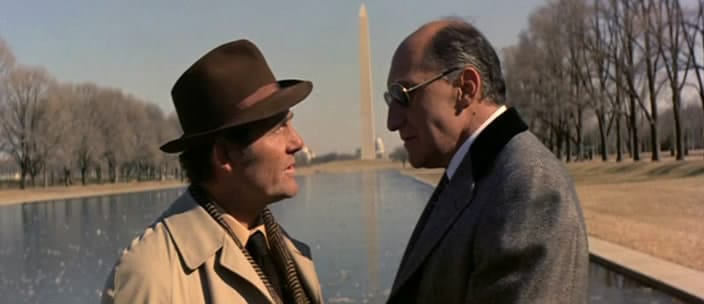
In 1977, John Williams composed the scores for STAR WARS, CLOSE ENCOUNTERS OF THE THIRD KIND, and this — a fact that says something about both the range of the man and the extraordinary breadth of what American cinema was doing that year. John Frankenheimer — who opened this series with 1962's THE MANCHURIAN CANDIDATE — returns here on familiar ground: the weapons a government manufactures don't stay pointed in the right direction.
The plan at the center of BLACK SUNDAY is specific and terrifying: a traumatized Vietnam POW named Lander (Bruce Dern, volatile and dangerously askew), discarded by the country that broke him, has agreed to help a Black September operative (Marthe Keller, who also appeared in MARATHON MAN) weaponize the Goodyear Blimp over the Super Bowl in Miami. Lander is the blimp's pilot.
Tracking them is an Israeli counter-terrorism agent (Robert Shaw), carrying the weight of a man who understands he's just another broken instrument in an endless machine of violence. John A. Alonzo's naturalistic, crowd-level photography strips the stadium spectacle of its Hollywood sheen, making the threat feel immediate and real. The film's climax — Shaw hooking the blimp's explosive device to a helicopter and flying it out to sea to detonate — provided Christopher Nolan with the structural finale of THE DARK KNIGHT RISES forty years later.
Sorcerer (1977)
Dir. William Friedkin · DP: Dick Bush and John M. Stephens · Cast: Roy Scheider, Bruno Cremer, Francisco Rabal, Amidou
Based on Georges Arnaud's 1950 novel The Wages of Fear, SORCERER arrived in the summer of 1977, the same summer as STAR WARS, and was immediately buried. William Friedkin's relentlessly tense account of four desperate men driving truckloads of leaking nitroglycerin through an indifferent South American jungle felt like exactly the wrong film for a moment when American cinema was discovering it preferred spectacle and hope. But fifty years of critical realignment have revealed the truth: Friedkin didn't make a misfire; he directed the apex of New Hollywood's uncompromising, sweat-drenched fatalism.
Four men are hiding in a poverty-stricken South American village, each a fugitive from a country that wants them dead: a New Jersey gangster, a French financier, a Latin American hitman, an Arab revolutionary. When a remote oil well explodes, the only way to extinguish it is with old, leaking, catastrophically unstable nitroglycerin that has to be driven through miles of jungle on roads that barely qualify as such. The oil company offers the men enough money to do the job and disappear forever. They take the deal. The company doesn't care if it's a suicide mission.
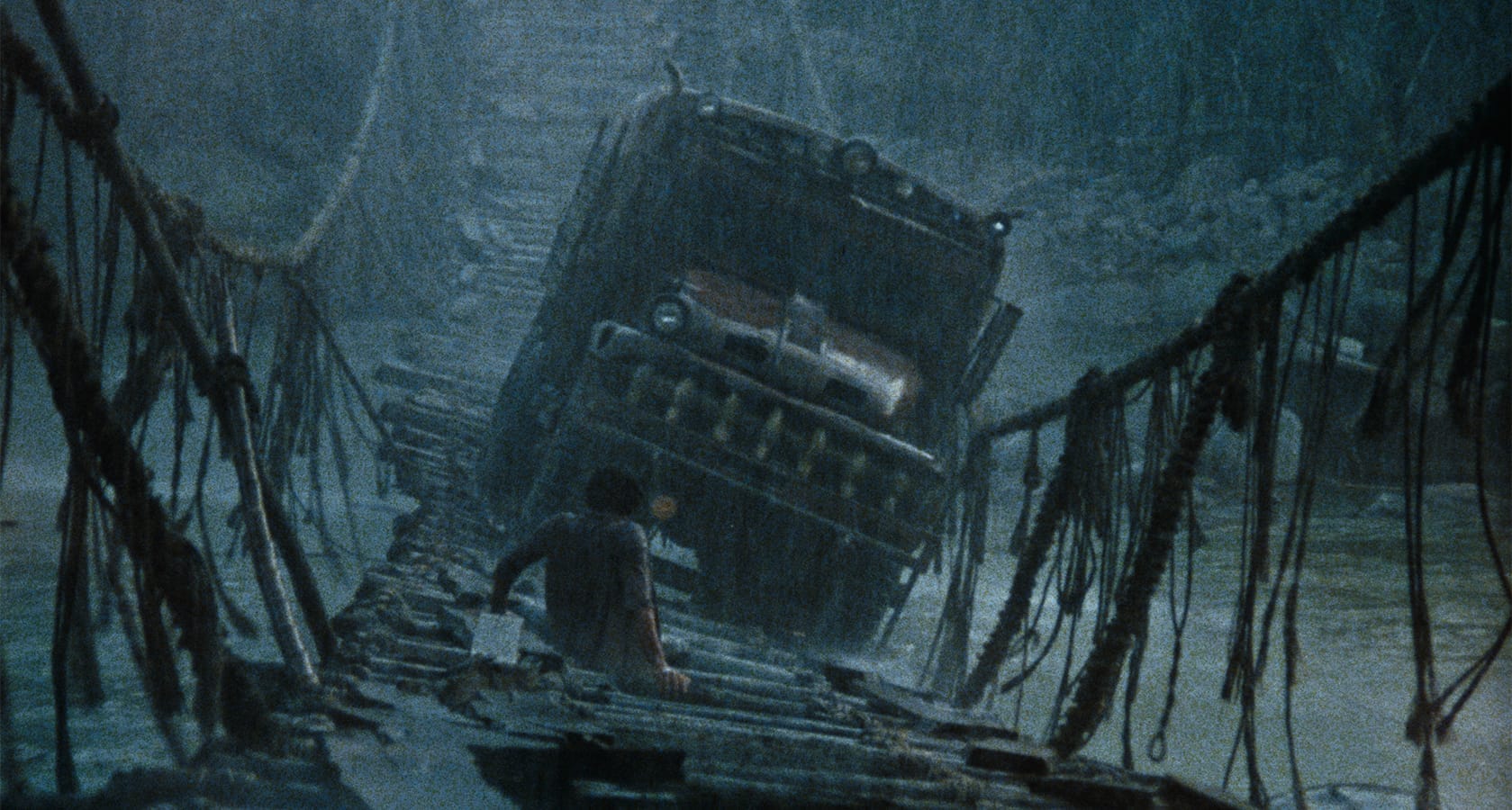
Roy Scheider carries the film on his back, all manic vigilance and barely contained dread, moving through an oppressive landscape of mud, roaring water, and rotting infrastructure. The film's most celebrated sequence — a swaying, disintegrating rope bridge, two trucks, driving rain — remains one of practical cinema's absolute peaks: entirely real, entirely terrifying, as Tangerine Dream's hypnotic electronic pulse turns the harrowing journey into a rhythmic, mechanical descent.
If THE EXORCIST is about faith, SORCERER is about fate: how no amount of cunning or sheer animalistic will can change what fate has already decided. Scanlon drags himself to the finish line only to discover his past is already there waiting for him. We're all just hitching a ride on an unstable machine, traversing precarious terrain, trying not to blow up before the next curve in the road. Naivety is humanity's greatest renewable resource.
Close Encounters of the Third Kind (1977)
Dir. Steven Spielberg · DP: Vilmos Zsigmond · Cast: Richard Dreyfuss, François Truffaut, Teri Garr, Melinda Dillon, Cary Guffey
Every other film in this volume is about what the system takes from you. This one is about what it can't. Steven Spielberg's CLOSE ENCOUNTERS OF THE THIRD KIND arrives in the middle of American cinema's darkest decade like a transmission on a different frequency: not a warning, not an indictment, but an invitation.
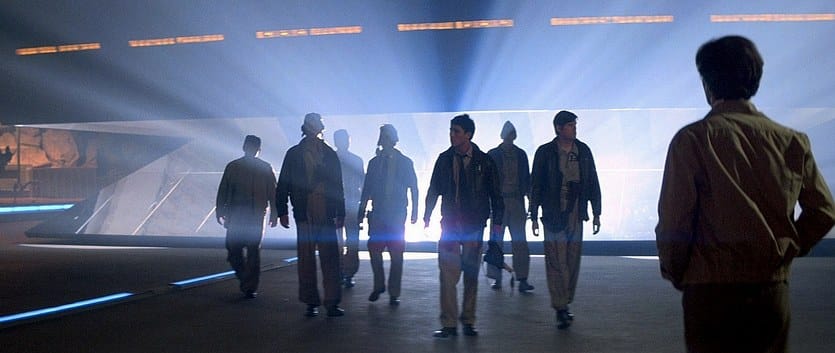
Roy Neary (Richard Dreyfuss) is an Indiana utility worker who has a UFO encounter and is never the same again. Something lodges in his mind: a shape he can't identify but can't stop recreating, in shaving cream, in mashed potatoes, in dirt piled across the living room floor. His family thinks he's losing his mind. He might be. But the shape is real, and something is calling him toward it. While Roy follows his obsession across the country, the government is doing everything it can to keep ordinary people away from what it has been quietly preparing. The system's instinct, even when confronted with something genuinely miraculous, is to classify it, contain it, and make sure nobody finds out.
Vilmos Zsigmond's Oscar-winning cinematography weaponizes light as a tool of curiosity and spiritual enlightenment rather than interrogation, warm and domestic at first, then vast and overwhelming at the film's climax, where John Williams' five ascending notes become the language of first contact — a musical handshake. François Truffaut's casting as the gentle French scientist frames the encounter not as invasion but as communication and communion. In a series defined by individuals crushed under institutional weight, CLOSE ENCOUNTERS offers the only genuine counterargument: that there are forces larger than the systems of man, and some of them are not indifferent.
Opening Night (1977)
Dir. John Cassavetes · DP: Al Ruban · Cast: Gena Rowlands, John Cassavetes, Ben Gazzara, Joan Blondell, Paul Stewart
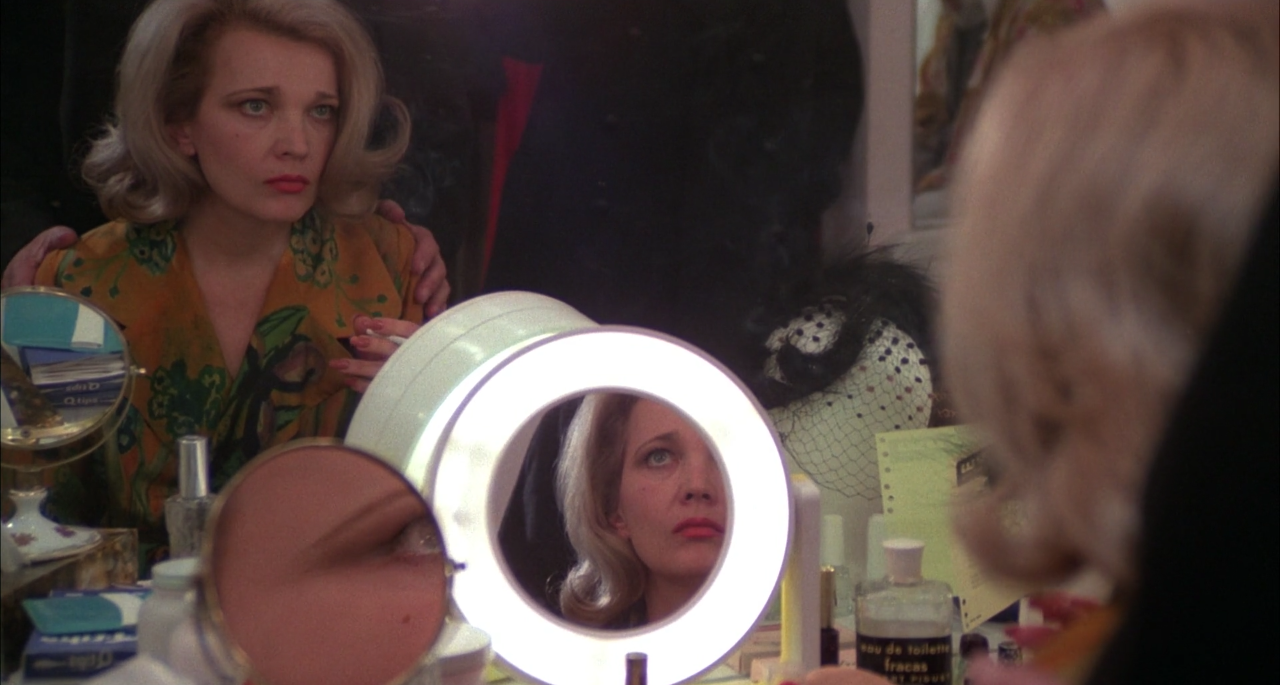
Cassavetes funded his films by acting in other people's films and refused every condition the studio system would have imposed on his own work. He was the system's most committed refusal — and OPENING NIGHT is his most demanding act of it. His 1977 study of a celebrated stage actress in the midst of a spiritual and psychological breakdown before a major opening operates somewhere between a performance film and a private exorcism: uncomfortable, formally strange, and entirely on its own terms.
Gena Rowlands — who was also Cassavetes's wife — performs with wild, unguarded physical and emotional abandon as Myrtle Gordon, a woman haunted by the death of a young fan and increasingly unable to separate the role she's performing from the self she's losing. Al Ruban's restless, close-held camera doesn't give her — or the audience — anywhere to run.
The system OPENING NIGHT dismantles is the one that demands artists, and women especially, remain legible, controlled, and professionally functional at all times. Myrtle refuses, spectacularly and dangerously, and Cassavetes films it with the conviction of a man who spent his career proving that the most important stories are the ones the industry won't let you tell.
Blue Collar (1978)
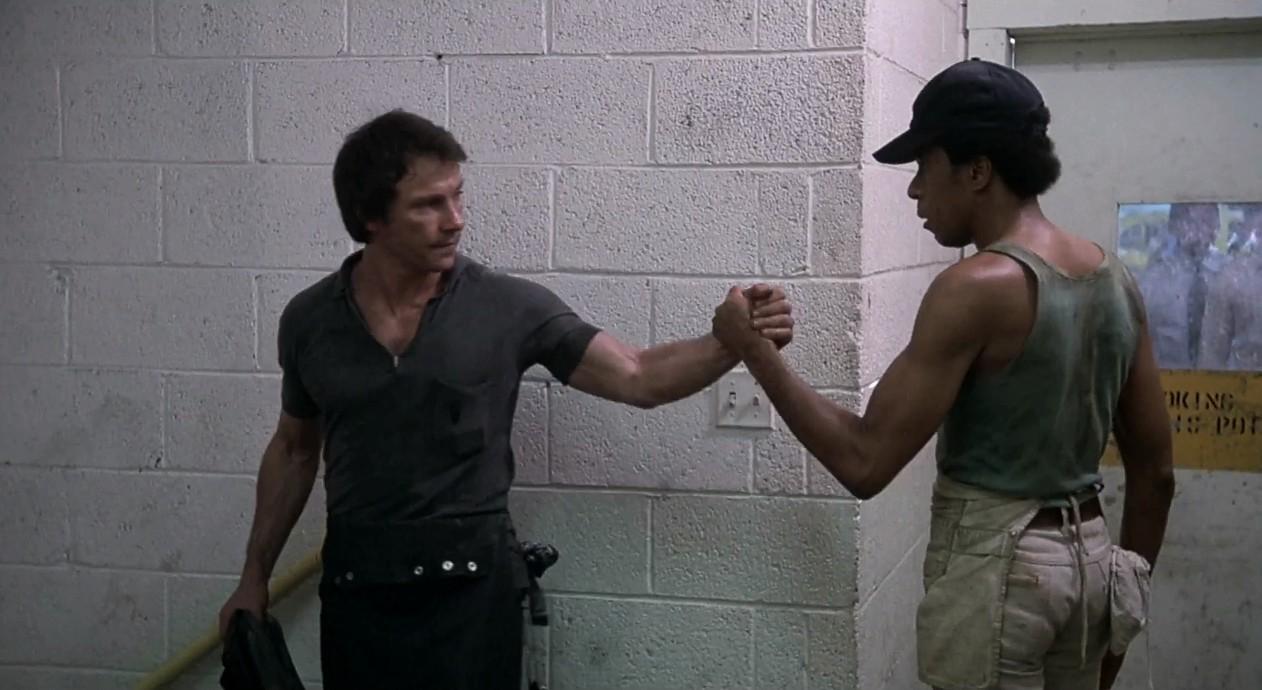
Dir. Paul Schrader · DP: Bobby Byrne · Cast: Richard Pryor, Harvey Keitel, Yaphet Kotto, Ed Begley Jr.
"They pit the lifers against the new boy and the young against the old. The black against the white. Everything they do is to keep us in our place."
Paul Schrader's directorial debut is maybe the most explicitly political film in the entire series, and one of the most formally controlled. Richard Pryor, Harvey Keitel, and Yaphet Kotto are electric as three Detroit assembly-line workers ground down by debt and institutional indifference, who decide to rob their own corrupt union's safe and discover something worse than money: a ledger of compromises proving that the union leadership and corporate management are different faces of the same machine.
Bobby Byrne's industrial cinematography treats the factory floor as the film's primary character — a roaring, fluorescent inferno of noise and repetition where human solidarity goes to die, one shift at a time. Schrader refuses every form of crowd-pleasing comfort the genre might offer, following the situation's logic to its grim, unsparing end. The film's thesis, delivered without apology: the system doesn't just exploit the working class. It is engineered to turn them against each other so they never think to look up.
The Last Waltz (1978)
Dir. Martin Scorsese · DP: Michael Chapman (and ensemble) · Performers: The Band, Bob Dylan, Eric Clapton, Van Morrison, Neil Young, Joni Mitchell, Muddy Waters
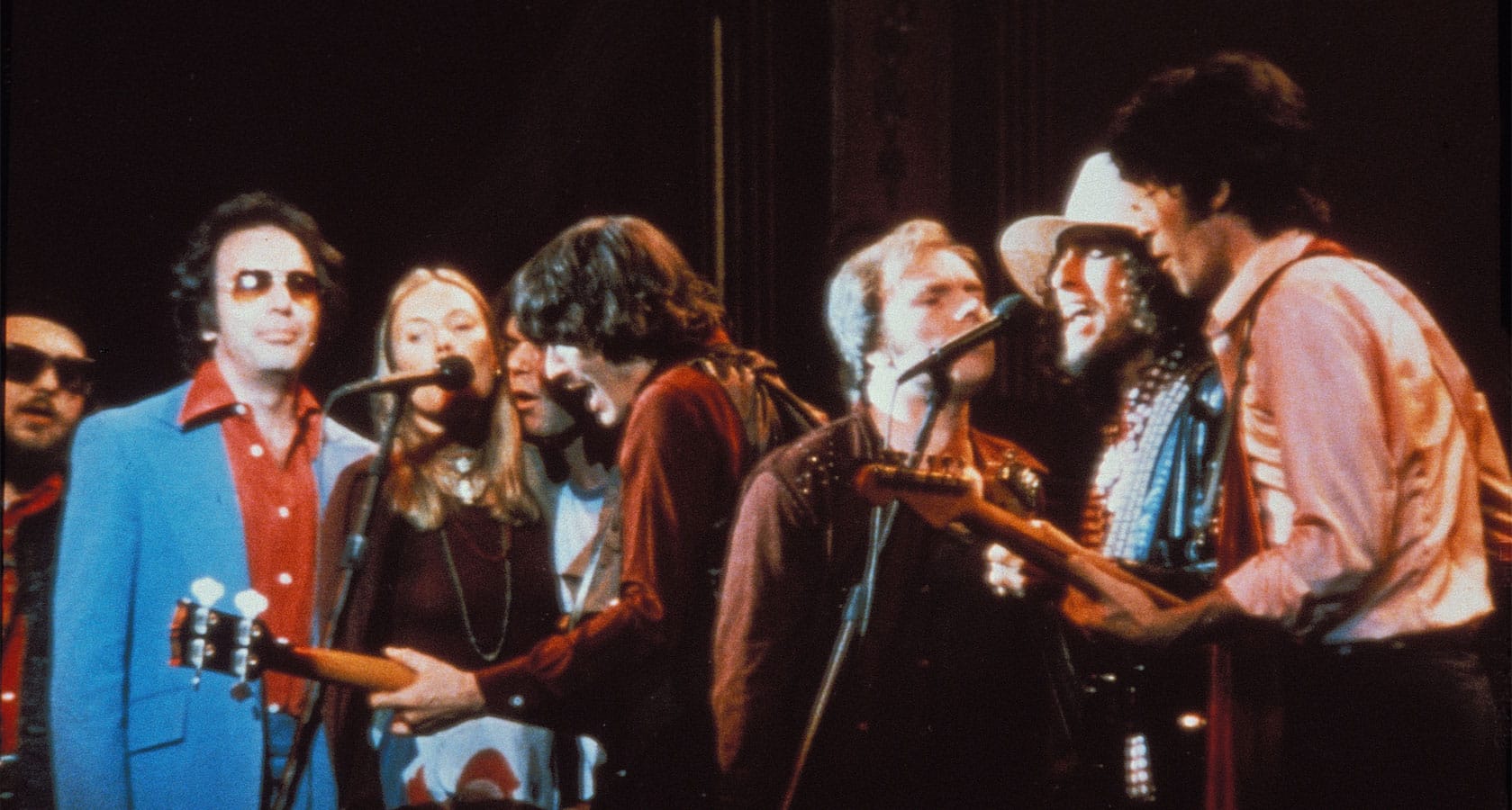
If NASHVILLE captured the sprawling, chaotic noise of a country fracturing on the eve of its Bicentennial, Martin Scorsese's THE LAST WALTZ is the measured, shadow-drenched elegy for the counterculture's musical soul. Documenting The Band's final concert at San Francisco's Winterland Ballroom on Thanksgiving night, 1976, Scorsese turns what could have been a simple rock documentary into a meditation on exhaustion, myth-making, and the physical cost of sustained artistic life.
Michael Chapman — reuniting with Scorsese after TAXI DRIVER — leads a team of legendary cinematographers, including Vilmos Zsigmond and László Kovács, in painting the stage in deep velvet crimsons and expressionistic shadow, making the performance feel less like a victory lap and more like a beautifully lit farewell. The guests — Bob Dylan, Eric Clapton, Van Morrison, Neil Young, Joni Mitchell, Muddy Waters — arrive like mourners at a funeral they wish they didn't have to attend. Robbie Robertson moves through it all with the quiet awareness of a man who knows exactly what's ending. THE LAST WALTZ earns its place in this series not by being dark but by being the opposite — a genuine, unhurried celebration of something worth celebrating.
Dir. Francis Ford Coppola · DP: Vittorio Storaro · Cast: Martin Sheen, Marlon Brando, Robert Duvall, Frederic Forrest, Albert Hall, Laurence Fishburne, Dennis Hopper
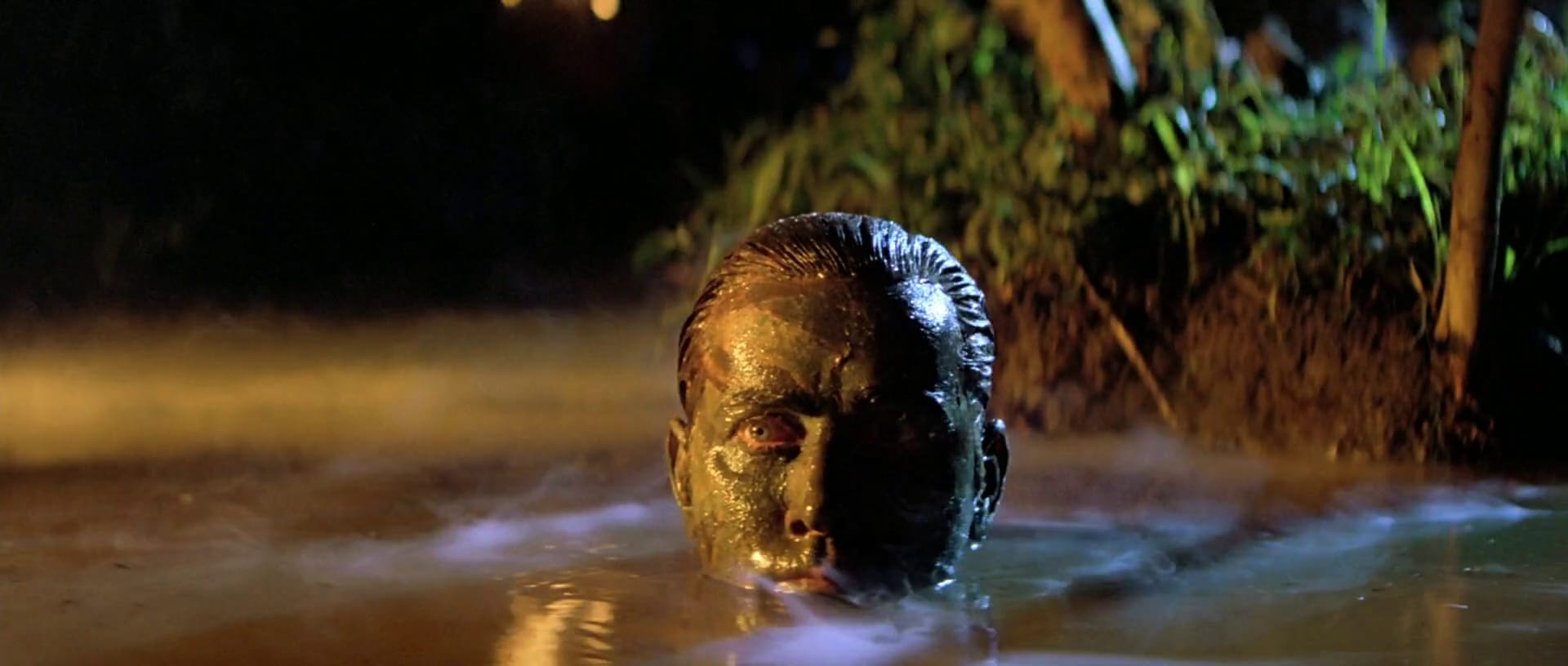
Francis Ford Coppola's APOCALYPSE NOW — adapted from Joseph Conrad's HEART OF DARKNESS and transplanted from the Congo to the Mekong Delta — took four years to make, nearly destroyed its director, and arrived in 1979 as something genuinely unprecedented: a studio film that structurally replicates the madness it depicts, that doesn't merely critique American imperial violence but forces you to experience its internal logic from the inside.
Martin Sheen plays Captain Willard, a hollow-eyed military assassin dispatched upriver in Vietnam to "terminate with extreme prejudice" Colonel Kurtz — played by Marlon Brando, a once-decorated Special Forces officer who has gone rogue in Cambodia, built his own army, and is waging war entirely by his own rules. The central irony, which is also the film's central argument, is that a military establishment dropping napalm on civilian villages and calling it liberation has decided that Kurtz's methods are "unsound." The horror, the film suggests from its very first frame, is not Kurtz. It's the institution that made him.
The further Willard travels, the more completely civilization dismantles itself. Near the shore, Lieutenant Colonel Kilgore (Robert Duvall, in a performance of magnificent, testosterone-fueled absurdism) conducts helicopter warfare with surfboards in tow, imposing American pop culture on a landscape of carnage with the serene confidence of a man who cannot comprehend that he is a walking atrocity. By the time Willard reaches the Do Lung Bridge — the last army post, manned by soldiers fighting a faceless enemy with no commanding officer in sight — the institutional scaffolding has completely dissolved. All that remains is despair and disorder. Vittorio Storaro's Oscar-winning cinematography renders this dissolution in images of terrible beauty: the blinding pyrotechnics of American military might against something that cannot be illuminated or conquered — the ancient, implacable darkness of the jungle.
When Willard finally reaches him, Kurtz is not a raving lunatic. He is the logical conclusion. He followed the rules of war to their absolute end and arrived at a clarity so complete it shattered him. His final words — "The horror. The horror." — are not a confession. They are a diagnosis of American power and human nature. Willard kills Kurtz and leaves the jungle neither vindicated nor transformed — just carrying the knowledge, the way the best characters in this series carry the truth: as weight, as wound, as the thing that can't be put back. APOCALYPSE NOW is what you find when you follow the river of institutional power, running red with blood, all the way to its source.
That’s Volume IV. These films arrived at the twilight of an era that didn't know it was ending, forged by a generation of artists who fiercely believed that cinema could tell the truth about power and be heard. Some of them were right. Some of them weren't. But the work remains for us now, either way, to reckon with.
I hope you walked away with a few titles you hadn't seen, or found a fresh perspective on the films you've already seen. For my money, the most revelatory entry in this batch remains Paul Schrader’s BLUE COLLAR — a film I highly recommend seeking out, not just for the raw, combustive chemistry of its performances, but for its razor-sharp, uncompromising diagnosis of how modern capitalism operates.
The fifth volume is coming — opening with ALIEN and closing with PARIS, TEXAS. 10 films that track the cultural handoff from the Nixon/Carter hangover to the dawn of the Reagan era. We’re moving out of the grime and murky shadows of the seventies and straight into a glossy, neon-drenched landscape where the system successfully seduced the individual into abandoning their idealism for materialism. If you can't fix the world, you might as well watch it burn in comfort and luxury.
Stay tuned. 📺
🍕 POP 'N' PIZZA is your deep-dish slice of pop culture's weirdest, most esoteric corners—served with extra sauce and a side of existential dread. Written by Adam Frazier.