While the World Burns: Volume V
A film series covering 80 films from 1959 to 1989, from the waning days of the studio system through the early tremors of New Hollywood to the excess of the '80s.

By 1979, the machinery of the previous decade had been exposed, examined, and — unchanged — left running. The films in Volume IV raged against it. Volume V doesn't rage. It asks a quieter, darker question: what's left of the self once the system has done its work and the company takes its cut?
These ten films — made between 1979 and 1984, drawn from American studios, Soviet state cinema, and European art houses alike — arrive at that question from different directions and in different registers. Some approach it through the body: an invasive organism that treats its crew as incubation vessels; a deformed man whose physical form makes personhood itself a radical demand; a filmmaker poisoned by the world he was trying to document. Some approach it through identity: a blank slate mistaken for a visionary; a community that cannot survive the truth one of its members has become; a mythic king who discovers that the institution he built cannot contain the human nature it was designed to transcend.
Some approach it through truth itself: a sound recordist who captures evidence of murder and watches it repurposed as entertainment; a whistleblower driving toward a meeting she'll never reach, carrying documents that were never found. And one approaches it through exile — a man walking out of the desert, mute and hollowed out, trying to find a way back to the smoldering ruins of a life he destroyed.
The individual vs. the system knows no borders. It speaks every language. It has always been happening everywhere. Ten films. Let's get started.
Alien (1979)
Dir. Ridley Scott · DP: Derek Vanlint · Cast: Sigourney Weaver, Tom Skerritt, Veronica Cartwright, Harry Dean Stanton, John Hurt, Ian Holm, Yaphet Kotto
APOCALYPSE NOW closed the previous volume with Colonel Kurtz describing enemy soldiers who hacked the inoculated arms off children: "perfect, genuine, complete, crystalline, pure." To survive in a universe indifferent to human morality, Kurtz concluded, you must become capable of that. The knowledge destroyed him — because Kurtz was human, burdened with conscience and love and memory, and the truth of what he'd become split him apart. ALIEN opens this volume asking the same question and arriving at a colder answer: if the problem is conscience, don't send a man upriver. Build something without one.
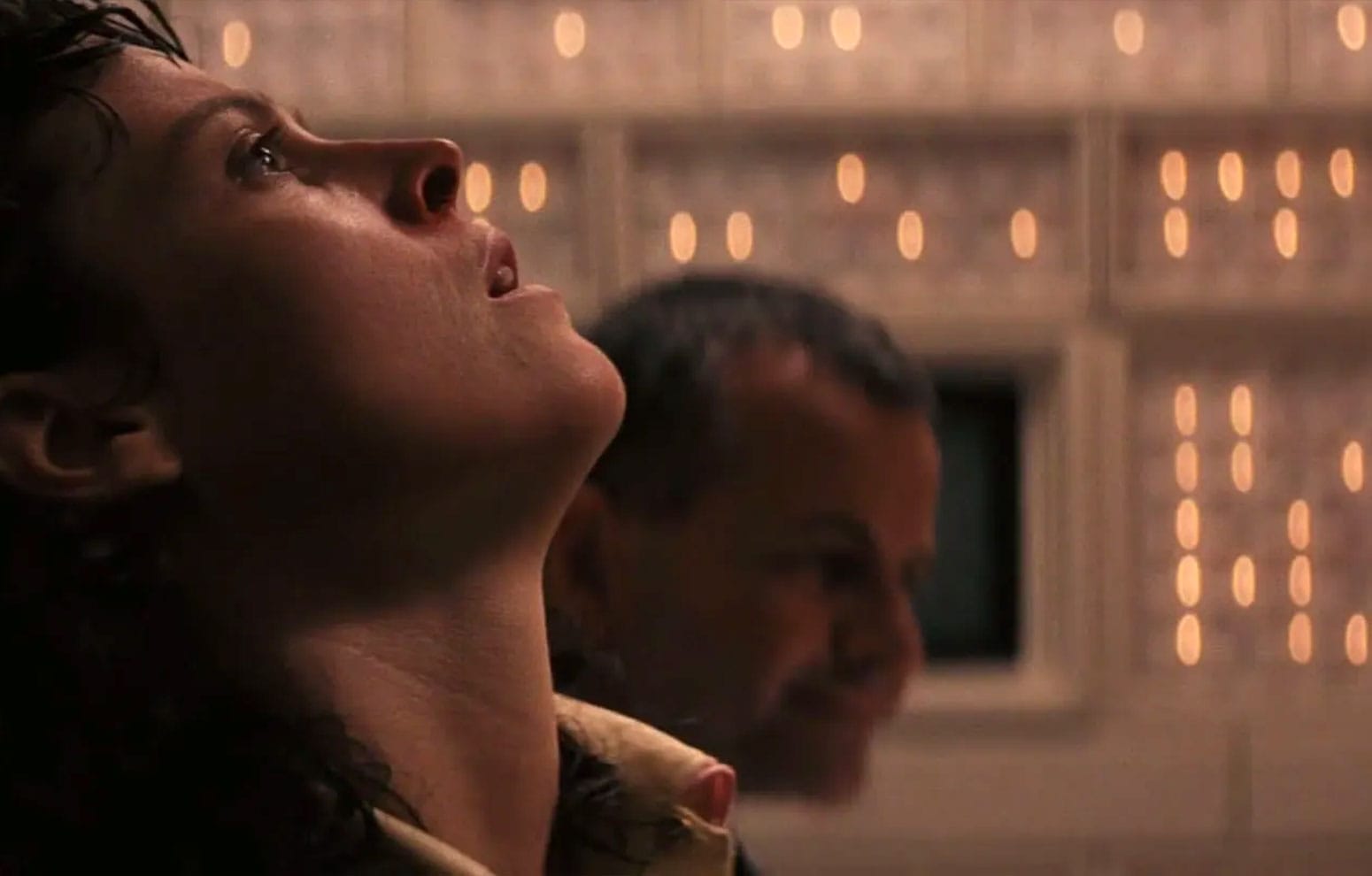
That something is Ash — Ian Holm's science officer, planted aboard the Nostromo by Weyland-Yutani Corporation to ensure the alien life form is returned intact, crew be damned. When exposed, he describes the xenomorph with something close to reverence: "the perfect organism... unclouded by conscience, remorse, or delusions of morality." The same conclusion Kurtz reached at the end of his river. But where that knowledge shattered Kurtz's humanity, it doesn't touch Ash — because Ash never had any. He was manufactured by a corporation that has already solved the problem Kurtz died trying to resolve. The horror isn't the alien. It's that the company built something that admires it.
Ridley Scott's film is a haunted-house story in space: the crew of a deep-space commercial towing vessel responds to a distress signal from an uncharted moon and returns with something that kills them one by one. But the world Scott builds tells you the real story before the first death. The Nostromo is not a gleaming starship — it is a refinery, a trawler, a truck stop in the cosmos, its corridors caked in grime and condensation, its equipment held together by people paid too little to care.
The creature they encounter is the work of Swiss surrealist H.R. Giger, who designed everything alien — the xenomorph's elongated skull, the facehugger's reproductive horror, the derelict ship's fused-bone architecture — introducing a visual language of dread rooted in bodily violation and psychosexual anxiety. The human side of the world belongs to production designer Ron Cobb and illustrator Mœbius, who built the Nostromo's grimy, functional interiors and the crew's sleek pressure suits, respectively — a "used future" so lived-in and working-class in comparison to the sleek, sterile beauty of Kubrick's 2001: A SPACE ODYSSEY. The genius of the film's design is that these two worlds have entirely different visual DNA. When they collide, the violation is felt deeply.
Together with Derek Vanlint's shadow-heavy cinematography, they built a world that feels discovered rather than designed. Yaphet Kotto — who played one of BLUE COLLAR's three leads just one year earlier — is Parker, a space trucker grumbling about his cut of the profits before he knows anything is wrong. Harry Dean Stanton is his partner, Brett. They are the bottom of the hierarchy aboard a ship that is itself the bottom of Weyland-Yutani's hierarchy. The company's indifference to them predates the alien by years.
At the center is Ellen Ripley — written gender-neutral in Dan O'Bannon and Ronald Shusett's original script, transformed when Sigourney Weaver was cast. Weaver doesn't play Ripley as symbol or exception. She plays her as competent, frightened, and furious — a warrant officer who follows protocol until the protocol turns against her. She is the only crew member who refuses to lower the quarantine barrier when Kane returns infected from the derelict ship — correctly, as it turns out — and is overruled by Ash on Weyland-Yutani's behalf. The feminist argument is embedded in that moment: the woman who makes the right call is the one the institution ignores.
Special Order 937 — "Insure return of organism for analysis. All other considerations secondary. Crew expendable." — is the film's thesis dressed as a plot reveal. Weyland-Yutani views its crew the way every institution in this series views the individuals inside it: as resources to be allocated and, when necessary, written off. The alien is simply a more valuable resource. In a series that has spent four volumes tracing the machinery of power from its most polished surfaces to its rotting core, ALIEN strips that machinery down to its essential function: fucking us over for a goddamn percentage.
Stalker (1979)
Dir. Andrei Tarkovsky · DP: Alexander Knyazhinskiy · Cast: Alexander Kaidanovsky, Anatoly Solonitsyn, Nikolai Grinko
"When a man is born, he is soft and pliable. When he dies, he is strong and hard. Hardness and strength are death's companions. Flexibility and softness are the embodiment of life. That which has become hard shall not triumph."
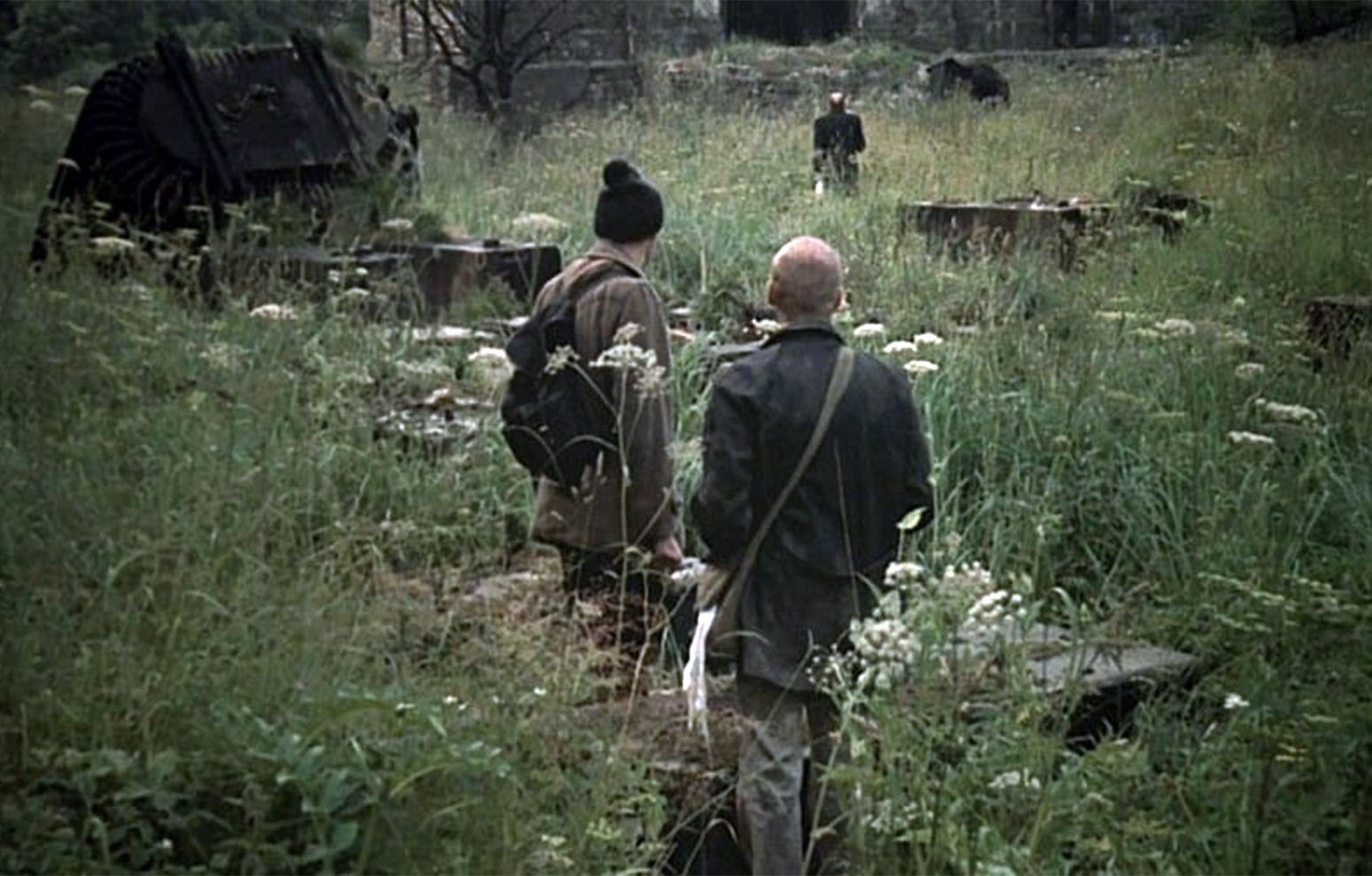
In Tarkovsky's 1979 Soviet sci-fi film, STALKER, the Zone is a restricted area surrounding the site of an unexplained cosmic event. The government has walled it off, declared it forbidden, and militarized its borders. What they call a hazardous wasteland is something else entirely: a place of tranquility, flourishing in the absence of humanity, with overgrown flora, abandoned war machines, and dilapidated man-made structures. The world outside the Zone, sepia and soul-crushing, is the truly poisoned place.
An illegal guide called a Stalker smuggles two clients through the checkpoint: a cynical Writer and a pragmatic Scientist. At the Zone's center lies the Room — a mythical space rumored to grant the visitor's deepest, most subconscious desire. Not what you say you want. Not what you think you want. What your innermost being actually desires. The Room is a mirror that strips away every pretension and reveals what actually lives beneath the stories we tell about ourselves.
Tarkovsky uses only 142 shots across 161 minutes — long, deliberate takes that push the viewer beyond traditional narrative expectations and into a meditative, dreamlike state. The result is a slow, quietly damning film about the friction between the soul and the outside world. Modern humanity, armored in intellect and allergic to faith, has made itself incapable of introspection. The Writer's cynicism and the Scientist's rationalism are precisely what keep them from entering. Paralyzed by self-doubt, intellect, and materialism, they are terrified of doing the one thing the Room demands: accepting oneself completely.
During production, Tarkovsky filmed near a chemical plant outside Tallinn, Estonia, by a river carrying industrial runoff downstream. Crew members later attributed multiple deaths to the toxic location — including those of lead actor Anatoly Solonitsyn, Tarkovsky's wife Larisa, and Tarkovsky himself, all of whom died of the same rare lung cancer...

Being There (1979)
Dir. Hal Ashby · DP: Caleb Deschanel · Cast: Peter Sellers, Shirley MacLaine, Melvyn Douglas, Jack Warden, Richard Dysart, Ruth Attaway
Hal Ashby makes his fourth series appearance — after HAROLD AND MAUDE, THE LAST DETAIL, and SHAMPOO — and closes out the decade with his most quietly cynical film. Peter Sellers, in his final performance, plays Chance, a simple gardener raised in total isolation, his entire consciousness formed by decades of passive television viewing. He possesses no inner life, no opinions, no past — only the soothing, depthless images flickering across the screen.
When his elderly benefactor dies, Chance is ejected onto the streets of 1979 Washington, D.C., where fate pulls him into the orbit of Eve Rand (Shirley MacLaine) and her dying business mogul husband Ben (Melvyn Douglas, in an Oscar-winning performance). Ben finds in Chance exactly what he needs: a man of preternatural calm who speaks in simple truths and seems unbothered by the machinery of power. He takes an immediate liking to him. So does Eve. Installed in the Rand household, Chance is soon introduced to Ben's close friend, the President of the United States (Jack Warden).
In a discussion about the economy, Chance's banal observations about gardening are mistaken for profound metaphorical wisdom. From there, the ascent is swift and inevitable — the elite don't just listen, they anoint him. Caleb Deschanel's elegant, soft-focus cinematography wraps the capital in a hazy, old-money warmth that makes the collective delusion feel entirely plausible — right up until the film's final, audacious image pulls the rug out completely.
BEING THERE is something of a companion piece to NETWORK — a critique of television culture, in which the intellectually starved masses crown an empty suit as their king. The film's most devastating line belongs to the Black housekeeper who raised Chance:
"It's for sure a white man's world in America. Look here: I raised that boy since he was the size of a piss-ant. And I'll say right now, he never learned to read and write. No, sir. Had no brains at all. Was stuffed with rice pudding between the ears. Shortchanged by the Lord, and dumb as a jackass. Look at him now! Yes, sir, all you've gotta be is white in America to get whatever you want."
The Elephant Man (1980)
Dir. David Lynch · DP: Freddie Francis · Cast: John Hurt, Anthony Hopkins, Anne Bancroft, John Gielgud, Wendy Hiller, Freddie Jones
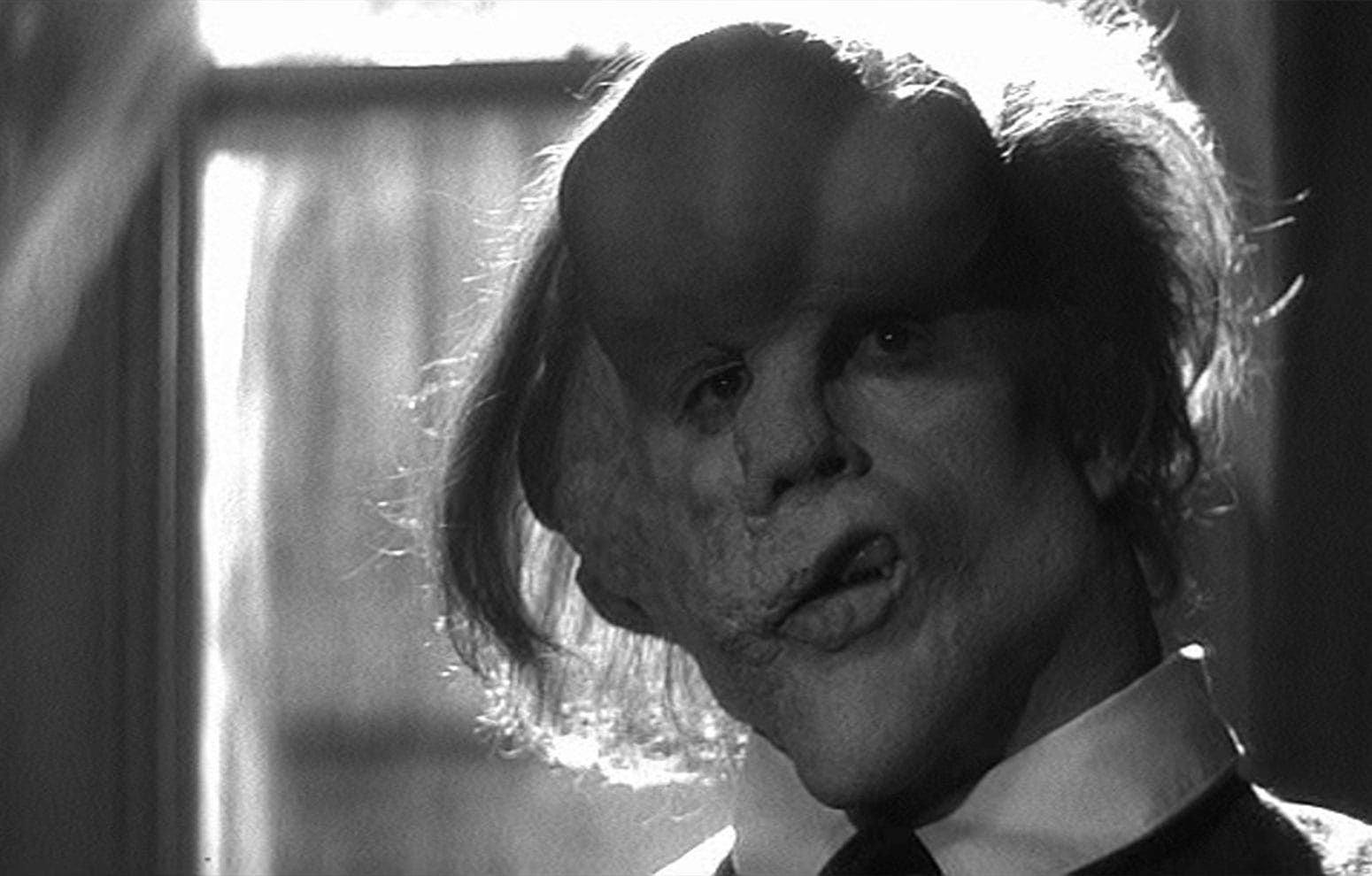
Mel Brooks — yes, that Mel Brooks financed a film about Joseph Merrick, the severely deformed Victorian man known as "The Elephant Man," and handed it to the director of ERASERHEAD. What David Lynch delivered earned eight Academy Award nominations, including Best Picture and Best Director, and remains one of the most stirring films ever made about human dignity and decency.
Dr. Frederick Treves (Anthony Hopkins) rescues Merrick (John Hurt, completely transformed by extraordinary prosthetics) from a brutal London carnival sideshow and brings him to the London Hospital. Every institution Merrick passes through treats him as a specimen — the carnival exhibited him for money, the hospital for science, Victorian high society for the warm glow of charitable self-congratulation. Lynch, working with legendary cinematographer Freddie Francis in stark expressionistic black-and-white, closes the moral distance between the carnival barker and the duchess: exploitation dressed in curiosity and generosity is still exploitation.
Lynch cuts periodically to roaring factory machinery — iron gears, steam pistons, the grinding infrastructure of industrialization — framing Merrick's world as one in which human bodies are raw material to be processed. The film's defining moment arrives when Merrick, cornered by a mob, turns and cries: "I am not an animal! I am a human being!" It is the series' argument in its purest form — an individual asserting personhood against a world that only sees him as a misshapen cog in the machine.
Excalibur (1981)
Dir. John Boorman · DP: Alex Thomson · Cast: Nigel Terry, Nicol Williamson, Helen Mirren, Nicholas Clay, Cherie Lunghi, Patrick Stewart, Liam Neeson
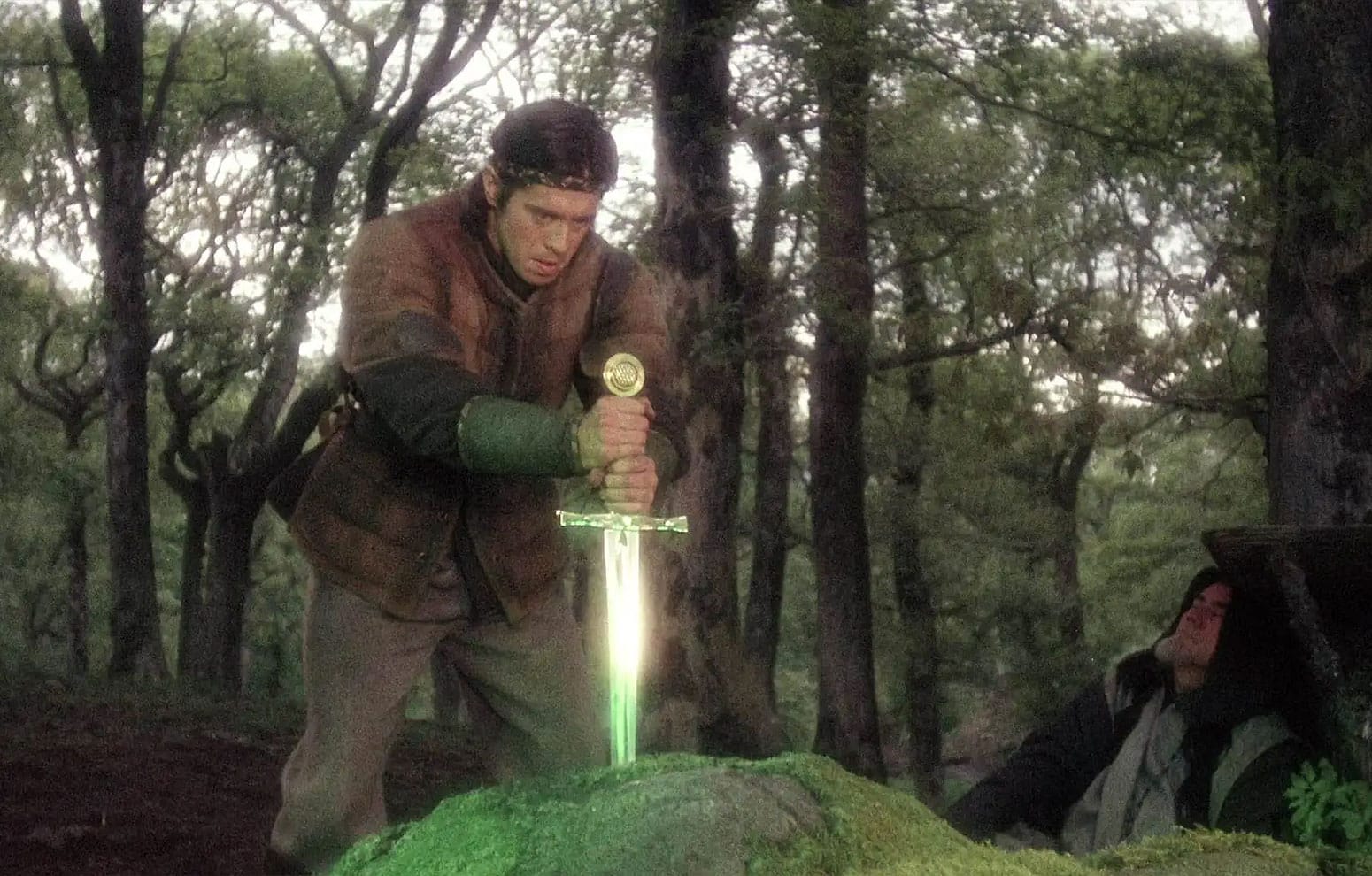
John Boorman's EXCALIBUR arrived in April 1981 — three months into Reagan's presidency, as America was actively constructing its own myth of restored greatness. Reagan's political reign was Arthurian: the invocation of a golden age that may never have existed, the promise that the right king with the right sword could set the world right. Boorman's adaptation of Sir Thomas Malory's Le Morte d'Arthur dismantles that promise — showing how our civilized institutions are fragile structures built atop a boiling cauldron of animalistic instinct.
Filmed in the misty Irish countryside, EXCALIBUR distills the Arthurian legend into a primal allegory of birth, glory, decay, and fragile restoration. Nigel Terry's Arthur emerges from Uther Pendragon's (Gabriel Byrne) violent sin, pulls the sword from the stone, and forges Camelot — only to watch it rot from within, betrayed by the very human weaknesses that the Round Table was meant to transcend. Nicol Williamson's magnificently unhinged Merlin and Helen Mirren's coiled, vengeful Morgana are two faces of the same fading world — one who accepts the old magic's eclipse with weary resignation, one who weaponizes it in retaliation.
The visual language is one of cinema's great achievements in world-building. Alex Thomson shoots the Irish landscape through rich emerald filters, making the natural world feel genuinely ancient and alive — standing stones emerging from morning fog, forests breathing with something older than human memory. Terry English's mirror-polished chrome armor is the film's central visual metaphor: gleaming, artificial, and reflecting the lush landscape around it. In battle, the armor catches firelight and turns men into something monstrous. As Camelot decays, the sheen fades, the color drains from the frame, and the golden warmth of a once-glorious kingdom is beset by mud and ash.
The film's power lies in its willingness to embrace contradiction: it mourns the loss of old enchantments even as it acknowledges their inevitable eclipse. Arthur's final realization — that he exists to become "the stuff of future memory" — is both tragic and quietly hopeful. The dream fails, yet its memory may summon it again. Civilizations rise and fall, but the dream of a just, harmonious world endures through myth, calling us to try again.
Blow Out (1981)
Dir. Brian De Palma · DP: Vilmos Zsigmond · Cast: John Travolta, Nancy Allen, John Lithgow, Dennis Franz
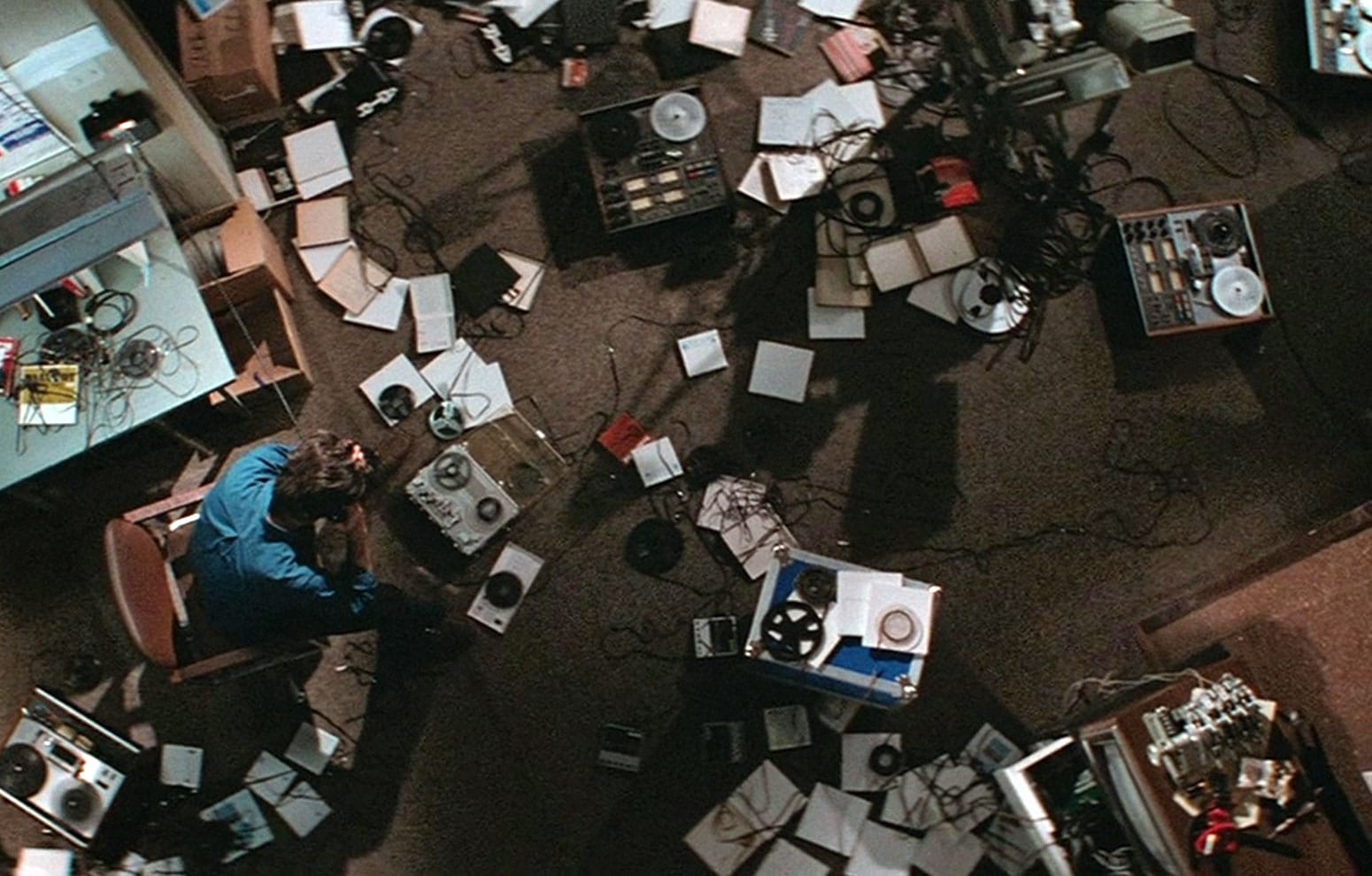
Riffing explicitly on Antonioni's BLOW-UP — transposed from London to Philadelphia, from image to sound — De Palma's film follows Jack Terry (John Travolta), a B-movie sound recordist who accidentally captures audio of a car tire being shot out on a bridge, sending a presidential candidate's car into the water below. Jack pulls the only survivor from the wreck: Sally (Nancy Allen), a woman whose continued existence becomes a liability the moment she can identify what actually happened.
Working with Vilmos Zsigmond — in his fifth appearance across this series — De Palma shoots Philadelphia through split-diopter lenses that keep multiple planes in simultaneous sharp focus, generating the constant unease of a world under surveillance from every angle. The sound design is equally precise: we experience Jack's investigation through our ears as much as our eyes, assembling the truth from fragments of captured audio alongside him. What he pieces together — his recording synched to a photographer's film strip — is an unimpeachable document of political assassination. Jack believes documented truth has power. He is wrong.
The ending is one of the most brutal — and most cynical — in American cinema. Sally is killed, her nerve-shattering scream captured on Jack's equipment, and the cover-up succeeds completely. Jack, destroyed, returns to his editing bay. The cheap slasher flick he's working on needs a great scream. He plays Sally's recording. It works perfectly. The film ends with Jack listening to her real death on a loop, her voice repurposed from evidence into entertainment, the truth converted into product.
Come Back to the 5 & Dime, Jimmy Dean, Jimmy Dean (1982)
Dir. Robert Altman · DP: Pierre Mignot · Cast: Sandy Dennis, Cher, Karen Black, Kathy Bates, Marta Heflin, Sudie Bond, Mark Patton
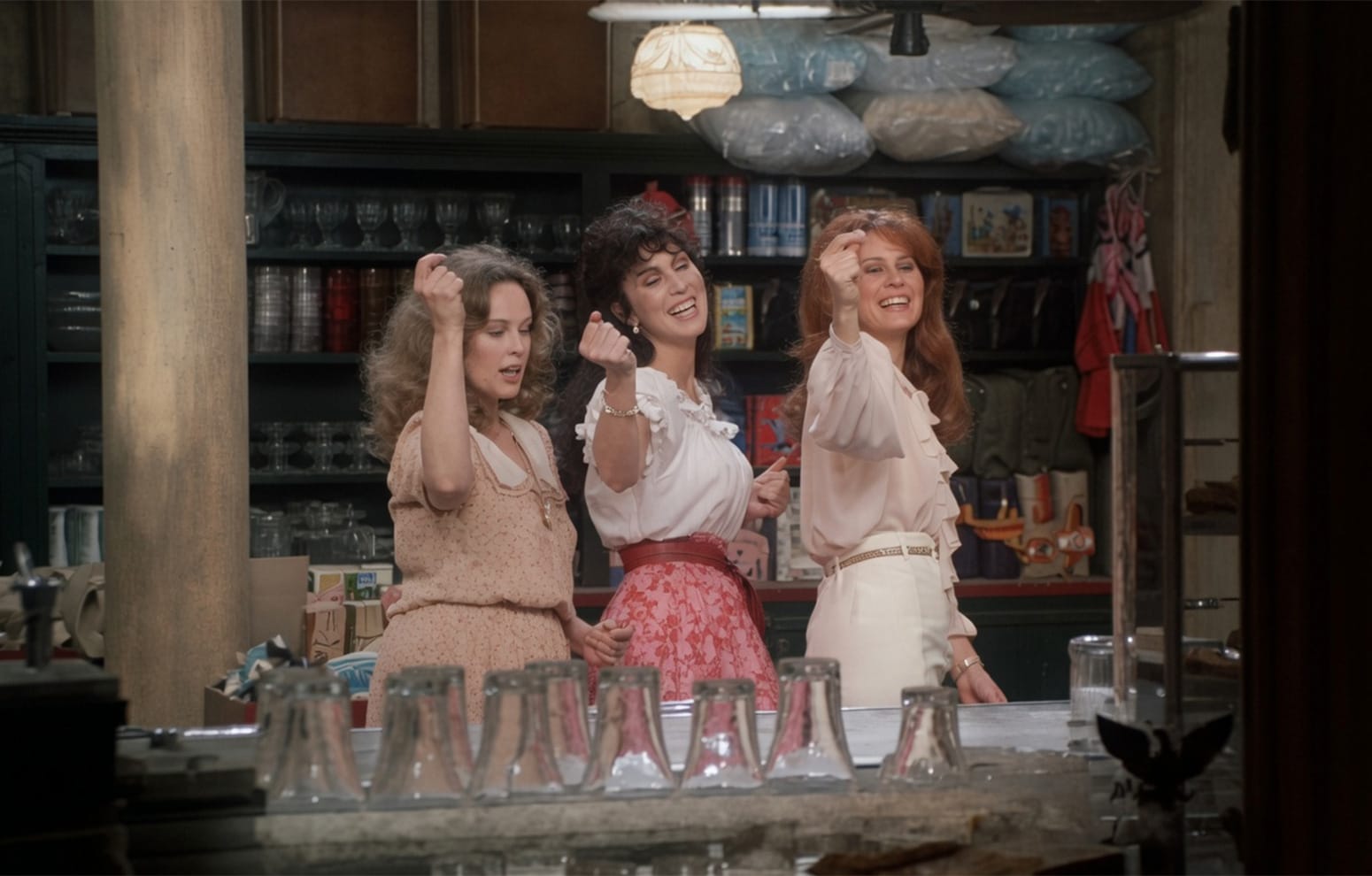
Robert Altman makes his fifth appearance in this series — after MASH, IMAGES, THE LONG GOODBYE, and NASHVILLE — and arrives here at his most intimate. Following the box-office failure of POPEYE, he retreated from the studio system entirely, directing Ed Graczyk's play on Broadway before gathering the same cast to shoot a film adaptation on an $850,000 budget. The theatrical roots show, deliberately: Altman and DP Pierre Mignot built a two-way mirror across the set, allowing the 1955 past and the 1975 present to exist in the same frame simultaneously — memory and reality share the same stage.
The setting is a dusty Texas five-and-dime on the twentieth anniversary of a James Dean fan club's founding — a reunion of women whose identities calcified around a parasocial obsession with a dead movie star. Altman is interested in what happens to people who mistake myth for truth — who build a sense of self around something that was never real to begin with. Sandy Dennis (last seen in Vol. I's WHO'S AFRAID OF VIRGINIA WOOLF?) anchors the ensemble as Mona, the truest believer. Kathy Bates announces herself in an early role. And Cher — in her dramatic debut — strips away every performative layer to deliver something raw and specific, a woman whose life has narrowed in ways she's still uncovering. We'll see her again shortly.
The film's moral center is Joanne, played by Karen Black in the present and Mark Patton in the past — a transgender woman returning to the reunion as her true self. In 1982, this was genuinely radical: Joanne is portrayed not as a spectacle or a cautionary tale but as glamorous, empathetic, and sane. She is the only character not imprisoned by illusion. While the others cling to manufactured nostalgia and rehearsed identity, Joanne fought for the truth of who she actually is — and the reunion's discomfort with her return exposes how rigid the social architecture of small-town femininity really is. The club's entire self-image is built on a version of her that no longer exists, and her presence demands they demolish it and, like STALKER's Room, confront that which they'd rather not see.

Tootsie (1982)
Dir. Sydney Pollack · DP: Owen Roizman · Cast: Dustin Hoffman, Jessica Lange, Teri Garr, Dabney Coleman, Charles Durning, Bill Murray
Owen Roizman has been everywhere in this series. He shot THE STEPFORD WIVES — a film about men replacing women with perfectly compliant replicas — then THREE DAYS OF THE CONDOR, then NETWORK. Now, for his fourth appearance, he shoots a film about a man who has to become a woman to understand what women actually experience. The through-line is unmistakable: Roizman keeps being drawn to stories about the machinery of gender and power, and what it costs to live inside it. Sydney Pollack makes his fourth series appearance as well — after THEY SHOOT HORSES, THE YAKUZA, and THREE DAYS OF THE CONDOR — and TOOTSIE is his most unlikely and most perfectly calibrated film.
Michael Dorsey (Dustin Hoffman) is a brilliant but unemployable New York actor — not blacklisted, just insufferable. He's difficult, demanding, and so committed to his own artistic integrity that no one in the industry will hire him. Out of desperation, he disguises himself as "Dorothy Michaels" to land a role on a daytime soap opera, figuring the female disguise is a temporary inconvenience. Dorothy — competent, direct, unwilling to be diminished — becomes a phenomenon precisely because she behaves the way the men around her do without consequence, exposing the casual, predatory patriarchy embedded within the system, personified by Dabney Coleman's slimy director.
Beneath the breezy, cross-dressing physical comedy, Pollack and writers Larry Gelbart and Murray Schisgal deliver a sharp deconstruction of gender dynamics and systemic misogyny — Michael only learns how to genuinely listen to women and become a better man by experiencing the world under the exhausting daily constraints of womanhood. While its 1980s gender politics have aged with a few inevitable blind spots regarding trans identity, its core critique of workplace power dynamics and the performative nature of corporate equality still cuts straight to the bone.
TOOTSIE earned ten Academy Award nominations, winning Best Supporting Actress for Jessica Lange, whose performance as Julie — the actress Michael falls for — gives the film its emotional center and keeps the satire from tipping into pure farce. Hoffman himself was nominated for Best Actor, and the performance deserved it: Dorothy is not a joke Hoffman is playing. She is someone he becomes, and the empathy he brings to both sides of that transformation elevates TOOTSIE from crowd-pleasing comedy to something with real weight.
Silkwood (1983)
Dir. Mike Nichols · DP: Miroslav Ondříček · Cast: Meryl Streep, Kurt Russell, Cher, Craig T. Nelson, Henderson Forsythe
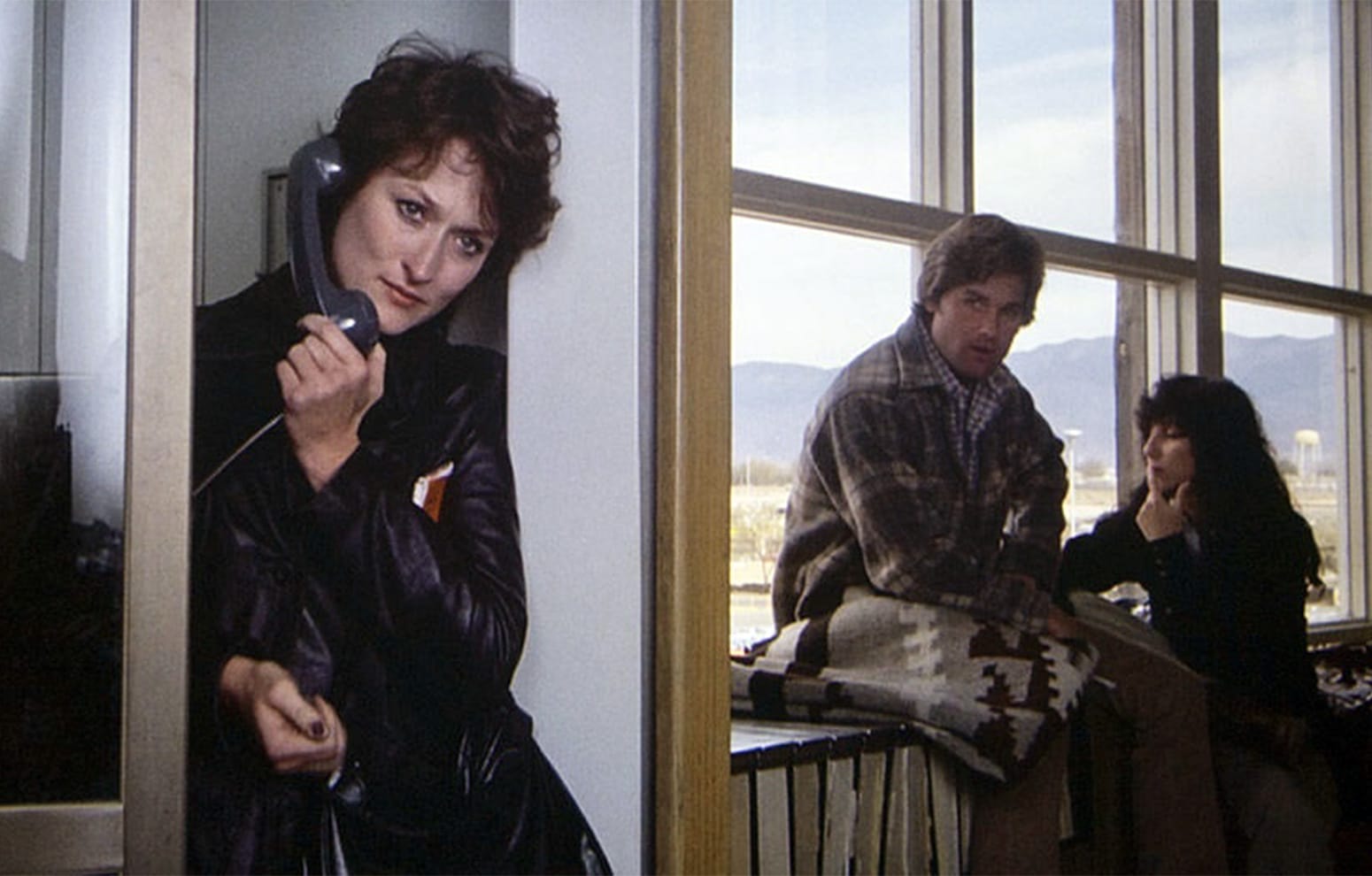
Directed by Mike Nichols (WHO'S AFRAID OF VIRGINIA WOOLF?) and written by Nora Ephron and Alice Arlen, SILKWOOD joins HARLAN COUNTY USA, BLUE COLLAR, and MATEWAN as the series' labor thread — four films tracking what happens when working-class individuals discover the truth about the systems that employ them. The difference here is gender, and that difference matters: Karen Silkwood starts as an ordinary chemical technician who becomes a union activist — and finds herself in a hostile workplace that has decided she's the problem.
Karen (Meryl Streep, nominated for Best Actress) is a lab technician at the Kerr-McGee Cimarron Fuel Fabrication Site in Crescent, Oklahoma — making plutonium pellets for an energy company that processes its workers as efficiently as the radioactive materials around them. When she begins investigating evidence of safety violations and corporate cover-ups, the response isn't confrontation but something more insidious: surveillance, social pressure, isolation, and the slow erosion of her credibility among people she thought were friends. Streep plays Karen not as a flawless whistleblower but as an ordinary, flawed woman — imperfect, sometimes reckless, entirely human — whose demands for basic safety are met with the full weight of institutional machinery.
Kurt Russell brings unexpected warmth and quiet frustration to Drew, Karen's boyfriend — a man who loves her and can't follow where she's going. And Cher — who announced herself as a dramatic force in COME BACK TO THE 5 & DIME, JIMMY DEAN, JIMMY DEAN — delivers fully on that promise as Dolly, Karen's housemate and closest friend. Nominated for Best Supporting Actress, she disappears into the role completely, every scene grounded in the weight of a friendship under impossible strain.
On November 13, 1974, Karen Silkwood was driving to meet a New York Times reporter. She had documents. Her car ran off the road. She didn't survive. The documents were never found. SILKWOOD doesn't tell you what happened. Neither does anyone else.
Paris, Texas (1984)
Dir. Wim Wenders · DP: Robby Müller · Cast: Harry Dean Stanton, Nastassja Kinski, Dean Stockwell, Hunter Carson, Aurore Clément
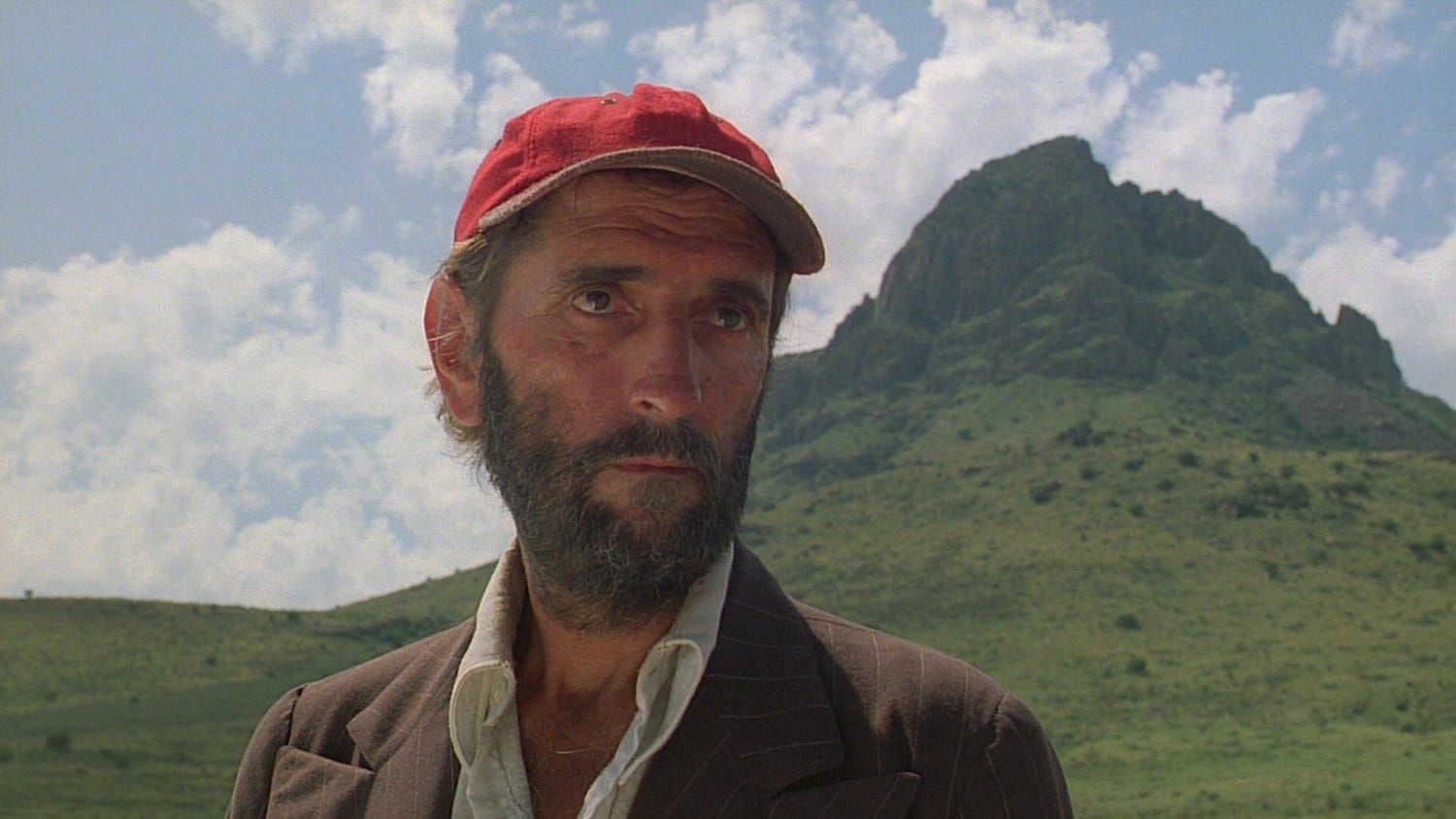
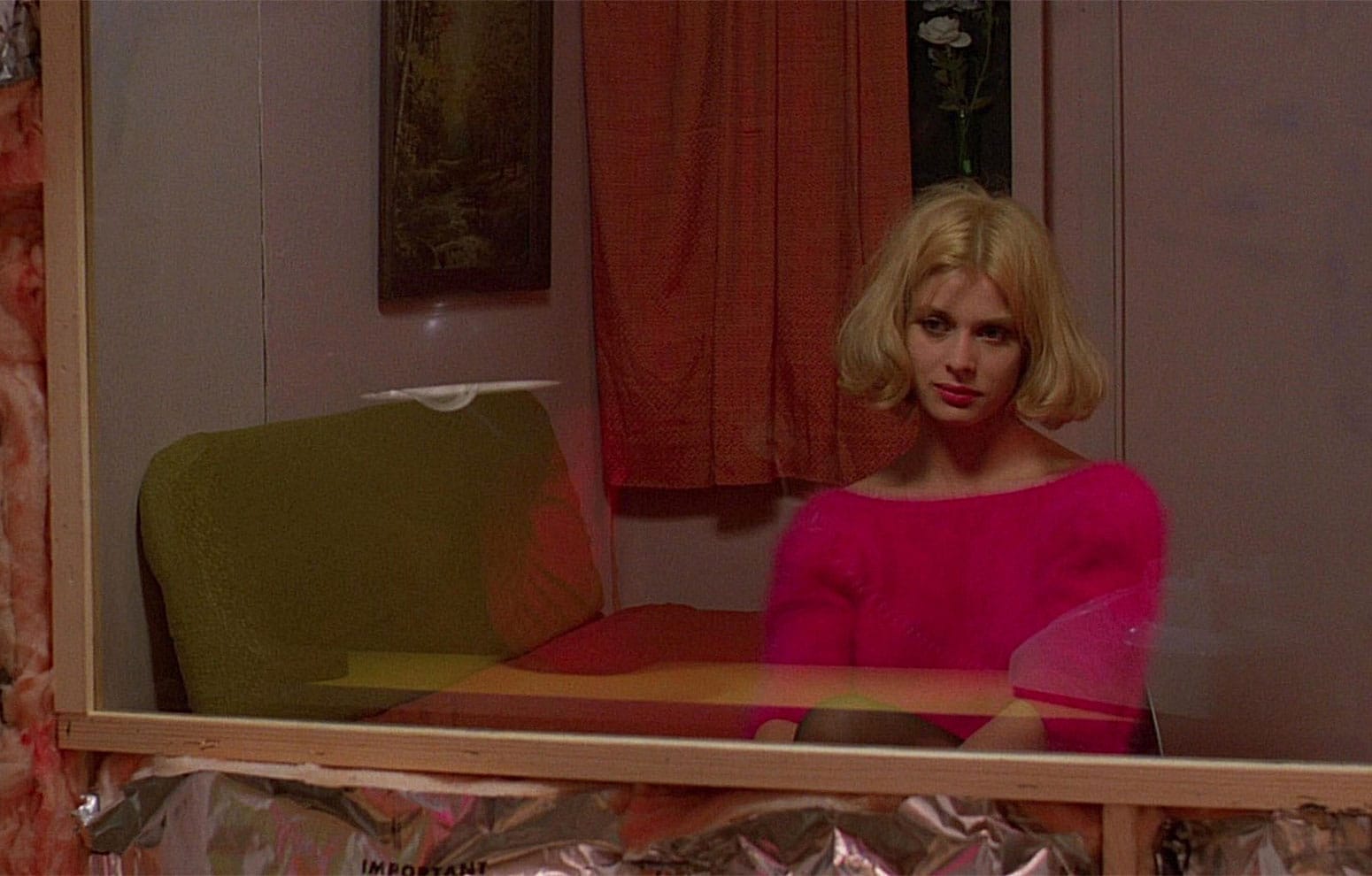
New German Cinema pioneer Wim Wenders brings his eye for landscape to the American Southwest in PARIS, TEXAS — a profoundly moving character study written by Pulitzer Prize-winning playwright Sam Shepard, with a slide-guitar score by Ry Cooder that makes the desert sound like grief given a melody. The plot is disarmingly simple: Travis Henderson (Harry Dean Stanton) is found wandering, mute, in the Mojave by his brother Walt (Dean Stockwell), is reunited with his son Hunter, and sets out to find his missing wife, Jane (Nastassja Kinski).
Robby Müller's cinematography turns the American Southwest into a psychological mirror: vast desert light, Houston's concrete canyons, neon bleeding into darkness — the external world reshaping itself around Travis's interior one. The film's argument is about the violence that rigid masculine myths do to the people inside them. Travis didn't lose his family. He burned it down — through jealousy and possession, a love so consuming it left nothing standing.
The emotional climax arrives in a Houston peep show booth, where Travis speaks by phone to Jane through a one-way mirror she can't see through — telling her their story in the third person, the distance of someone else's narrative the only way he can finally tell the truth. When he turns off his overhead light so she can see him for the first time, it is one of cinema's great quiet devastations. Traditional redemption is not on the menu: Travis engineers a reunion between mother and son, then disappears into the darkness of a parking deck below. He's been walking away from things his entire life. This time, at least, he knows what he's leaving behind — and why it's better this way.
That's Volume V. I hope you walked away with a few titles you hadn't seen, or found something new in ones you had. Two films in this batch arrived as complete revelations for me personally — movies I'd kept at arm's length for reasons that now seem embarrassing.
STALKER sat unwatched in my queue for too long, its 161-minute runtime and reputation for slowness keeping me away. I was wrong to wait. Nothing in this series has asked bigger questions more provocatively, and the image of the Zone — a place the government declared a hazardous wasteland that turns out to be the only living thing left — hasn't left me since. Neither has PARIS, TEXAS, which I came to expecting a road movie and found something rarer: a film that understands masculinity not as villainy but as a disease, and offers no cure beyond honesty. Harry Dean Stanton's face in that peep show booth is one of the great images in American cinema. Seek both out.
The sixth and final volume is coming — opening with Miloš Forman's AMADEUS and closing with Oliver Stone's BORN ON THE FOURTH OF JULY. These are films about people who believed in something — a country, a myth, a system, a God — and discovered, at great cost, what that belief was actually worth.
Stay tuned. 📺
🍕 POP 'N' PIZZA is your deep-dish slice of pop culture's weirdest, most esoteric corners—served with extra sauce and a side of existential dread. Written by Adam Frazier.